

















































































































































































































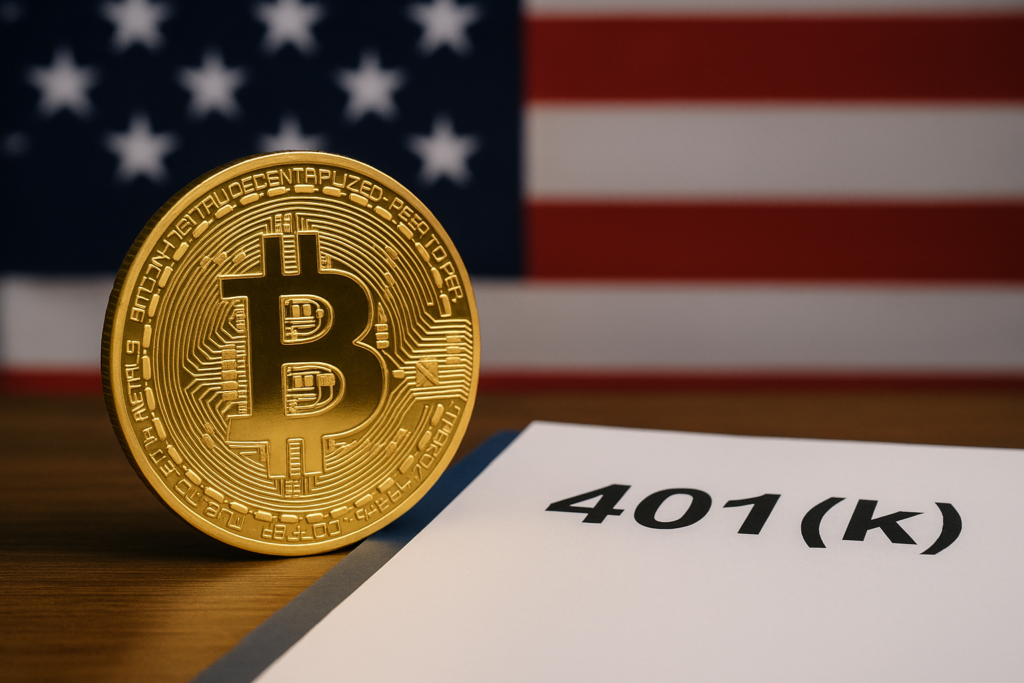
The White House has officially cleared a major regulatory hurdle that could allow cryptocurrencies to be included in 401(k) retirement plans, signaling a historic shift in how Americans invest for retirement. The proposal, which has passed federal review, now moves to the Department of Labor for final rulemaking—potentially opening the $12 trillion retirement market to digital assets and alternative investments like crypto and private equity.
Crypto Access to Retirement Accounts Expands
The new rule aims to modernize retirement investing by allowing broader asset exposure beyond traditional stocks and bonds.
Key changes include:
- Clearing regulatory barriers for crypto in 401(k) plans
- Allowing alternative assets like private equity alongside crypto
- Giving plan providers more flexibility in investment offerings
- Moving decision-making power closer to fund managers and employers
This marks one of the biggest steps toward mainstream crypto adoption in traditional finance.
Department of Labor Expected to Finalize Rules
While the proposal has passed White House review, final implementation depends on regulators.
What happens next:
- The U.S. Department of Labor will issue detailed guidance
- New rules will define how crypto can be offered in retirement plans
- Employers will receive clearer legal protections (“safe harbor”)
- Fiduciary responsibilities will be clarified for plan sponsors
This next phase will determine how quickly crypto is adopted across retirement accounts.
Massive Market Opportunity for Crypto
The 401(k) market represents one of the largest pools of capital in the world.
Potential impact includes:
- Trillions of dollars potentially flowing into crypto markets
- Increased institutional demand for Bitcoin and digital assets
- Greater legitimacy for crypto as a long-term investment
- Expansion of crypto-based retirement products
Even a small allocation shift could significantly impact the crypto market.
Balancing Innovation With Risk
The move also raises concerns about volatility and investor protection.
Key concerns include:
- Crypto’s price volatility impacting retirement savings
- Legal risks for employers offering crypto options
- Lack of clear guidelines on asset allocation limits
- Potential lawsuits tied to underperformance
Regulators are expected to introduce guardrails to manage these risks while enabling innovation.
Part of a Broader Pro-Crypto Policy Shift
This decision aligns with a larger push to integrate digital assets into the U.S. financial system.
Recent developments include:
- Executive orders supporting crypto innovation
- Removal of previous warnings against crypto in retirement plans
- Increased regulatory clarity across digital assets
- Efforts to position the U.S. as a global crypto leader
The administration is actively working to bring crypto into mainstream finance.
Why This Matters
This development signals a major turning point for crypto adoption:
- Crypto could become a standard option in retirement portfolios
- Trillions in retirement capital may enter digital asset markets
- Institutional adoption is accelerating at a national level
- The line between traditional finance and crypto continues to blur
If finalized, this move could transform crypto from a speculative asset into a core component of long-term wealth-building for millions of Americans.
- Mortgage Giants Fannie Mae, Freddie Mac Directed to Consider Crypto as Valid Assets For Home Loan Eligibility
- Crypto Class Action Against Mark Cuban and Dallas Mavericks Dismissed
- Celsius Founder Alex Mashinsky Banned From Crypto Industry in $10M FTC Settlement
- Pro-Crypto Congressman French Hill to Lead Powerful House Financial Services Committee Panel Next Term
- Rep. Maxine Waters Questions Kansas Fed Over Kraken’s Access to Federal Reserve System
- Trump Organization to Launch a Cryptocurrency Initiative, Eric Trump Says