
















































































































































































































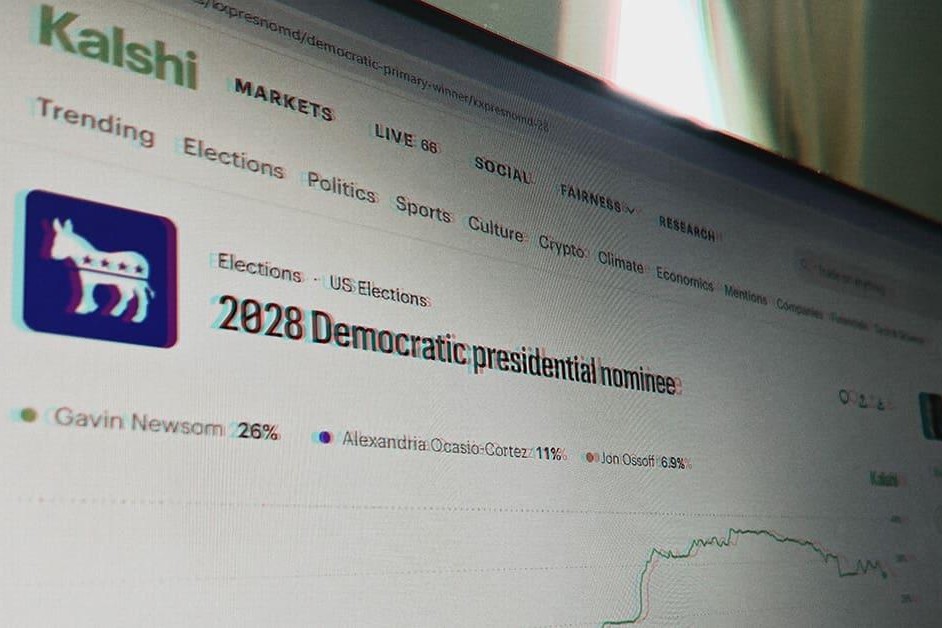
Prediction market platform Kalshi has fined and suspended three U.S. congressional candidates after determining they engaged in “political insider trading” by placing bets on their own election outcomes, marking one of the most high-profile enforcement actions in the emerging prediction markets sector. The penalties come as regulators and lawmakers increase scrutiny on platforms that allow users to trade on real-world events, especially when participants may have direct influence over outcomes.
Candidates Penalized for Betting on Their Own Races
Kalshi identified three candidates who violated platform rules by trading on markets tied to their own campaigns:
- Matt Klein, a Democratic Minnesota state senator
- Ezekiel Enriquez, a Republican candidate in Texas
- Mark Moran, an independent Senate candidate in Virginia
All three were found to have placed wagers on their own election outcomes, which Kalshi classifies as insider trading due to their direct involvement in the events being traded.
Fines and Five Year Suspensions Issued
Each candidate received financial penalties and was banned from the platform for five years.
- Klein wagered around $50 and was fined roughly $539
- Enriquez placed under $100 in bets and was fined about $784
- Moran placed multiple bets and received the largest fine of over $6,000
Klein and Enriquez admitted wrongdoing and cooperated with the investigation, while Moran stated he intentionally placed the bets to expose the platform’s influence.
Kalshi Tightens Rules Around Political Insider Trading
The enforcement follows newly implemented safeguards designed to prevent candidates and insiders from trading on events they can directly influence. Kalshi stated the violations were detected through its updated monitoring systems, which specifically flag political participants attempting to trade on their own races. The company emphasized that even small trades are subject to penalties if they violate rules, reinforcing a zero-tolerance stance on insider activity.
Prediction Markets Face Growing Regulatory Pressure
This case highlights broader concerns surrounding prediction markets and their potential overlap with gambling and insider trading. Lawmakers and regulators are increasingly focused on:
- Whether event-based trading qualifies as gambling
- How to prevent misuse of insider information
- Who has jurisdiction over these platforms
Recent actions at the state and federal level suggest that stricter oversight could be coming as the industry grows.
The Bigger Picture
Kalshi’s decision to fine and suspend political candidates marks a turning point for prediction markets. As these platforms expand into politics, finance, and real-world events, the risk of insider trading becomes more pronounced—forcing companies to adopt enforcement mechanisms similar to traditional financial markets. This situation reinforces a key shift in the industry. Prediction markets are no longer experimental tools. They are evolving into regulated financial systems where access to information can create an unfair advantage, and controlling that advantage is becoming a top priority.
- The Federal Reserve Maintained The Federal Funds Rate Unchanged Between 4.25% and 4.50%
- Coinbase, SEC Reach Agreement to Dismiss Lawsuit
- Celsius Founder Alex Mashinsky Banned From Crypto Industry in $10M FTC Settlement
- Crypto.com Files for National Bank Charter Following Circle, Stripe and Coinbase
- U.S. Treasury Urges Congress for Tools Against Crypto Finance
- Bitcoin ATM Operator Coinhub Hit With Fines From California Regulator