

















































































































































































































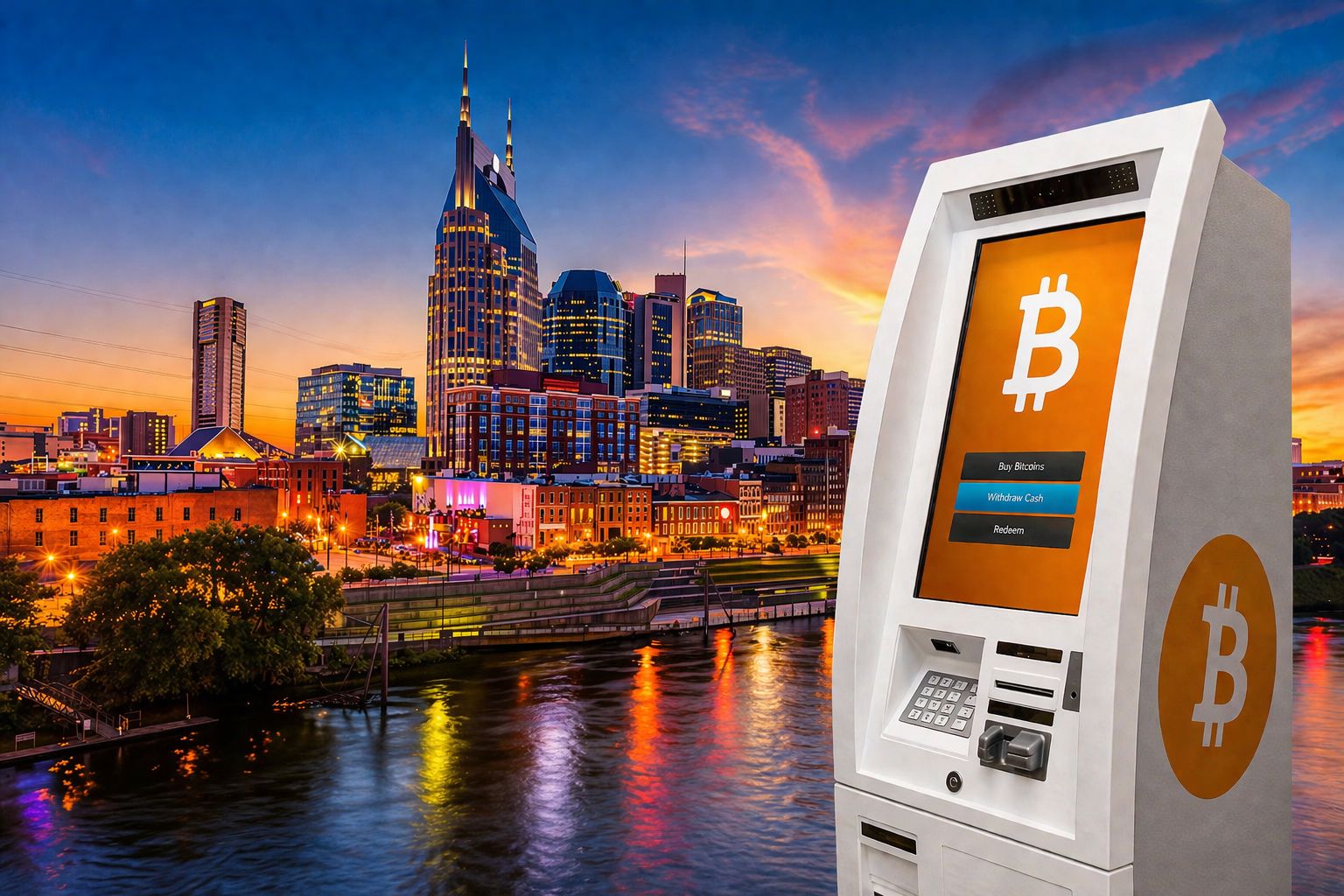
Tennessee has officially banned crypto ATMs statewide, becoming the second U.S. state after Indiana to take such a drastic step as regulators escalate efforts to combat rising fraud tied to these machines. The new law makes it a criminal offense to operate, install, or even host a crypto ATM, signaling one of the most aggressive state-level actions against crypto infrastructure in the U.S. to date.
Statewide Ban Targets Fraud Linked to Crypto ATMs
The legislation, signed by Governor Bill Lee, requires all crypto ATMs—also known as virtual currency kiosks—to be removed by July 1, 2026. Violations will be treated as a Class A misdemeanor, carrying penalties that can include:
- Up to 1 year in jail
- Fines up to $2,500
- Legal liability for both operators and businesses hosting machines
Unlike other states that opted for licensing and transaction limits, Tennessee chose a full ban, reflecting the severity of concerns around misuse.
Fraud Surge Drives Bipartisan Support
Lawmakers pointed to a sharp rise in scams as the primary driver behind the decision. According to federal data, crypto ATM-related fraud has disproportionately impacted vulnerable groups, particularly older Americans. In Tennessee alone, reported crypto scam losses reached around $142 million in 2025, helping push the bill through with unanimous support.
Authorities say these machines are frequently used because:
- Transactions are fast and irreversible
- Funds are difficult to trace
- Scammers can easily guide victims through the process
Indiana Set the Precedent for Full Ban
Tennessee’s move follows Indiana, which earlier in 2026 became the first U.S. state to ban crypto ATMs outright as part of its own fraud crackdown. Indiana lawmakers argued that crypto kiosks had become:
- Hotspots for money laundering
- Tools for tax evasion and scams
- High-risk entry points into crypto for unsuspecting users
Together, the two states signal a shift toward more aggressive enforcement rather than incremental regulation.
U.S. Crypto ATM Industry Faces Growing Pressure
Across the country, regulators are tightening oversight on crypto ATMs as fraud cases continue to rise.
While most states are pursuing:
- Licensing requirements
- Transaction limits
- Identity verification rules
Tennessee’s full ban represents a worst-case regulatory scenario for the industry—one that could influence other states considering similar action.
- Warren and Wyden Open Fourth Probe Into Lutnick–Tether Loan Ties
- Ripple Walks Away Paying Just $50 Million to SEC Over XRP Lawsuit
- Democrats Pushing Harris Campaign for ‘Reset’ on Crypto Stance, House Rep Says
- Louisiana State Government Now Accepts Bitcoin Lightning as Payment
- US President Donald Trump Signs Bill to Kill IRS DeFi Rule
- President Donald J. Trump Establishes The Strategic Bitcoin Reserve and U.S. Digital Asset Stockpile