
































































































































































































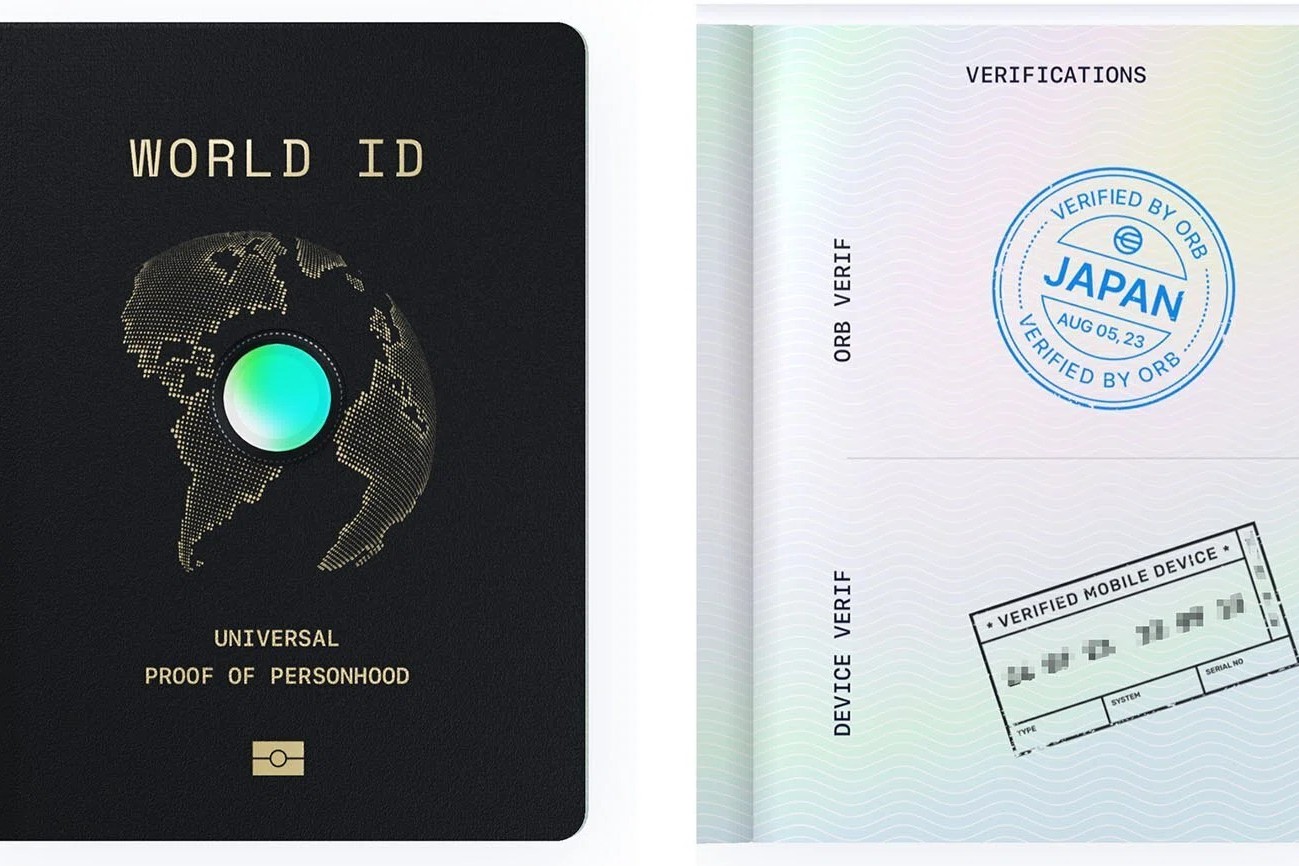
World is opening up the privacy technology behind World ID to everyone. The Sam Altman-backed identity project has open-sourced ProveKit, a zero-knowledge proving toolkit that lets people prove things like their age, nationality or ownership of a valid ID without handing over the personal information contained inside the document.
ProveKit has already been used inside World ID since April, but its open-source release means developers outside the World ecosystem can now build the same privacy-preserving verification technology into their own applications.
Prove You’re Over 18 Without Showing Your Birthday
Most online identity verification works by collecting far more information than a company actually needs.
A website trying to determine whether someone is over 18 might ask for a driver’s license containing their full name, address, birthday, photograph, license number and other personal information.
ProveKit takes a different approach.
Using zero-knowledge proofs, a person’s phone or browser can cryptographically prove that a specific statement is true without revealing the information used to prove it.
For example:
- Age verification without revealing your exact birthday
- Nationality verification without sending your passport
- Proof that you possess a valid government ID
- Verification without uploading the underlying document to an external server
The company requesting verification receives essentially a yes-or-no cryptographic confirmation, rather than a copy of someone’s identity documents.
Your Personal Data Stays on Your Phone
One of ProveKit’s biggest differences from many identity-verification systems is where the cryptographic proof gets created.
It happens locally on the user’s device.
World says sensitive information doesn’t need to be sent to an external server for processing, reducing the amount of personal data that companies need to collect and store.
World ID credentials can also store information from NFC-enabled passports and national identity cards directly on a user’s device.
According to World, that information isn’t accessible to World Foundation, Tools for Humanity or other third parties.
That’s particularly important because centralized databases filled with identity documents can become extremely valuable targets for hackers.
153 Million Driver’s Licenses Show Why This Matters
The timing of ProveKit’s release couldn’t be more relevant.
Cybersecurity journalist Brian Krebs recently reported that the FBI’s New Orleans field office is investigating a dark-web service called Nexus that claims to offer scans of more than 153 million U.S. and Canadian driver’s licenses.
The data appears to have been obtained from infrastructure associated with identity-verification provider IDScan.net, according to the investigation.
The incident isn’t connected to World or ProveKit.
But it demonstrates the fundamental security problem ProveKit is trying to solve.
If companies don’t need to receive and retain complete identity documents in the first place, there is less sensitive information sitting inside centralized databases for hackers to steal.
Remco Bloemen, Head of Blockchain at World Foundation, argued that identity documents should be authenticated using zero-knowledge proofs rather than requiring people to repeatedly reveal all of their personal details.
World Says It Works on Regular Smartphones
Zero-knowledge cryptography has historically required significant computing resources, which can make using it directly on consumer devices difficult.
World says ProveKit was specifically designed to solve that problem.
The toolkit has been under development for approximately two years and can generate proofs:
Within seconds on a typical smartphone and in under 30 seconds on the low-end device World used for testing.
ProveKit also:
- Supports Noir, the zero-knowledge programming language developed by Aztec
- Doesn’t require a trusted setup
- Targets 128-bit post-quantum security
- Can operate on standard smartphones and browsers
- Allows developers to create new types of provable claims
Making ProveKit open source means developers can now use those capabilities without building their own zero-knowledge identity infrastructure from scratch.
World Is Building Beyond the Orb
World, formerly known as Worldcoin, has largely been associated with its controversial Orb devices that scan people’s irises to establish proof of personhood.
ProveKit demonstrates a broader direction for the project.
Instead of only proving “I’m a unique human,” World wants its identity technology to answer much more specific questions while revealing as little information as possible.
That could eventually include proving eligibility for financial services, age-restricted websites, online communities, ticketing platforms or other applications where some form of identity verification is required.
World is also exploring support for Groth16, a zk-SNARK system that could make proofs more efficient to verify directly on blockchains including World Chain, Ethereum, Base and Solana.
Digital Identity Could Shift From Showing Documents to Proving Facts
The bigger idea behind ProveKit is simple.
The internet currently treats identity verification like showing someone your entire wallet when they only need to know one thing about you.
Zero-knowledge technology could reverse that model.
Instead of uploading a driver’s license to prove you’re 21, prove you’re over 21.
Instead of submitting a passport to prove nationality, prove the nationality.
And instead of trusting another company to safely store your sensitive documents, keep the information on your own device and send only the cryptographic proof.
World has spent years trying to build a global digital identity network. By making ProveKit open source, it’s now giving other developers access to one of the technologies powering that vision.
If it works at scale, the future of digital identity may involve proving who you are without actually showing everyone who you are.
- DePIN Platform Peaq Raises $15M Ahead of Launch
- Ledger Faces Scrutiny After User Claims $2.5M in Bitcoin, NFTs Stolen
- Phantom Wallet Suffers Service Outage, Disrupting Trading and Balance Displays
- TCL’s RayNeo Air 3s Pro AR Glasses Go Global with a $249 Price Tag
- Elon Musk’s X Names Polymarket as Official Prediction Market Partner
- XProtocol’s Ethereum Phone XForge Launching to Take on Solana Seeker