











































































































































































































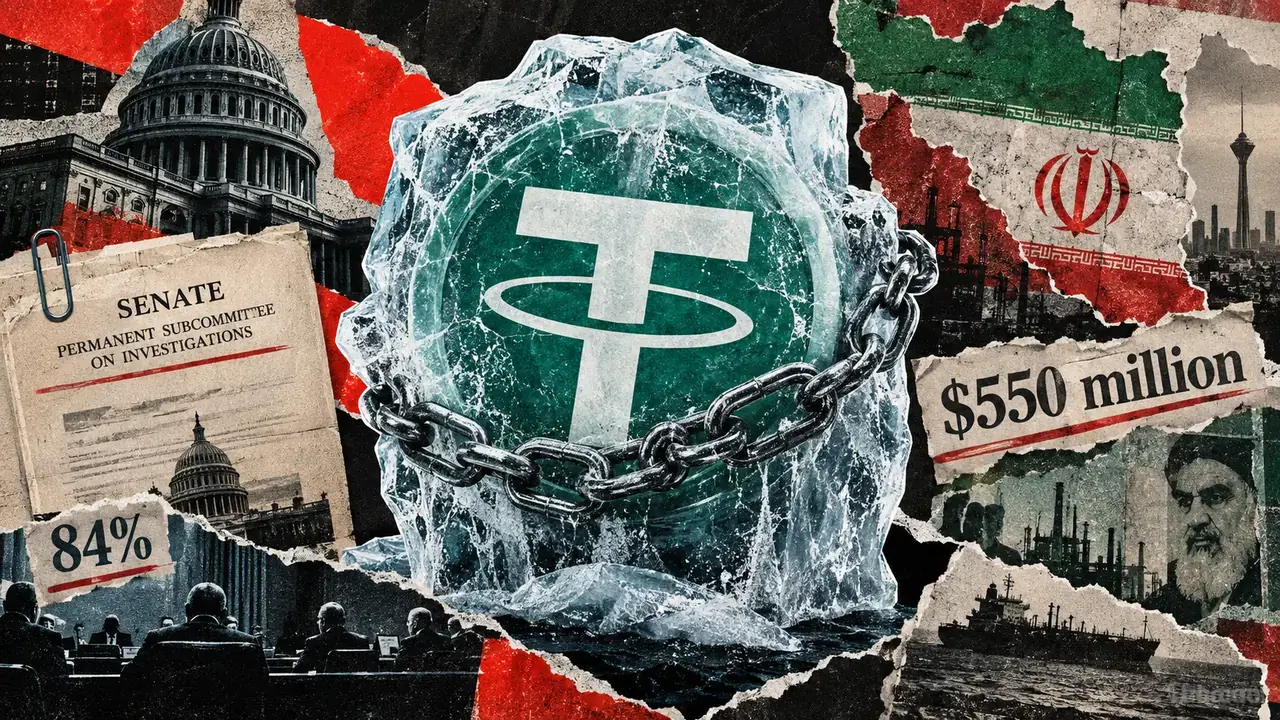
A new U.S. Senate minority-staff investigation says Tether’s USDT became a major financial tool within Iran-linked shadow banking networks, with 84% of 846 sanctioned or seizure-targeted crypto wallets examined using USDT exclusively or almost exclusively. Tether disputes the report’s portrayal of its compliance record and says it helped authorities freeze nearly $550 million in Iran-linked USDT during 2026.
Senate Investigators Trace Hundreds of Iran-Linked Crypto Wallets
Democratic investigators on the Senate Permanent Subcommittee on Investigations, led by ranking member Sen. Richard Blumenthal, analyzed blockchain activity connected to 846 cryptocurrency wallets associated with Iran and Iran-linked organizations.
The wallets had been sanctioned, blocked or targeted by authorities in the United States or Israel.
Investigators reported that:
- 84% of the 846 wallets transacted exclusively or nearly exclusively in USDT
- The analysis covered more than five years of blockchain transactions
- USDT was used significantly more frequently than Bitcoin among the wallets examined
- Some transactions were linked by investigators or sanctions authorities to Iran’s Central Bank, oil networks and regional proxy organizations
The report describes USDT as a significant component of what investigators characterize as Iran’s shadow banking network, which is used to move money outside traditional financial institutions affected by international sanctions.
USDT Used to Move Dollars Outside Traditional Banks
USDT is a dollar-pegged stablecoin designed to maintain a value of approximately $1, making it useful for transferring dollar-denominated value across blockchain networks without relying directly on conventional banks.
According to the Senate report, Iran-linked networks used that capability to move funds internationally and support financial activity despite restrictions on Iran’s access to the global banking system.
Investigators said USDT was associated with activity involving:
- Moving money into and out of Iran
- Supporting the Iranian rial
- International oil transactions
- Payments involving Iran-linked organizations
- Purchases connected to military supply chains
The report argues that USDT’s liquidity and global availability made it particularly useful within these networks.
84% Figure Doesn’t Represent Overall USDT Activity
The report’s 84% figure requires an important distinction.
It does not mean 84% of USDT transactions are connected to Iran or illicit activity.
Instead, investigators started with a specific dataset of 846 wallets already identified or targeted by U.S. or Israeli authorities because of alleged connections to Iran and related organizations and examined which cryptocurrencies those addresses used.
Among 757 wallets identified by Israeli authorities, investigators found that 87% conducted more than 80% of their transaction value in USDT.
Among 101 OFAC-designated wallets, 57% predominantly used USDT.
Senate Report Questions How Quickly Tether Freezes Wallets
Unlike decentralized cryptocurrencies such as Bitcoin, Tether can freeze USDT held at specific blockchain addresses.
That ability became another focus of the investigation.
The report questioned whether Tether consistently moved quickly enough after wallets were publicly identified by authorities. Investigators highlighted cases where sanctioned addresses allegedly continued moving USDT before being frozen.
Blumenthal has asked the U.S. Treasury Department and Department of Justice to examine Tether’s sanctions and anti-money-laundering compliance practices.
The report itself does not establish that Tether committed a legal violation.
Tether Says It Helped Freeze Nearly $550 Million
Tether pushed back against the report’s characterization of the company and emphasized its cooperation with law enforcement.
CEO Paolo Ardoino said USDT is not a safe haven for sanctioned actors, terrorist organizations or criminal networks.
Tether says its ability to freeze tokens has helped authorities stop funds that would be considerably more difficult to recover through decentralized cryptocurrencies.
During 2026, the company says enforcement actions involving USDT helped freeze nearly $550 million in assets linked to Iran.
That reportedly included more than $344 million across two wallets associated with the Central Bank of Iran in April and another $130 million-plus connected to four addresses in July.
Stablecoin Transparency Creates Both Risk and Enforcement Tools
The dispute highlights one of the unusual characteristics of centralized stablecoins.
USDT can move globally without using traditional banking rails, potentially making it attractive to entities attempting to move dollar-denominated value around financial restrictions.
At the same time, transactions occur on public blockchains, allowing investigators to trace funds, while Tether retains the technical ability to blacklist addresses and freeze USDT.
That gives authorities enforcement capabilities that don’t exist in the same form with cash or fully decentralized cryptocurrencies.
Tether Faces Increased Scrutiny Over Sanctions Compliance
USDT remains the world’s largest dollar-backed stablecoin and plays a major role across global cryptocurrency markets.
The Senate minority report is now increasing scrutiny over how Tether identifies and responds to sanctioned addresses as stablecoins become increasingly integrated into the international financial system.
For now, the report presents the investigators’ findings about a specific group of Iran-linked wallets, while Tether argues its nearly $550 million in Iran-related freezes during 2026 demonstrate that centralized stablecoins can also provide law enforcement with powerful tools for stopping illicit funds.
Blumenthal is calling for additional examination by Treasury and the Justice Department, meaning the Senate report could lead to further federal scrutiny of Tether’s compliance practices.
- Israel Approves First Shekel-Pegged Stablecoin After Two-Year Pilot
- Revolut Enables Crypto Purchases For U.K. Users, Directly into MetaMask Wallets, With Revolut Ramp
- KRWQ Launches as First Korean Won Stablecoin on Base
- Tether Teams Up with The Country of Georgia’s Central Bank to Launch “Official” Stablecoin
- Israel’s Largest Bank Taps Galaxy to Bring Bitcoin, Ethereum and Solana Trading Directly to Customers
- India’s ‘Most Prolific Darknet Drug Syndicate’ Used Monero to Evade Cops