

















































































































































































































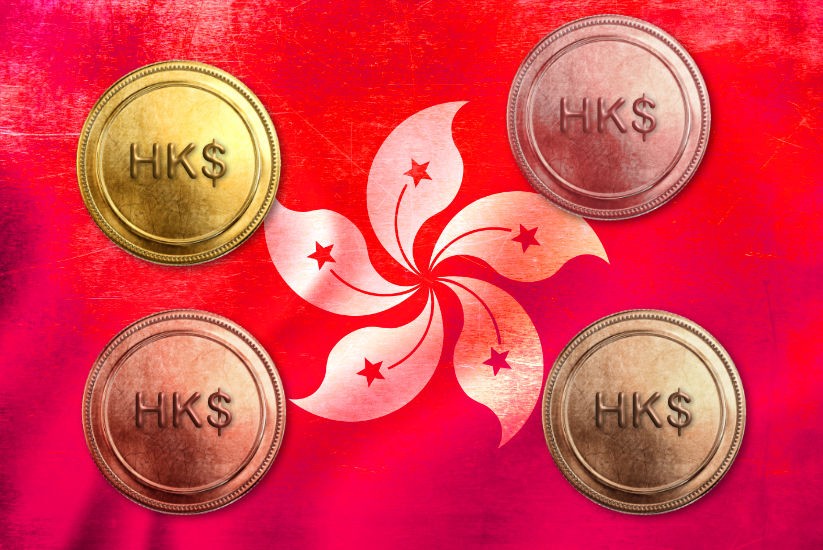
Hong Kong’s first regulated Hong Kong dollar stablecoin is moving beyond testing and into real-world finance, with HashKey Exchange preparing to use HKDAP for cross-border trade settlements with the United Arab Emirates and commercial insurance payments.
HashKey Exchange, Hong Kong’s largest crypto exchange, plans to use HKDAP to settle transactions between Hong Kong and the UAE as well as the broader Middle East, opening a potentially significant use case for the newly launched regulated stablecoin.
The initiative is particularly notable because Hong Kong and the UAE recorded approximately $48.95 billion in cross-border trade during 2025, nearly twice Hong Kong’s roughly $24 billion in trade with the rest of the Middle East.
HKDAP Goes From Stablecoin Launch to Real-World Payments
HKDAP, short for HKD At Par, launched on August 12 and is issued by Anchorpoint Financial under Hong Kong’s regulated stablecoin framework.
The stablecoin maintains a 1-to-1 peg with the Hong Kong dollar and is currently being rolled out primarily to institutions, corporate customers and professional investors.
Only days after launching, HKDAP is already being tested or deployed across several financial use cases:
- Cross-border trade settlement between Hong Kong and the UAE
- Commercial insurance premium payments
- Life insurance premium settlement
- Fiat-to-stablecoin subscription and redemption
- Institutional payments and capital flows
- Potential settlement between Hong Kong dollars, U.S. dollars and UAE dirhams
The rapid expansion gives Hong Kong an opportunity to demonstrate that regulated stablecoins can operate as financial infrastructure rather than simply functioning as crypto trading assets.
HashKey Targets $49 Billion Hong Kong-UAE Trade Corridor
One of the biggest opportunities involves trade between Hong Kong and the UAE.
HashKey intends to use HKDAP for cross-border settlement involving businesses operating across Hong Kong, the UAE and the wider Middle East.
The UAE was Hong Kong’s largest trading partner in the Middle East during 2025, with bilateral trade reaching approximately $48.95 billion.
Stablecoins could potentially reduce some of the friction associated with moving money between businesses operating across different currencies, banking systems and time zones.
Instead of relying entirely on traditional correspondent banking infrastructure, HKDAP could provide an onchain settlement asset denominated directly in Hong Kong dollars.
Insurance Companies Are Testing Stablecoin Payments
Insurance is emerging as another major early use case.
HashKey is working with digital asset insurer OneDegree to explore HKDAP for commercial insurance premium payments. The companies also plan to examine its use for cross-border business payments, with HashKey’s Middle East operation providing conversion between HKDAP, U.S. dollars and UAE dirhams.
HashKey had already completed a separate real-money test involving HKDAP and YF Life on August 14.
That test covered the subscription and redemption process necessary for customers to eventually purchase HKDAP with Hong Kong dollars and use the stablecoin to pay insurance premiums.
The potential settlement improvement is significant.
Traditional insurance premium payments can take approximately two to three business days before settlement is confirmed. HashKey says HKDAP transactions can provide near-real-time settlement.
Hong Kong Approved Just Two Stablecoin Issuers
HKDAP’s launch follows Hong Kong’s introduction of one of the world’s most tightly regulated stablecoin frameworks.
The Hong Kong Monetary Authority received 36 applications from companies seeking stablecoin issuer licenses.
Only two were approved.
Those licenses went to:
- Anchorpoint Financial, issuer of HKDAP
- HSBC
Anchorpoint received license FRS01, making it one of the first companies authorized to issue regulated fiat-referenced stablecoins under Hong Kong’s new framework.
The limited number of approvals demonstrates the high regulatory barrier Hong Kong has established for companies entering its stablecoin market.
Standard Chartered and Animoca Brands Are Behind Anchorpoint
HKDAP also has significant backing from companies spanning traditional finance, telecommunications and Web3.
Anchorpoint Financial is connected to Standard Chartered Bank Hong Kong, with HKT and Animoca Brandsparticipating as venture partners.
That combination brings together banking infrastructure, telecommunications and blockchain expertise around the development of a regulated Hong Kong dollar stablecoin.
HashKey and OSL Group are serving as distributors during HKDAP’s initial rollout.
The structure is an example of traditional banks and crypto-native companies increasingly working together to build regulated blockchain payment infrastructure.
Retail Users Still Can’t Access HKDAP
Despite HKDAP being live, most ordinary consumers cannot currently purchase it.
The initial rollout is limited primarily to eligible institutions, corporate clients and professional investors.
Anchorpoint is taking a staged approach to distribution as it tests the stablecoin’s infrastructure and builds additional partnerships.
Retail access could arrive by the end of 2026, although a specific launch date has not been confirmed.
That means HKDAP’s first major test will happen inside institutional finance rather than consumer crypto markets.
Hong Kong Is Challenging the Dollar-Dominated Stablecoin Market
HKDAP is entering a stablecoin market overwhelmingly controlled by U.S. dollar-backed assets.
Stablecoins such as Tether’s USDT and Circle’s USDC account for the vast majority of global stablecoin supply.
Hong Kong is taking a different approach by developing regulated blockchain money tied directly to its own currency.
The Hong Kong dollar itself has been pegged to the U.S. dollar since 1983, but an HKD-denominated stablecoin could still provide advantages for businesses that maintain Hong Kong dollar accounts, conduct regional trade or want blockchain-based settlement without constantly converting into dollar stablecoins.
Stablecoins Are Moving Beyond Crypto Trading
The significance of HKDAP’s early use cases extends beyond Hong Kong.
Stablecoins originally gained adoption primarily as a way for cryptocurrency traders to move dollar-denominated value between exchanges without interacting with banks for every transaction.
Their role is rapidly expanding.
Financial institutions are increasingly exploring stablecoins and tokenized deposits for:
- International business payments
- Trade settlement
- Insurance premiums
- Treasury management
- Securities settlement
- Corporate payments
- 24/7 movement of money
HKDAP’s deployment demonstrates how quickly that transition can happen once a regulated framework is established.
Less than a week after its launch, the stablecoin was already being connected to insurance payments and one of Hong Kong’s largest international trade corridors.
Hong Kong Could Become an Asia-Middle East Stablecoin Hub
The connection between Hong Kong and the UAE may ultimately be the most important part of the initiative.
Both jurisdictions have been aggressively developing regulatory frameworks for cryptocurrency, tokenization and blockchain-based financial services.
Using HKDAP as a settlement asset between the two markets could create a regulated blockchain payment corridor connecting major financial centers in Asia and the Middle East.
For HashKey and Anchorpoint, the opportunity is significantly larger than simply creating another stablecoin.
If HKDAP can prove that regulated digital currencies can reduce settlement times and simplify cross-border transactions, the model could potentially expand into additional trade corridors, insurance products and institutional payment networks.
Hong Kong’s first regulated stablecoin is therefore entering an important test.
The question is no longer whether regulators will allow an HKD stablecoin to exist. With HKDAP now live, the next question is whether businesses will actually use it to move money.
Early adoption across insurance and a nearly $49 billion Hong Kong-UAE trade corridor could provide the first real answer.
- Chainlink Pilots Bermuda Monetary Authority Complaint Stablecoin
- Abu Dhabi’s Mubadala Capital Tokenizes Private Markets Fund as Coinbase Invests in On-Chain Strategy
- Cryptocurrency Clarified to Be Personal Property in China, Remains Barred For Businesses
- PayPal USD Launches Natively on Polygon to Expand Global Stablecoin Payments
- El Salvador Launches $2 Stablecoin Remittance App on Coinbase’s Base Network
- Brazilian Judge Allows NFT Subpoenas to Bitcoin Wallets in High-Profile Fraud Cases