








































































































































































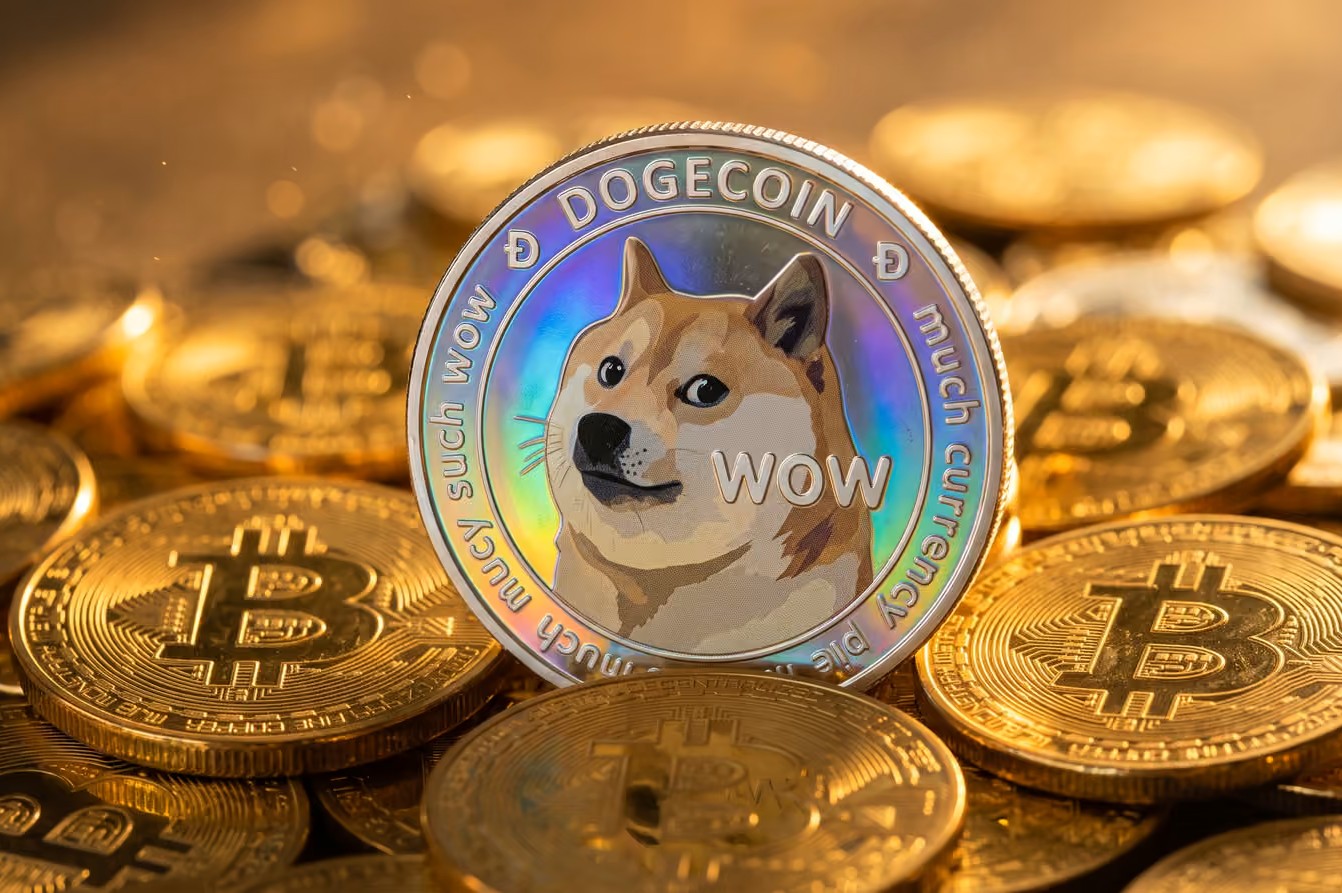
DogeOS, an Ethereum-compatible application layer designed to bring decentralized finance (DeFi), gaming and smart contracts to Dogecoin, is approaching its long-awaited mainnet launch. DogeOS founder and CEO Jordan Jefferson confirmed that the platform’s first version has completed development and security audits, with more than 100 developers already building applications for the ecosystem. Speaking on The Block’s The Starting Block podcast, Jefferson said the launch was “very, very close,” although he did not announce an official release date. The development represents a major effort to transform Dogecoin (DOGE) from a cryptocurrency primarily associated with payments, tipping and internet memes into a broader blockchain ecosystem supporting decentralized exchanges, lending, stablecoins, prediction markets and Web3 applications. The announcement follows the September 30 launch of DogeOS’ public testnet and the October 21 formation of Dogecoin Labs, an organization bringing together several major Dogecoin projects to accelerate development and commercial adoption.
DogeOS Completes Development and Security Audits Ahead of Mainnet
The Dogecoin ecosystem is preparing for one of its most significant technological expansions as DogeOS moves closer to launching its production network.
During a November 11 interview with The Block’s Gareth Jenkinson, DogeOS founder and CEO Jordan Jefferson confirmed that development of the platform’s first version and its associated audits had been completed.
The team is now concentrating on the infrastructure and partnerships required to support a public mainnet launch.
These efforts include coordinating with cryptocurrency exchanges, wallet providers, application developers and other blockchain protocols.
Jefferson emphasized that the platform is approaching launch, but stopped short of providing a specific date.
That distinction is important because DogeOS has not yet announced when its mainnet will become publicly available.
The project is designed to expand Dogecoin’s functionality without fundamentally changing the cryptocurrency’s existing base-layer architecture.
Dogecoin currently operates primarily as a proof-of-work cryptocurrency designed for transferring value between users.
Although it has a large community and substantial market recognition, its native blockchain does not offer the same general-purpose smart contract capabilities as Ethereum or Solana.
DogeOS intends to address that limitation through a separate application layer.
Major DogeOS Development Milestones
| Date | Development |
|---|---|
| May 2025 | DogeOS announces a $6.9 million funding round led by Polychain Capital |
| July 2025 | Developers propose an upgrade enabling native zero-knowledge proof verification |
| September 30, 2026 | DogeOS launches its public EVM-compatible testnet |
| October 21, 2026 | Dogecoin Labs launches, bringing together major ecosystem projects |
| November 11, 2026 | Jefferson confirms first-version development and audits are complete |
| Upcoming | DogeOS mainnet launch, with no confirmed public date |
The upcoming release will mark a transition from experimental development toward applications operating in a production environment.
However, completing software audits does not eliminate every potential security risk, particularly for new blockchain infrastructure.
DogeOS Will Bring Ethereum-Compatible Smart Contracts to Dogecoin
The most important feature of DogeOS is its compatibility with the Ethereum Virtual Machine (EVM).
The EVM is the execution environment used by Ethereum and numerous other blockchain networks to run smart contracts.
Smart contracts are programs that automatically execute predefined instructions when specified conditions are met.
They support a wide range of decentralized applications, including cryptocurrency exchanges, lending markets, blockchain games and financial services.
By supporting EVM-compatible applications, DogeOS aims to make it easier for developers familiar with Ethereum’s programming ecosystem to build products for Dogecoin users.
Rather than requiring developers to create an entirely new programming environment, the platform intends to support tools and development practices already used throughout the EVM ecosystem.
This approach could reduce technical barriers for teams interested in developing Dogecoin-based applications.
Potential applications include:
Decentralized exchanges: Platforms allowing users to trade supported digital assets through smart contracts.
DeFi lending: Applications enabling users to supply or borrow assets under defined protocol rules.
Stablecoins: Dollar-pegged digital assets that could support payments and financial applications.
Prediction markets: Platforms where participants trade positions based on the outcomes of future events.
Blockchain gaming: Games incorporating digital assets, rewards and onchain transactions.
Consumer applications: Services using DOGE for payments, incentives and other digital interactions.
These are intended use cases, not confirmation that every category will be available when the mainnet launches.
The actual functionality will depend on which developers deploy applications and whether those products attract users.
DogeOS Uses Zero-Knowledge Technology Without Rebuilding Dogecoin
DogeOS is being developed as a zero-knowledge rollup, commonly called a ZK-rollup.
A rollup is a blockchain scaling architecture that processes activity outside the underlying base chain while using mechanisms to connect its state or transaction information back to that chain.
Zero-knowledge technology can provide cryptographic proofs demonstrating that certain computations were performed correctly without requiring every participant to repeat the entire computation.
DogeOS intends to use this architecture to support smart contracts while preserving Dogecoin’s existing payment-focused blockchain.
The approach separates two functions.
Dogecoin’s base layer continues to support its existing proof-of-work network and native DOGE transfers.
DogeOS provides an additional environment where developers can create more complex applications.
The platform is designed to use DOGE as its native transaction-fee asset, rather than requiring users to purchase a separate token solely to pay network fees.
This could provide additional utility for DOGE if the application ecosystem attracts sustained activity.
However, the architecture currently has important technical limitations.
Dogecoin Does Not Yet Verify DogeOS Proofs Directly
DogeOS’ public testnet uses a combination of validators, a trusted execution environment (TEE) and a permissioned sequencer to operate its network.
A sequencer is responsible for ordering transactions before they are processed through the rollup.
The current design requires valid cryptographic proofs alongside signatures from a majority of the validator set and a TEE signer for certain bridge-state transitions.
Dogecoin’s existing base layer does not independently verify those zero-knowledge proofs.
That means DogeOS should not be described as having exactly the same security guarantees as a rollup whose proofs are directly verified by its settlement chain.
Developers have proposed a Dogecoin Core upgrade that would introduce native proof verification, but that proposal has not yet been implemented.
Until such an upgrade is adopted, DogeOS will continue relying on additional security mechanisms outside Dogecoin’s existing consensus rules.
This distinction is important for developers and users evaluating the platform’s security model.
More Than 100 Developers Are Building Dogecoin Applications
Jefferson revealed that more than 100 builders are already working on projects connected to DogeOS.
The figure suggests that the platform has attracted developer interest before its mainnet launch.
However, the number of builders should not be interpreted as 100 completed applications or 100 projects ready for immediate public use.
Developers may be working on infrastructure, early prototypes, integrations or applications at different stages of completion.
DogeOS is currently focused on supporting these teams as they prepare to move from the public testnet into a production environment.
A major priority involves establishing connections with wallets and cryptocurrency exchanges.
These integrations can help users access the network and move supported assets between services.
The project is also coordinating with other blockchain protocols that could provide essential DeFi infrastructure.
For example, decentralized lending applications generally require reliable pricing information, liquidity and mechanisms for managing collateral.
Decentralized exchanges require liquidity providers and systems for executing trades.
Blockchain games may require wallet integration and infrastructure for managing digital assets.
DogeOS’ success will therefore depend on more than launching its core network.
It must also attract applications capable of providing useful services to Dogecoin holders.
Dogecoin Labs Unites MyDoge, DogeOS and Such App
The upcoming mainnet launch follows the creation of Dogecoin Labs, announced on October 21.
The organization brings together several prominent Dogecoin-related products and development teams under a coordinated commercial structure.
It was formed in partnership with the Dogecoin Foundation, with Jefferson serving as CEO.
The initiative combines efforts involving MyDoge, DogeOS and Such App, alongside contributors associated with the Dogecoin Foundation and House of Doge.
Each product addresses a different part of the cryptocurrency ecosystem.
| Project | Primary function |
|---|---|
| MyDoge | Self-custody wallet for holding and transferring DOGE |
| DogeOS | EVM-compatible application layer for DeFi and smart contracts |
| Such App | Merchant payment tools, invoicing and QR-code transactions |
| Dogecoin Labs | Commercial coordination, ecosystem development and adoption |
| Dogecoin Foundation | Nonprofit stewardship and support for Dogecoin’s open-source ecosystem |
The structure is intended to coordinate development across products that previously operated more independently.
For example, MyDoge could provide wallet access to applications developed on DogeOS, while Such App focuses on commercial payment use cases.
Dogecoin Labs could then support partnerships, developer resources and broader adoption initiatives.
However, the organization does not replace the decentralized Dogecoin network or automatically control its consensus rules.
Dogecoin Core development and changes to the base protocol remain separate from the commercial operations of Dogecoin Labs.
MyDoge Wallet Brings More Than 500,000 Users Into the Ecosystem
One of the potential advantages for DogeOS is its connection to MyDoge, a self-custody wallet co-founded by Jefferson.
According to the October announcement, MyDoge has more than 500,000 users.
The wallet provides an established product through which Dogecoin holders can manage their cryptocurrency.
For a new application network, wallet integrations are particularly important.
Users generally need compatible wallet software to interact with decentralized applications, authorize transactions and manage their assets.
An existing wallet community could help reduce the difficulty of introducing new products.
However, MyDoge’s reported user base should not be confused with the number of active DogeOS users.
The mainnet has not yet launched, and there is no verified evidence that all MyDoge users intend to participate in DeFi applications.
The commercial opportunity depends on whether users find the new services useful.
A successful integration could make it easier for existing Dogecoin holders to explore additional blockchain functionality without abandoning the broader Dogecoin ecosystem.
Such App Aims to Expand Dogecoin Payments Into Everyday Commerce
While DogeOS focuses on smart contracts and decentralized applications, Such App addresses another major opportunity: everyday cryptocurrency payments.
The product was developed through efforts associated with House of Doge and Brag House.
Its planned functionality includes merchant invoicing and in-person QR-code payments.
These features are designed to help businesses accept DOGE for goods and services.
Dogecoin has historically been associated with tipping and peer-to-peer payments, but broader merchant adoption remains an important challenge.
For businesses, accepting cryptocurrency requires more than simply providing a wallet address.
Practical payment systems may need to support transaction records, invoices, customer-facing payment interfaces and accounting workflows.
Such App aims to address some of these requirements.
Together, Such App and DogeOS represent two different approaches to expanding Dogecoin’s utility.
One focuses on payments and commerce.
The other focuses on decentralized applications and programmable financial services.
Dogecoin Labs intends to coordinate these efforts rather than treating them as unrelated development initiatives.
Dogecoin Foundation Wants to Reduce Reliance on Donations
Another important objective of Dogecoin Labs involves funding long-term development.
During the November 11 interview, Jefferson explained that Dogecoin’s open-source infrastructure has historically relied heavily on volunteer contributions and donations.
The Dogecoin Foundation has supported development and ecosystem stewardship, but maintaining a widely used cryptocurrency network requires ongoing technical work.
Developers must review software changes, address security vulnerabilities and maintain infrastructure.
Jefferson argued that Dogecoin has become too large to depend indefinitely on donations as its primary development model.
Dogecoin Labs aims to create a commercial organization capable of supporting developers and coordinating ecosystem growth.
This approach could provide additional resources for technical maintenance and new applications.
However, the organization has not announced a comprehensive public funding model demonstrating exactly how future commercial revenue will support Dogecoin Core development.
The distinction between nonprofit stewardship and commercial development remains important.
The Dogecoin Foundation continues to support the open-source ecosystem, while Dogecoin Labs focuses on building products, partnerships and commercial infrastructure.
Dogecoin’s Inflation Model Supports Its Payments-Focused Identity
Jefferson also addressed Dogecoin’s monetary design during the interview.
Unlike Bitcoin, which has a maximum supply of 21 million BTC, Dogecoin does not have a fixed maximum token supply.
The network issues new DOGE through mining rewards.
Dogecoin currently produces 10,000 DOGE per block, with blocks targeted approximately every minute.
That results in roughly 5.26 billion new DOGE annually, although actual issuance can vary slightly with block timing.
Because the number of newly created coins remains approximately constant each year, the percentage increase in total supply gradually declines as the circulating supply grows.
Jefferson described Dogecoin’s inflation rate as approximately 3.3%, noting that the percentage decreases over time.
He argued that the issuance model is a feature of Dogecoin’s monetary design rather than a flaw.
The reasoning is that Dogecoin is intended to function as money that people use and spend, rather than exclusively as an asset held for long-term scarcity.
This differs from Bitcoin’s fixed-supply model, which supporters frequently compare to digital gold.
Dogecoin and Bitcoin Monetary Models
| Feature | Dogecoin | Bitcoin |
|---|---|---|
| Native asset | DOGE | BTC |
| Maximum supply | No fixed maximum | 21 million |
| New issuance | Approximately 5.26 billion DOGE annually | Declines through periodic halvings |
| Consensus mechanism | Proof of work | Proof of work |
| Primary historical use | Payments and tipping | Payments and store-of-value investment |
| Smart contract expansion | DogeOS application layer | Separate layers and protocols |
Jefferson indicated that he does not expect Dogecoin’s issuance model to change.
That is his assessment, not a binding decision on behalf of the decentralized network.
Changes to Dogecoin’s monetary rules would require a separate protocol development and adoption process.
DogeOS Could Help Dogecoin Compete With Ethereum and Solana
The expansion into smart contracts could position Dogecoin within a broader market currently dominated by established blockchain application ecosystems.
Ethereum supports a large range of decentralized finance protocols, stablecoins and tokenized assets.
Solana has attracted developers building consumer applications, decentralized exchanges, payments and blockchain games.
Other networks, including Base, Avalanche and BNB Chain, also compete to attract users and developers.
DogeOS intends to enter this market by combining EVM-compatible technology with Dogecoin’s existing community and brand recognition.
Its potential advantage is access to an established cryptocurrency with a large holder base.
However, community recognition does not automatically translate into DeFi adoption.
Successful application ecosystems require:
Liquidity: Sufficient capital to support trading and lending activity.
Developer tools: Reliable software infrastructure for building and maintaining applications.
Security: Audited contracts, dependable bridges and resilient network operations.
Wallet access: Simple ways for users to interact with applications.
Useful products: Services that provide reasons to use the network beyond speculation.
Sustainable incentives: Economic models that attract users without relying entirely on short-term rewards.
DogeOS will need to demonstrate progress across these areas after its mainnet launches.
Its Ethereum compatibility may help developers bring existing technical knowledge to the ecosystem, but it does not guarantee that applications will achieve the same level of activity as those on established networks.
Proposed Dogecoin Upgrade Could Strengthen DogeOS Security
A major long-term technical question involves whether Dogecoin will eventually support native verification of zero-knowledge proofs.
In July 2025, the DogeOS team proposed a Dogecoin Core upgrade intended to introduce that capability.
The proposal is associated with OP_CHECKZKP, a proposed mechanism for verifying zero-knowledge proofs.
If implemented, the upgrade could allow Dogecoin’s base-layer network to verify certain cryptographic proofs associated with applications operating on separate layers.
This could reduce reliance on some of the external trust assumptions currently involved in DogeOS’ architecture.
However, the proposal has not been adopted.
As of November 11, DogeOS continues to rely on its existing validator and trusted execution environment arrangements.
There is no confirmed timetable for implementing OP_CHECKZKP.
The distinction is important because proposed blockchain upgrades can require extensive technical review and broad community acceptance.
DogeOS’ upcoming mainnet should therefore be evaluated according to the security architecture actually deployed at launch, rather than capabilities that may be introduced in the future.
Dogecoin Developers Want to Move Beyond Elon Musk’s Influence
Dogecoin’s growth has historically been closely associated with social media attention, particularly from Elon Musk.
Musk’s public comments about Dogecoin have frequently influenced market sentiment and helped bring the cryptocurrency to mainstream audiences.
However, Jefferson believes the ecosystem needs to develop a stronger identity based on real products and sustained adoption.
During the podcast, he argued that Dogecoin has matured beyond depending entirely on individual social media posts to generate attention.
He described the cryptocurrency as occupying a unique position within the memecoin market because of its history, liquidity and established community.
However, Dogecoin’s brand recognition does not eliminate its exposure to market volatility.
Its price remains influenced by cryptocurrency market conditions, investor sentiment and speculative trading.
DogeOS represents an effort to build additional demand around practical functionality rather than relying exclusively on celebrity attention.
If the network succeeds in attracting useful applications, Dogecoin holders could gain more opportunities to use DOGE within financial and consumer services.
That outcome remains dependent on adoption following the mainnet launch.
Dogecoin Labs Plans Global Community Expansion
Beyond technology development, Dogecoin Labs intends to strengthen community participation.
Jefferson discussed efforts to organize local groups and developer communities around the world.
He compared the strategy to Solana’s Superteam model, which uses regional communities to support developers, entrepreneurs and ecosystem adoption.
The Dogecoin initiative includes Doge User Groups, which have already organized local events in different countries.
These groups could help introduce users to new applications, connect developers and encourage business adoption.
Community development is particularly important for cryptocurrency projects attempting to move beyond speculative trading.
Local education programs, developer workshops and business partnerships can provide opportunities for people to learn how blockchain applications work.
However, community participation alone does not guarantee financial sustainability.
Dogecoin Labs will need to connect grassroots enthusiasm with products that people consistently use.
The combination of local communities, developer support and commercial applications forms a central part of the organization’s long-term strategy.
Dogecoin’s DeFi Expansion Arrives During a Difficult Market Period
The upcoming launch comes as Dogecoin faces broader cryptocurrency market weakness.
DOGE has experienced significant price declines during 2026, reflecting reduced investor appetite for memecoins and other speculative assets.
The cryptocurrency was trading near $0.07 around the November 11 announcement, substantially below its previous market highs.
The decline illustrates the difference between technological development and short-term token performance.
A project can make meaningful technical progress while its cryptocurrency continues losing market value.
DogeOS’ mainnet launch could attract attention from investors and developers, but it does not guarantee a price recovery.
The impact on DOGE will depend on whether applications generate sustained transaction activity and demand for the token.
Because DOGE is intended to serve as the native fee asset on DogeOS, network usage could create additional demand.
However, transaction-fee demand may be modest relative to Dogecoin’s overall circulating supply and trading volume.
Investors should therefore distinguish between the project’s technical potential and speculative predictions about future DOGE prices.
What to Watch Before DogeOS Launches Its Mainnet
The next major milestone is the official mainnet launch.
Although Jefferson confirmed that development and audits are complete, the project has not provided a release date.
Several developments will help determine whether DogeOS is prepared for broader adoption.
Important Upcoming Milestones
Official mainnet announcement: Confirmation of the production network’s launch date and availability.
Wallet integrations: Support from MyDoge and other wallets allowing users to access DogeOS applications.
Exchange connectivity: Infrastructure for moving supported assets into and out of the ecosystem.
DeFi deployments: Launches of decentralized exchanges, lending protocols and other financial applications.
Developer activity: Evidence that the reported 100-plus builders are deploying functional products.
Security documentation: Additional details about audits, bridge architecture and validator operations.
DOGE usage: Whether real application activity generates sustained demand for DOGE transaction fees.
Dogecoin Core proposals: Progress on potential upgrades supporting native zero-knowledge proof verification.
The quality and reliability of the first applications will be particularly important.
A mainnet launch represents the beginning of production operations, not the completion of the ecosystem’s development.
DogeOS Could Mark a Major Turning Point for Dogecoin
The November 11 announcement represents an important milestone in Dogecoin’s effort to expand beyond its original identity as a meme-inspired cryptocurrency.
DogeOS has completed development and audits for its first version, attracted more than 100 builders and established a public testnet supporting EVM-compatible applications.
The upcoming mainnet aims to introduce decentralized finance, gaming and other programmable services while using DOGE as the network’s native fee asset.
The formation of Dogecoin Labs adds a coordinated commercial structure connecting DogeOS, MyDoge and Such App with broader ecosystem development efforts.
Together, these initiatives could create new opportunities for developers, businesses and Dogecoin holders.
However, important questions remain.
DogeOS has not announced an official mainnet date, its current architecture relies on permissioned validators and other security mechanisms, and its proposed native zero-knowledge proof verification upgrade has not been implemented.
The ecosystem must also demonstrate that developers can build applications capable of attracting sustained usage.
DogeOS’ approaching mainnet launch could become one of Dogecoin’s most important technological developments, potentially transforming DOGE from a cryptocurrency primarily used for payments and tipping into an asset supporting decentralized finance, gaming and Web3 applications. With development and audits completed and more than 100 builders preparing projects, the next challenge will be proving that Dogecoin’s enormous community can translate into meaningful blockchain adoption beyond the memecoin market.
- Morgan Stanley Files for National Trust Bank Charter to Custody Crypto, Offer Staking & Trading
- Bitcoin Developers Uncover 85 Critical Security Bugs as AI Accelerates Code Audits
- MoonPay Partners with BitPay to Streamline Crypto Transactions
- Ripple Introduces Institutional Lending Protocol to Transform the XRP Ledger Into an On-Chain Credit Market
- T-Mobile Parent Company Deutsche Telekom Joins NEAR as Blockchain Validator
- Worldcoin Enhances Privacy and Security with Iris ID Removal Feature