



















































































































































































































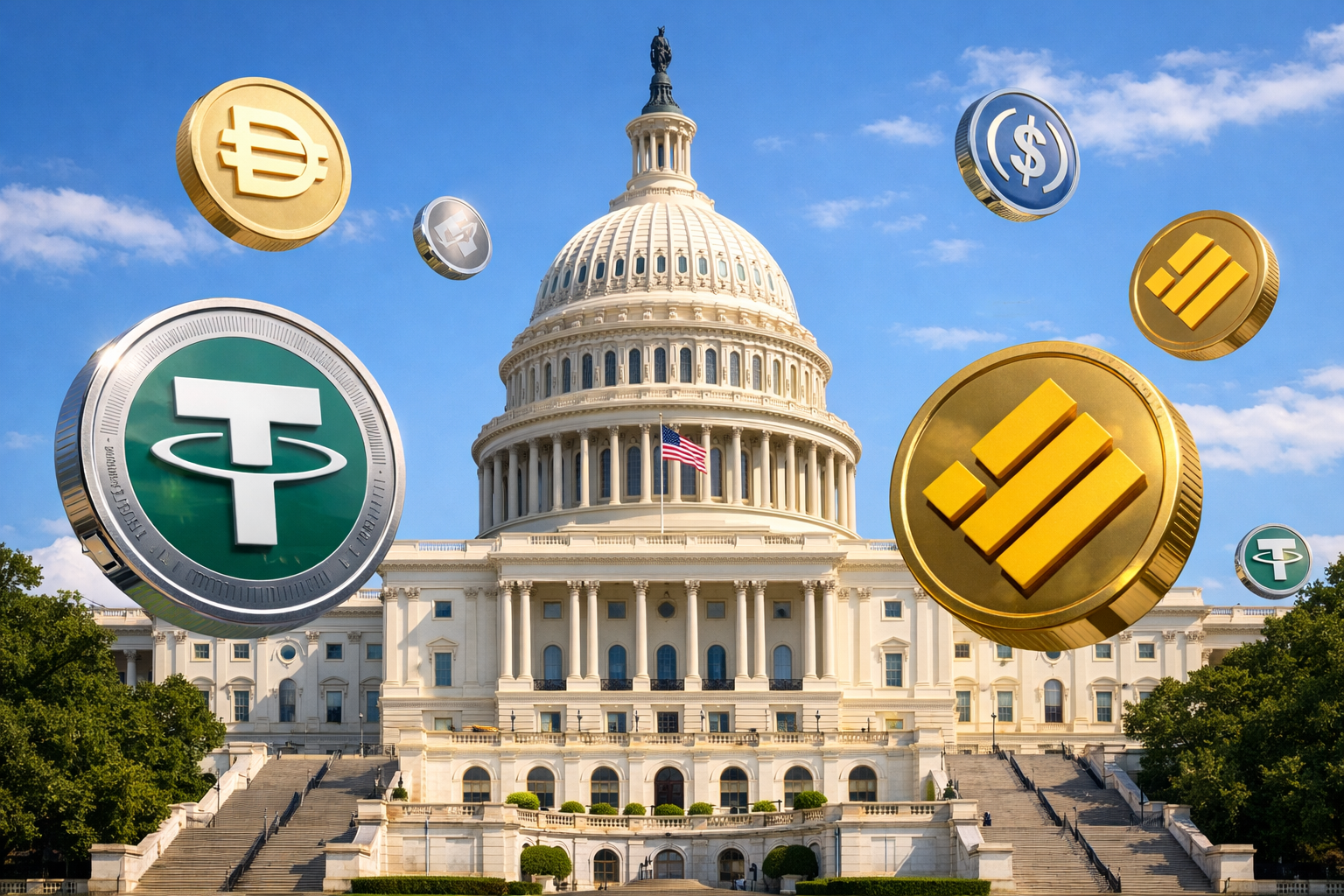
Crypto regulation in the United States is heating up as new language in the CLARITY Act proposes banning stablecoin issuers from offering yield to users simply for holding their tokens, a move aimed at preventing stablecoins from functioning like interest-bearing bank accounts. The proposal is already sending shockwaves through the crypto market, with investors reacting to the potential impact on major players tied to stablecoin ecosystems.
Stablecoin Yield Under Fire
The latest draft of the CLARITY Act would restrict companies from providing passive rewards on stablecoin balances, targeting a core feature that has helped drive adoption.
Key implications include:
- No yield for simply holding stablecoins
- Reduced incentives for users to hold regulated stablecoins
- Stablecoins positioned more like payment tools than savings vehicles
- Stronger alignment with traditional banking rules
Lawmakers appear focused on protecting the traditional financial system by ensuring stablecoins do not replicate savings accounts.
Market Reaction Hits Major Crypto Firms
The proposed rule has already impacted publicly traded crypto companies and stablecoin issuers.
Examples include:
- Circle seeing sharp declines due to its reliance on USDC-related revenue
- Coinbase stock dropping as investors reassess yield-driven income streams
These companies have built revenue models around stablecoin usage and rewards, making them especially vulnerable to regulatory changes.
Tether Could Be the Unexpected Winner
While some firms face pressure, others may benefit from the proposed restrictions.
Key takeaway:
- Tether does not share yield with users, making it less exposed to the new rules
This could strengthen Tether’s dominance in the global stablecoin market as competitors lose a key growth incentive.
DeFi May Absorb the Demand for Yield
If users can no longer earn passive rewards through regulated stablecoins, they may look elsewhere.
Potential outcomes include:
- Increased migration to DeFi platforms for higher yields
- Growth in offshore or unregulated financial products
- Expansion of decentralized lending and staking ecosystems
This shift could accelerate innovation outside of U.S. regulatory oversight.
Is Regulation Protecting Banks Over Crypto?
The proposal has sparked debate about its broader intent and impact.
Critics argue:
- The rule protects traditional banks from stablecoin competition
- It weakens compliant U.S.-based crypto firms
- It may push users toward less regulated, higher-risk environments
This raises concerns about whether regulation is achieving its intended goals.
Why This Matters
This development signals a major turning point in U.S. crypto policy:
- Stablecoins may no longer function as yield-generating financial tools
- Regulatory pressure could reshape the competitive landscape
- DeFi adoption could accelerate as users seek alternative returns
- The balance between innovation and financial protection is becoming more contested
As lawmakers push for clearer crypto regulations, the unintended consequences could redefine how and where users interact with digital assets.
- CLARITY Act Faces Critical Senate Deadline as Lawmakers Race Against August Recess
- Bitcoin ETF Pump Fake: Hacked SEC Twitter account falsely posts agency approved Bitcoin ETFs
- Florida Introduces New Bill to Establish Bitcoin and Digital Asset Reserves
- White House Clears Path for Crypto in $12 Trillion 401(k) Market, Opening Door for Mass Adoption
- U.S. SEC Staff Clarifies That Some Crypto Stablecoins Aren’t Securities
- Bitwise Files for Dogecoin ETF Amid Shifting US Regulations