










































































































































































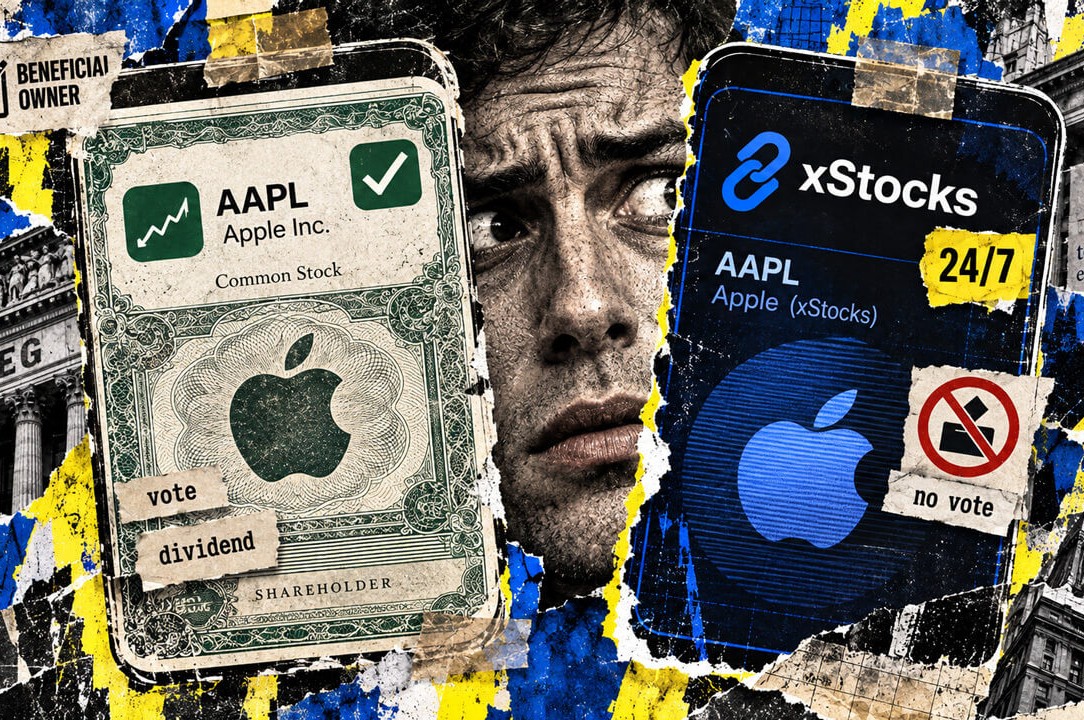
Apple, Home Depot, Boeing and ServiceNow have joined a growing group of major U.S. corporations opposing a proposed blockchain-based stock trading platform developed by cryptocurrency exchange OKX and Intercontinental Exchange (ICE), the parent company of the New York Stock Exchange (NYSE). According to a November 5, 2026, report from Fortune, 54 of the 62 companies originally selected for the platform have formally objected to having tokenized versions of their shares traded through the venture, known as OKXICE.
Including companies outside the original selection, the total number of objections has reached 62. The proposed marketplace aims to enable 24/7 trading of tokenized U.S. stocks using stablecoins, operating under a temporary exemption granted by the Securities and Exchange Commission (SEC) in September. However, concerns involving shareholder rights, market liquidity, price volatility and unauthorized associations with corporate brands are creating significant obstacles for one of Wall Street’s most ambitious blockchain initiatives.
Apple, Home Depot and Boeing Join Growing Opposition to Tokenized Stocks
The number of major corporations opposing the proposed OKXICE Tokenized Securities Venue continues to increase as companies evaluate how blockchain-based stock trading could affect their shareholders.
On November 3, Apple, Home Depot and GE Vernova appeared on an updated list of companies formally objecting to the platform.
Their additions brought the total number of objecting companies to 59, including businesses that were not part of the venue’s original proposed lineup.
On November 4, Boeing, ServiceNow and Nebius Group joined the list, raising the overall number of objections to 62.
According to Fortune, 54 of those companies were among the 62 businesses originally selected for the proposed marketplace.
This means approximately 87% of the original companies have objected, leaving just eight without a publicly disclosed objection as of November 5.
The opposition includes some of the largest companies in the United States, spanning technology, retail, financial services, manufacturing and telecommunications.
The development creates a significant challenge for OKXICE, which initially planned to introduce tokenized versions of major U.S. stocks through a blockchain-based trading platform.
Although the project has not been canceled, its potential selection of available stocks has narrowed substantially.
Microsoft, Nvidia, Amazon and JPMorgan Among Companies Rejecting the Plan
The latest objections follow earlier decisions by several major corporations to prevent unaffiliated third parties from tokenizing their shares on the proposed venue.
Companies that have appeared on the objection list include:
Technology: Apple, Microsoft, Alphabet, Nvidia, Amazon, Tesla and ServiceNow.
Financial services: JPMorgan Chase, Goldman Sachs and Wells Fargo.
Retail and consumer businesses: Home Depot, Walmart, Costco, Nike and McDonald’s.
Industrial and manufacturing: Boeing, GE Vernova and other major manufacturers.
Additional companies: Arm Holdings, Cigna Group, Nebius Group and Cerebras Systems.
The growing opposition illustrates the challenges facing blockchain companies attempting to introduce traditional financial assets into new trading environments.
Many of these corporations have spent decades operating within established stock market systems that provide standardized rules for shareholder ownership, disclosures, settlement and market oversight.
Tokenized stocks introduce an alternative infrastructure in which ownership interests can be represented and transferred through blockchain-based digital tokens.
While supporters argue that the technology could improve efficiency and market accessibility, corporate issuers are questioning how the proposed system would affect their existing shares and shareholders.
Importantly, a company’s objection to the OKXICE proposal does not necessarily mean it opposes blockchain technology or tokenization in general.
The objections apply to the specific arrangement involving unaffiliated third parties creating tokenized versions of their shares.
OKX and NYSE Owner ICE Plan 24/7 Blockchain Stock Trading
The proposed marketplace is being developed through OKXICE, a joint venture between cryptocurrency exchange OKX and Intercontinental Exchange, the company that owns the New York Stock Exchange.
The venture is structured as a 50-50 partnership between ICE and OKX’s U.S. holding company.
Former New York Governor Andrew Cuomo serves as a co-chair of the initiative.
The platform aims to allow eligible investors to trade tokenized representations of U.S. company shares around the clock rather than being limited to conventional stock exchange trading hours.
Traditional U.S. stock markets operate during established trading sessions, with additional access available through premarket and after-hours trading.
Blockchain-based securities platforms are exploring systems that could support transactions continuously, including weekends and holidays.
The OKXICE proposal involves several important components:
Tokenized equities: Digital tokens representing interests in underlying company shares.
24/7 trading: The ability to trade outside conventional stock exchange hours.
Stablecoin payments: Transactions using supported dollar-pegged digital assets.
Blockchain settlement: Recording and processing transactions through blockchain infrastructure.
Permissioned access: Participation restricted to wallets meeting the platform’s compliance requirements.
The marketplace plans to use XLayer, OKX’s blockchain network, alongside permissioned liquidity pools built using Uniswap v4 technology.
Supported payment stablecoins are expected to include USDC and USDG.
Unlike conventional stock exchanges that match buyers and sellers through centralized order books, the proposed platform would use automated market-making infrastructure to facilitate certain trades.
However, the venue has not announced a confirmed launch date.
SEC Innovation Exemption Gives Companies Right to Block Tokenization
The OKXICE proposal relies on a temporary regulatory exemption approved by the SEC on September 17, 2026.
The exemption allows qualifying platforms to facilitate certain tokenized securities transactions without registering as national securities exchanges, provided they comply with specific conditions.
The framework is intended to encourage experimentation with blockchain-based securities markets while establishing safeguards for participating companies and investors.
One of its most important provisions gives publicly traded companies the right to object when an unaffiliated third party proposes tokenizing their shares.
Under the framework, platforms must provide written notice to the company before beginning trading.
The company then has 30 calendar days after receiving the notice to submit an objection.
If the issuer objects, the platform cannot proceed with trading the unaffiliated third-party tokenized version of that company’s shares under the exemption.
Platforms must also update their public notices to reflect objections within the applicable reporting period.
These requirements have become a major obstacle for OKXICE because the majority of companies in its proposed lineup have exercised their right to object.
However, the exemption does not prevent companies from issuing their own tokenized shares or working directly with approved tokenization partners.
The distinction allows corporations to retain control over whether and how their securities are represented through blockchain technology.
Companies Raise Concerns About Stock Prices, Liquidity and Investor Confusion
Although many companies have not publicly explained their objections, some have identified concerns about the potential effects of third-party stock tokenization.
Applied Optoelectronics, a networking technology manufacturer, previously told Fortune that the regulatory framework remains relatively new and its consequences for traditional stock trading are uncertain.
The company specifically identified concerns involving share pricing, market liquidity and volatility.
These issues are important because tokenized stock platforms could create additional trading environments separate from conventional securities exchanges.
If tokenized shares trade in markets with limited liquidity, prices could temporarily differ from those on traditional exchanges.
Such differences may create opportunities for arbitrage but could also introduce additional risks for investors.
Companies may also have concerns about how blockchain-based transactions affect shareholder records, voting rights and corporate actions.
Another issue involves potential confusion about whether a company has officially endorsed a tokenized version of its stock.
Applied Optoelectronics indicated that investors might mistakenly assume the company sponsored or supported the offering simply because its shares appeared on the platform.
This concern is particularly relevant when tokenized securities are issued by independent third parties rather than the underlying companies.
The legal and financial rights attached to tokenized shares can vary depending on the structure of the product.
As a result, investors must distinguish between directly owning traditional shares and holding tokens that provide rights connected to those shares.
Coinbase, Circle and Robinhood Remain Among Eight Companies Without Objections
Despite the widespread corporate opposition, eight companies from the original OKXICE selection had not filed publicly disclosed objections as of November 5.
These companies include several businesses with established connections to cryptocurrency and blockchain technology.
| Company | Business |
|---|---|
| Coinbase | Cryptocurrency exchange and digital asset infrastructure |
| Circle | USDC stablecoin issuer |
| Robinhood | Stock and cryptocurrency trading platform |
| Strategy | Bitcoin-focused corporate treasury company |
| BitGo | Institutional digital asset custody |
| Securitize | Tokenization and digital securities infrastructure |
| Palantir | Enterprise software and data analytics |
| Super Micro Computer | Computing and server infrastructure |
The concentration of cryptocurrency-related companies among those without objections is notable.
Several of these businesses already operate within digital asset markets or provide services connected to blockchain-based finance.
However, not filing an objection does not automatically mean a company has endorsed the OKXICE platform.
It also does not guarantee that tokenized versions of its shares will be available when the marketplace launches.
Securitize and BitGo previously indicated that they did not intend to object to the proposal.
The remaining companies have not necessarily expressed public support for the initiative.
The final selection of available securities will depend on issuer responses, regulatory compliance, tokenization providers and the platform’s operational readiness.
Andrew Cuomo Says Companies May Reconsider as Tokenization Develops
Andrew Cuomo, the former New York governor and co-chair of OKXICE, has acknowledged that companies may initially hesitate to participate in unfamiliar financial market structures.
During an October 29 discussion with reporters, Cuomo suggested that some businesses prefer to observe how the technology develops before allowing their shares to be traded through tokenized markets.
His comments reflect the possibility that companies could reconsider their positions as blockchain-based securities platforms demonstrate operational performance and regulatory compliance.
However, the venture has not provided a timeline for when additional issuers might participate.
OKXICE has also declined to confirm whether the growing number of objections will delay its planned launch.
The uncertainty creates questions about whether the marketplace can attract sufficient trading activity with a smaller initial selection of securities.
For a new trading platform, liquidity is particularly important because it affects how efficiently investors can buy and sell assets.
If the venue launches with relatively few securities or limited trading participation, it may face challenges attracting the volume necessary to support competitive execution prices.
The project’s long-term success may therefore depend on building trust with both corporate issuers and investors.
Wall Street Divided Over Future of Tokenized Securities
The resistance facing OKXICE comes as major financial institutions continue exploring blockchain-based securities markets.
Tokenization has become an increasingly important area of financial technology development, with companies seeking to represent traditional assets through blockchain infrastructure.
Potential benefits include faster settlement, extended trading hours, programmable ownership and more efficient use of securities as collateral.
However, the growing list of corporate objections demonstrates that these benefits are not universally accepted as sufficient justification for changing how stocks are traded.
The Financial Times previously reported that concerns surrounding liquidity, pricing and shareholder rights were contributing to corporate hesitation.
Some market participants also worry that fragmented trading across conventional exchanges and blockchain platforms could create inconsistent pricing.
Others question whether investors would receive the same protections and shareholder rights associated with traditional securities ownership.
The debate is not simply about whether blockchain technology can represent company shares.
Instead, it concerns how tokenized securities should be issued, who should control their distribution and which regulatory protections should apply.
These questions are becoming increasingly important as traditional financial institutions and cryptocurrency companies develop competing models for blockchain-based capital markets.
Tokenized Stocks Face Different Challenges Than Tokenized Treasury Funds
The opposition to OKXICE highlights an important distinction between tokenizing traditional investment funds and tokenizing individual company shares.
Tokenized money market funds and Treasury products are often introduced through arrangements involving the asset manager or issuer.
These products can be designed specifically for blockchain-based distribution while maintaining established investment management structures.
Tokenized company shares introduce additional complications because the underlying corporation may not be involved in creating or distributing the blockchain representation.
A third-party platform could seek to tokenize shares without an established business relationship with the company whose stock is being represented.
This raises questions about corporate consent, shareholder communications and the handling of voting rights or dividends.
The SEC’s exemption attempts to address these concerns by giving companies an opportunity to object.
The response from major corporations demonstrates that issuer participation may be one of the most important factors determining how quickly tokenized equity markets develop.
For the cryptocurrency industry, the challenge will be demonstrating that blockchain-based securities trading can provide measurable benefits while preserving investor protections.
Growing Corporate Opposition Could Reshape the Future of Stock Tokenization
The addition of Apple, Home Depot, Boeing and ServiceNow to the OKXICE objection list represents a significant challenge for one of the most prominent efforts to bring U.S. equities onto blockchain infrastructure.
With 54 of the original 62 companies opposing the proposal, the venture faces the possibility of launching with a substantially smaller selection of stocks than initially planned.
The opposition does not necessarily signal the end of tokenized securities.
Major financial institutions, cryptocurrency exchanges and asset managers continue investing in blockchain-based financial infrastructure.
However, the objections demonstrate that technical innovation alone may not be enough to secure widespread corporate participation.
Companies want greater clarity about how tokenization could affect their shareholders, market valuations, liquidity and legal responsibilities.
The SEC’s temporary exemption has created a pathway for experimenting with tokenized equities, but it has also given issuers meaningful control over whether third parties can represent their shares.
For OKXICE, the next challenge will be determining whether it can proceed with the companies that have not objected while addressing the concerns raised by the broader corporate market.
For the cryptocurrency industry, the developments highlight the importance of collaboration between blockchain developers, financial institutions, regulators and publicly traded companies.
The growing resistance to OKXICE demonstrates that the future of tokenized stocks will depend not only on blockchain technology’s ability to modernize trading, but also on whether corporate issuers and investors trust the systems responsible for representing and transferring ownership.
- Charles Schwab Plans to Offer Spot Crypto Trading as US Rules Evolve Under Trump
- Fake Phantom Wallet Promoted in iOS AppStore Drains Users Funds
- Central Banks Prepare For a Tokenized Future
- Phantom Unveils Web3 Trading Platform Phantom Terminal
- Uphold Explores IPO, Targets XRP-Obsessed U.S. Crypto Market
- Pi Network to Launch Open Network on Feb 20, Pi Jumps 80%