












































































































































































































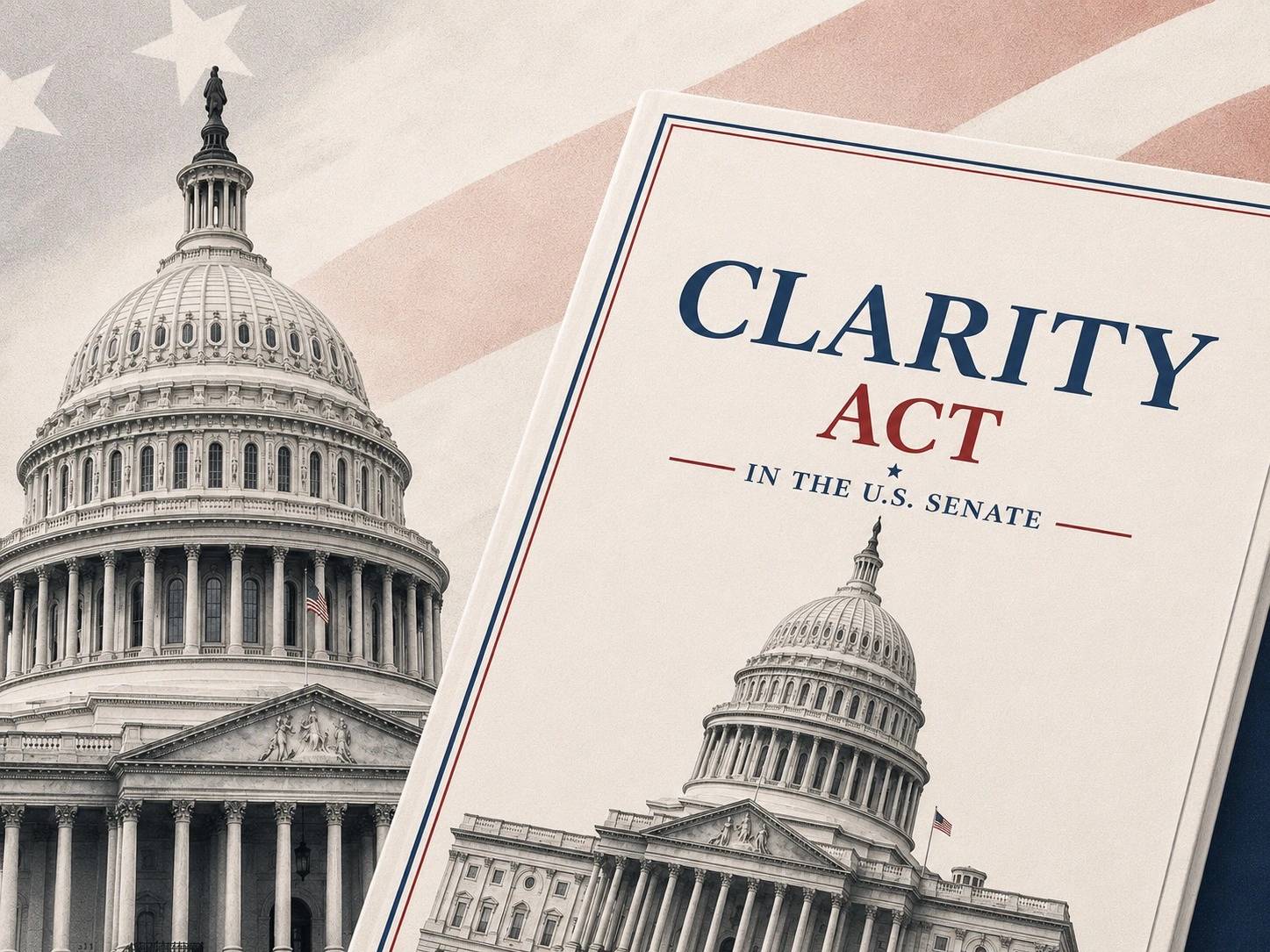
The Digital Asset Market CLARITY Act is running out of time in the U.S. Senate as lawmakers scramble to secure a procedural vote before Congress begins its August recess. Supporters of the landmark cryptocurrency market structure bill are pushing for a cloture vote to advance debate, but ongoing disagreements over ethics provisions, consumer protections, and conflicts of interest continue to threaten its progress. If the Senate fails to act before leaving Washington, the bill could face significant delays as lawmakers return to a crowded legislative calendar later this year.
The CLARITY Act is widely viewed as the most important piece of cryptocurrency legislation currently under consideration in the United States. The bill would establish clear rules defining whether digital assets fall under the jurisdiction of the Securities and Exchange Commission (SEC) or the Commodity Futures Trading Commission (CFTC), providing long-awaited regulatory certainty for exchanges, blockchain developers, and institutional investors.
Senate Faces a Narrow Window
Senate leaders have only a limited amount of time to move the legislation before the August recess begins.
To advance the bill, supporters must first secure a 60-vote cloture motion to overcome the Senate filibuster and begin formal debate. Republicans are expected to need support from at least seven Democratic senators, making bipartisan negotiations essential to the bill’s success.
Even if cloture succeeds, lawmakers would still need additional floor debate and votes before the legislation could receive final Senate approval.
Ethics Dispute Remains the Biggest Obstacle
The primary sticking point continues to be ethics provisions related to public officials’ involvement in cryptocurrency.
Several Democratic lawmakers have argued that stronger safeguards are necessary to address:
- Conflicts of interest.
- Consumer protections.
- Illicit finance concerns.
- Market integrity.
- Oversight of elected officials’ crypto holdings.
Negotiators have spent weeks attempting to reach a bipartisan compromise, but no final agreement has been announced.
Time Is Working Against the Bill
If the Senate does not begin consideration before recess, the CLARITY Act will likely compete with a much busier legislative agenda when Congress returns.
Lawmakers are expected to prioritize:
- Federal funding legislation.
- Judicial confirmations.
- National security measures.
- Midterm election issues.
Analysts warn that delaying the bill until later in the year could make passage significantly more difficult as political attention shifts toward the 2026 elections.
Industry Continues Pressing for Action
The cryptocurrency industry has strongly supported the CLARITY Act, arguing that regulatory certainty is essential for continued innovation and institutional adoption.
Major exchanges, investment firms, and blockchain companies believe the legislation would:
- Clarify SEC and CFTC jurisdiction.
- Encourage institutional investment.
- Reduce legal uncertainty.
- Strengthen U.S. competitiveness in digital assets.
Supporters also argue that clear federal rules would encourage more blockchain companies to build within the United States rather than overseas.
Regulators May Move Without Congress
Even if the Senate fails to pass the legislation before recess, crypto regulation is unlikely to come to a complete standstill.
SEC Chairman Paul Atkins has indicated the agency is prepared to continue developing crypto regulations through rulemaking if Congress does not act. While agency guidance could provide greater clarity in the short term, many industry leaders still prefer comprehensive legislation because statutory law offers greater long-term certainty than regulations that can be changed by future administrations.
What This Means for Crypto
The coming days could determine whether the United States finally moves closer to establishing a comprehensive regulatory framework for digital assets. A successful cloture vote would represent a major procedural victory and keep alive hopes of passing the CLARITY Act this year. Failure to advance the bill before the August recess, however, would likely push the debate into an increasingly crowded political calendar, reducing the chances of near-term legislative action.
For the broader Web3 industry, the CLARITY Act remains one of the most consequential pieces of crypto legislation ever considered by Congress. Clear market structure rules could accelerate institutional adoption, encourage blockchain innovation, and strengthen America’s position as a global leader in digital assets. At the same time, the bill’s uncertain path illustrates how political negotiations, ethics concerns, and legislative timing continue to shape the future of cryptocurrency regulation in the United States.
- Donald Trump Signs Executive Order Allowing Crypto Assets in 401(k)
- The FTC is reportedly investigating Meta’s VR division for antitrust violations
- MicroStrategy, Led by Michael Saylor, Faces Class Action Over Multibillion-Dollar Bitcoin Investment Loss
- SEC Declares Liquid Staking is Outside of Securities Laws in Latest Guidance Following ‘Project Crypto’ Initiative
- New Hampshire House Passes State Bitcoin Reserve Bill
- Trump Share Insights with Bitcoin Mining Execs at Mar-a-Lago