




















































































































































































































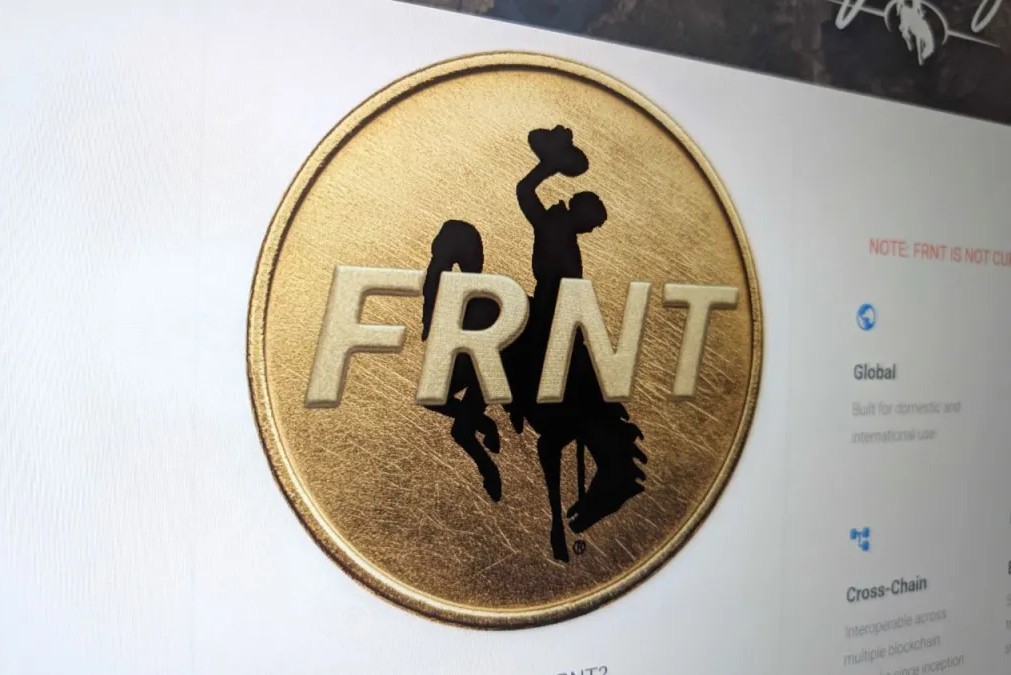
Wyoming is adding another layer of blockchain infrastructure to its state-issued stablecoin. The Wyoming Stable Token Commission has adopted Chainlink Proof-of -Reserve to provide near-real-time, onchain verification that its Frontier Stable Token, FRNT, remains fully backed by U.S. dollars and short-term U.S. Treasuries.
The move expands Wyoming’s relationship with Chainlink just weeks after the state migrated FRNT away from LayerZero and made Chainlink CCIP its exclusive cross-chain infrastructure following a security review.
FRNT’s Reserves Are Going Onchain
Traditional stablecoins typically rely on periodic attestations or examinations showing that enough reserve assets exist to back the tokens in circulation.
Wyoming wants to make that information more continuously available.
Under the new system, The Network Firm will independently examine FRNT’s reserves and circulating token supply under AICPA standards.
Chainlink Proof of Reserve will then make verified reserve information available directly onchain, reducing the information gap between traditional reporting periods.
The setup gives regulators, institutions, developers and FRNT holders another way to verify that:
FRNT circulating supply ≤ assets held in reserve
Anthony Apollo, Executive Director of the Wyoming Stable Token Commission, said the goal is to provide transparent and verifiable confirmation that FRNT remains fully backed while setting a higher standard for public-sector digital assets.
Wyoming Wants to Stop Unbacked FRNT From Being Minted
The next step could be even more significant.
Wyoming is working to adopt Chainlink Proof of Reserve Secure Mint, which can connect reserve verification directly to the token’s minting process.
Before additional FRNT can be created, the system would verify that reserves are equal to or greater than the token’s total supply.
That creates an automated safeguard:
- Reserves verified as sufficient → FRNT can be minted
- Reserves insufficient → new minting can be blocked
- Reserve information remains available onchain
- Helps protect against so-called infinite-mint attacks
An infinite-mint vulnerability can allow an attacker or compromised system to create tokens without sufficient collateral, potentially destroying confidence in a stablecoin.
Secure Mint is designed to make reserve backing part of the actual issuance process rather than something users simply have to trust will be checked later.
Wyoming Already Dropped LayerZero for Chainlink
The Proof of Reserve announcement follows a major infrastructure change for FRNT in August.
The Wyoming Stable Token Commission fully migrated FRNT from LayerZero to Chainlink’s Cross-Chain Interoperability Protocol, or CCIP, following a security review.
CCIP is now FRNT’s exclusive cross-chain infrastructure, allowing the stablecoin to move between supported blockchain networks.
According to The Block, approximately $15 billion in onchain value has migrated from LayerZero to CCIP across projects making similar infrastructure changes.
Wyoming is effectively using Chainlink for two different jobs:
CCIP → moves FRNT between blockchains
Proof of Reserve → verifies the assets backing FRNT
That gives Chainlink an increasingly central role in the technical infrastructure surrounding America’s first state-issued stable token.
America’s First State Stablecoin Is Building Differently
FRNT officially launched in January 2026, becoming the first stable token issued by a U.S. state.
The token is backed by U.S. dollars and short-term U.S. Treasuries, while income generated from those reserves helps diversify Wyoming’s state revenue and support its School Foundation Program.
Wyoming also says FRNT already exceeds the transparency requirements established under the federal GENIUS Act.
Adding automated Proof of Reserve takes the model another step by making reserve verification part of FRNT’s onchain infrastructure instead of relying exclusively on periodic financial reporting.
Wyoming Is Building a Blueprint for Government Stablecoins
Wyoming has spent years positioning itself as one of America’s most blockchain-friendly states.
FRNT is now turning that regulatory experimentation into actual financial infrastructure.
The significance extends beyond one stablecoin.
If other states or government entities eventually issue tokenized dollars, bonds or other blockchain-based financial assets, they will face the same question private stablecoin companies face today:
How can users independently verify that the assets onchain are actually backed by assets offchain?
Wyoming’s answer is increasingly automation.
Independent firms verify the reserves. Chainlink puts that verification onchain. CCIP moves the token between networks. Secure Mint could eventually prevent new FRNT from being created unless the collateral is already there.
That turns transparency from a quarterly report into part of the token’s underlying infrastructure.
Wyoming isn’t simply putting government money on a blockchain. It’s experimenting with whether the blockchain itself can help prove that government-issued digital money is actually backed.
- SEC Commissioners Peirce and Atkins Outline “Modest” Tokenized Trading Exemption Proposal
- SEC Drops Probe Into PayPal’s PYUSD Stablecoin
- Trump Appoints Meta and Nvidia CEOs to White House Tech Council to Shape AI Policy
- Bitcoin and Dogecoin Mining Don’t Violate Securities Law as SEC Gives OK to Proof-of-Work
- Biden Adviser Engages with Crypto Leaders in D.C. Roundtable
- SEC Chair Atkins Charts Pro-Innovation Path For Crypto and Tokenization Regulation