















































































































































































































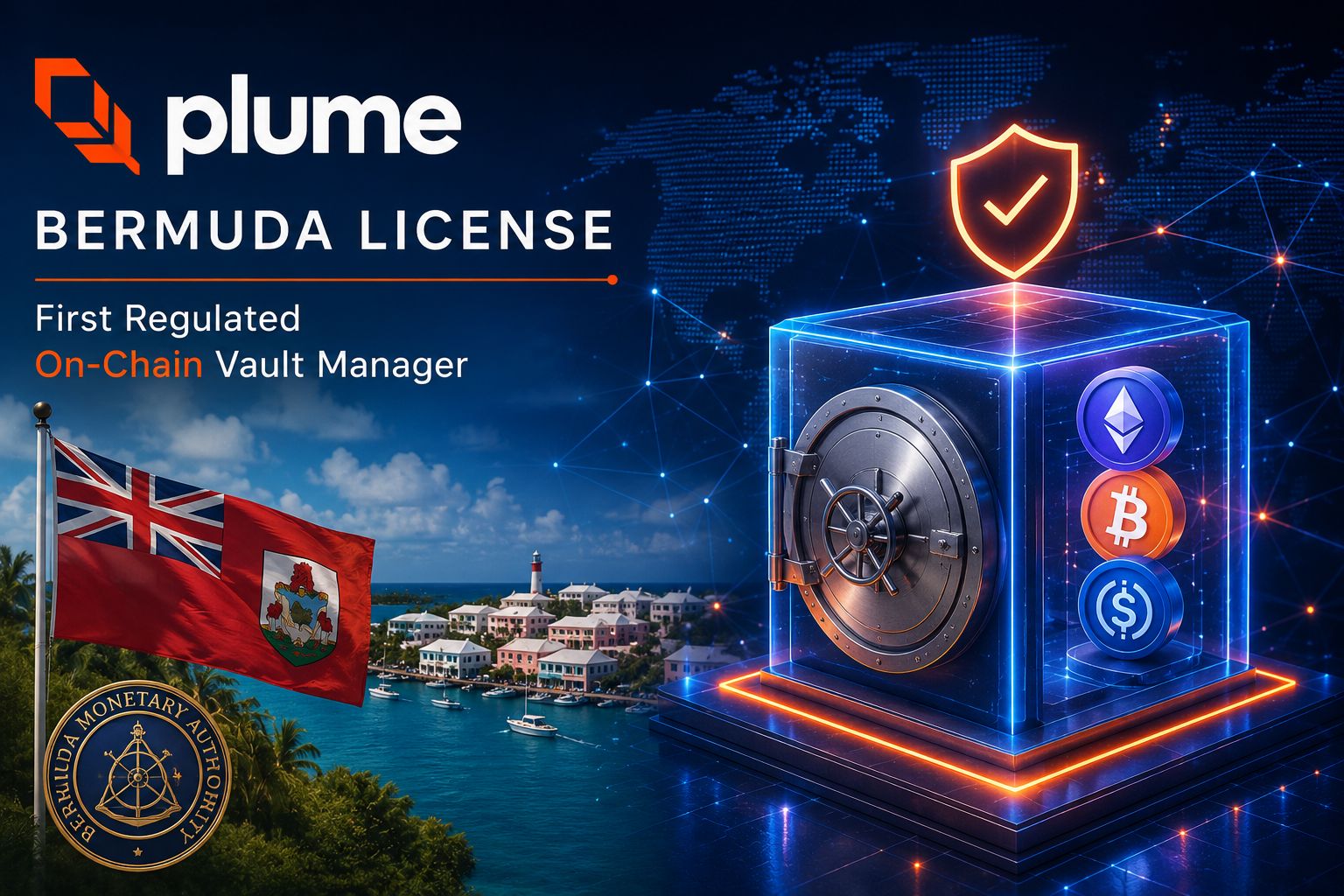
Real-world asset blockchain Plume has secured a Class M Digital Asset Business License from the Bermuda Monetary Authority (BMA), allowing the company to operate what it describes as the world’s first regulated on-chain vault manager. The move marks another major step forward for the rapidly growing tokenized asset sector.
What the License Actually Allows
The license was granted to Kimber Digital Assets Bermuda ISAC Ltd. (KDAB), Plume’s Bermuda-based subsidiary created specifically for regulated tokenized financial products. Under the approval, the company can now create and distribute tokenized vault products while operating under Bermuda’s digital asset regulatory framework.
According to reports, the vault products will follow AML and KYC compliance standards similar to Bermuda’s stablecoin regulations, giving institutional investors a regulated pathway into on-chain yield products and tokenized assets. The company plans to launch regulated treasury and yield-focused vaults tied to tokenized U.S. Treasuries and other real-world assets in the coming weeks.
Why Bermuda Has Become a Crypto Hub
Bermuda has quietly become one of the most important regulatory jurisdictions for digital assets over the past several years. The country introduced its Digital Asset Business Act back in 2018, creating one of the earliest formal licensing systems for blockchain companies.
Major crypto firms including:
- Coinbase
- Circle
- Kraken
have all previously secured Bermuda licenses under the same framework.
Unlike many jurisdictions still debating crypto definitions and regulations, Bermuda has focused on building structured compliance systems designed to attract institutional capital while maintaining oversight standards.
Plume Is Betting Big on Real-World Asset Tokenization
Plume is a Layer 1 blockchain built specifically around the tokenization of real-world assets (RWAs), one of the fastest-growing sectors in crypto. Since launching in 2024, the network claims partnerships with more than 150 RWA-focused companies and protocols.
The company is also partnering with Centrifuge and Anemoy for some of its treasury vault infrastructure. The vaults are expected to provide exposure to regulated yield-generating products primarily backed by tokenized U.S. Treasuries and low-risk credit instruments. This reflects a larger industry shift where blockchain projects are increasingly focusing less on speculative tokens and more on regulated financial infrastructure tied to real-world assets.
Why This Matters for Institutional Investors
One of the biggest obstacles preventing traditional financial firms from entering DeFi has been compliance risk. Many institutions cannot access unregulated on-chain products due to internal legal and regulatory restrictions.
By operating under Bermuda’s licensed framework, Plume is attempting to solve that issue by combining:
- On-chain infrastructure
- Smart contract-based vaults
- Traditional compliance standards
- Institutional-grade oversight.
The broader goal is to create regulated pathways into tokenized finance that institutions can legally and operationally participate in.
- Dubai Building 17-Story Crypto Tower with 150,000 Sq Ft For Blockchain Firms
- Ripple Concludes RLUSD Powered Kenya Drought Insurance Pilot
- Japan’s Next Prime Minister Announces Pro-Blockchain and NFT Policy Plans
- UK Crime Network, Worth Billions, Used Crypto to Funnel Drug Cash to Russia
- VALR Expands Crypto Access Across Africa With Mobile Money Integration
- Ukraine Plans to Create National Bitcoin Reserve