









































































































































































































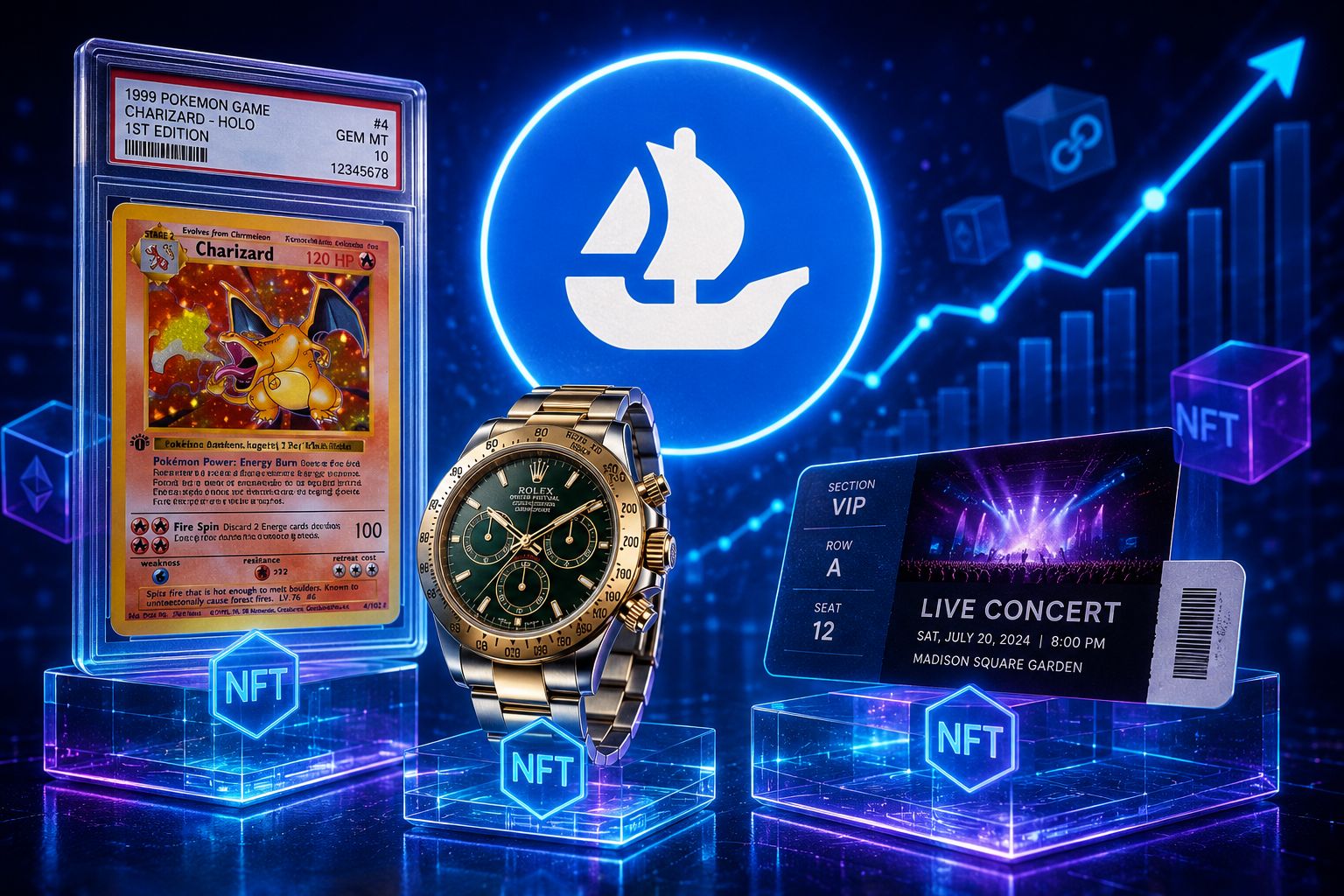
The next NFT wave may look very different from the JPEG speculation cycle of 2021. According to OpenSea CMO Adam Hollander, the future of NFTs is shifting toward tokenized real-world assets like Pokémon cards, Rolex watches, luxury collectibles, and event tickets. Rather than focusing purely on digital art and profile pictures, the industry is increasingly moving toward NFTs as a way to verify ownership of real-world items and experiences.
NFTs Are Evolving From Speculation to Infrastructure
During the first NFT boom, most attention centered around:
- Profile picture collections
- Digital art speculation
- Celebrity hype cycles
Now the conversation is shifting toward utility and ownership infrastructure. According to Hollander, tokenized assets like:
- Trading cards
- Luxury watches
- Sneakers
- Event tickets
- Collectibles
could become the next major growth category for NFTs because blockchain provides:
- Verifiable ownership
- Transparent provenance
- Transferability
- Fraud reduction.
Instead of asking whether an item is “real,” blockchain records can potentially prove authenticity instantly.
Pokémon Cards and Collectibles Are a Major Focus
One of the most notable examples mentioned was the growing market around tokenized Pokémon cards. The collectible card market has exploded in recent years, but it continues facing problems tied to:
- Counterfeits
- Authentication disputes
- Illiquid secondary markets
- Storage and insurance issues.
Tokenization could solve many of those problems by linking physical collectibles to on-chain ownership records.
The same logic applies to:
- Sports cards
- Rare sneakers
- Luxury handbags
- Watches like Rolexes
- High-end collectibles.
Instead of physically moving items constantly between buyers and sellers, ownership could potentially trade instantly while the underlying asset remains securely stored.
Luxury Goods and Secondary Markets Could Benefit Most
Luxury resale is another category OpenSea believes is primed for blockchain integration.
Markets for:
- Rolex watches
- Designer fashion
- Rare collectibles
already rely heavily on authenticity verification and provenance tracking. Blockchain systems could create immutable ownership histories, making fraud and fake goods significantly harder to circulate. This is especially important as the luxury resale market continues growing globally.
Several startups and platforms are already experimenting with:
- NFC-enabled physical products
- Digital authenticity certificates
- Blockchain-linked inventory systems
- On-chain collectible vaulting.
Ticketing May Become One of the Biggest NFT Use Cases
Beyond collectibles, event ticketing is increasingly viewed as one of the strongest real-world NFT applications. Traditional ticket systems continue struggling with:
- Scalping
- Fraud
- Counterfeit tickets
- Limited resale transparency.
NFT-based ticketing systems can potentially:
- Verify authenticity instantly
- Limit scalping through programmable resale rules
- Enable royalty payments for creators and venues
- Create digital collectibles tied to live experiences.
Major brands, sports organizations, and entertainment companies have already tested blockchain-based ticketing pilots over the past two years.
The NFT Market Is Smaller—But More Mature
The comments also reflect how much the NFT industry has changed since its peak. NFT trading volume today is still dramatically below 2021 highs, but the ecosystem is becoming:
- More infrastructure-focused
- Less hype-driven
- More connected to real-world commerce.
Instead of purely speculative digital collectibles, builders are now focusing on:
- Ownership systems
- Authentication layers
- Loyalty and membership programs
- Real-world asset tokenization.
This mirrors a larger trend happening across crypto where attention is shifting from hype cycles toward financial and technological infrastructure.
The Bigger Picture
The next NFT cycle may not be driven by cartoon avatars—it may be driven by real-world ownership moving on-chain. If tokenization scales successfully, NFTs could become less about speculation and more about:
- Proof of ownership
- Digital identity for assets
- Transfer infrastructure for collectibles and commerce.
That changes the narrative entirely. Instead of asking: “Why would someone buy a JPEG?” The industry is now asking: “Why wouldn’t ownership records eventually live on-chain?” And if companies like OpenSea are right, tokenized collectibles, luxury goods, and ticketing may become the bridge that finally brings NFTs into mainstream everyday use.
- Co-Museum & Azuki Reveal ‘Golden Skateboard’ Signed by Tony Hawk
- Lamborghini to Launch Digital Temerario GT3 in Wilder World Metaverse
- The $ANIME Token Launch and What Azuki Holders Need to Know
- Coinbase Unveils New AI-Driven ‘Instamint’ NFT Creation Tool
- Top NFT Brand Pudgy Penguins to Release $PENGU Token
- NFT Trader Takes Loss of $10M on Selling a Single CryptoPunk NFT