



































































































































































































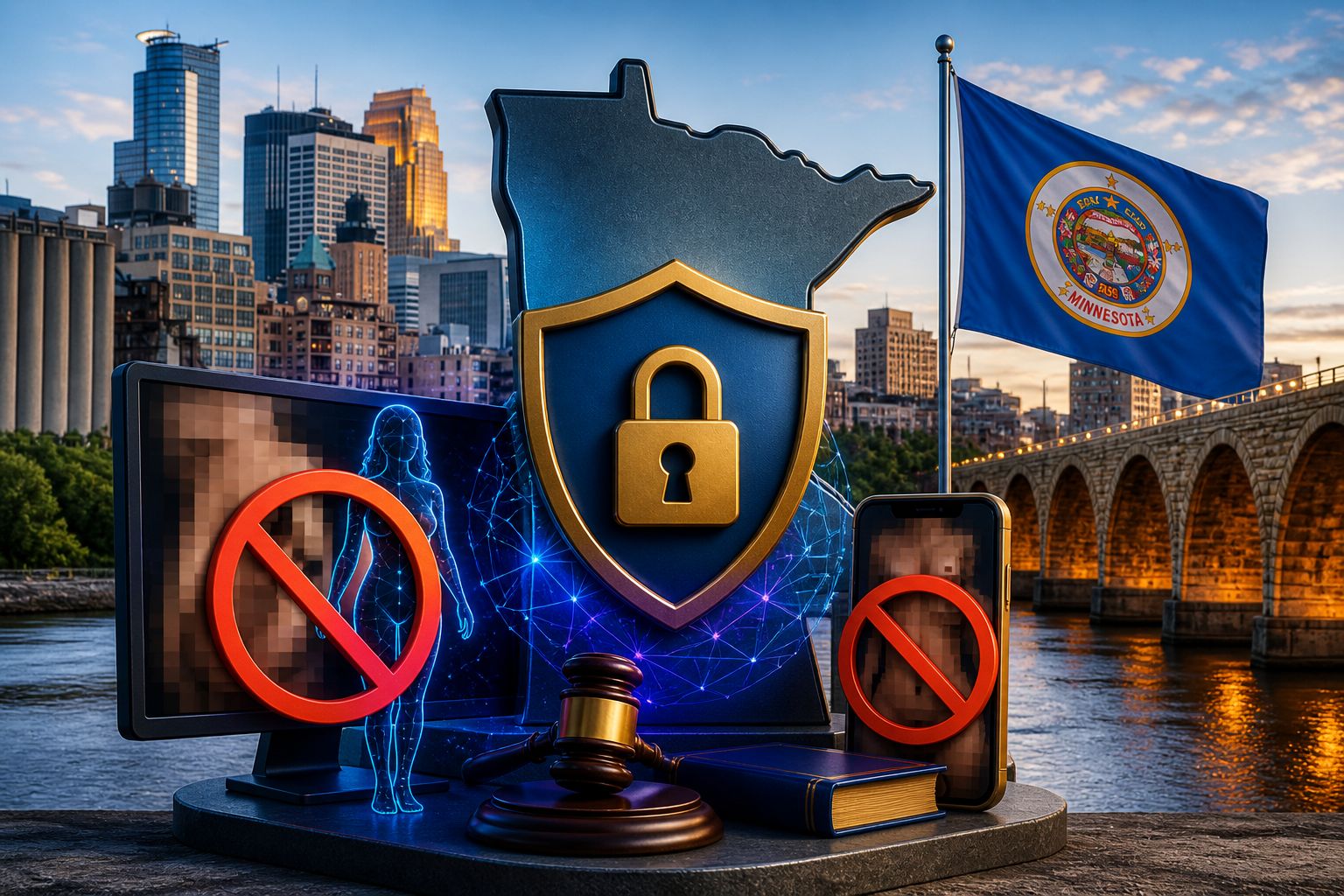
Lawmakers in Minnesota are taking a major step against harmful AI use, advancing legislation that would ban apps designed to generate non-consensual nude images—often referred to as “nudification” tools.
Nation’s First Ban Targets “Nudification” Apps
The proposed law would make it illegal to access, use, or distribute software that creates fake explicit images of real people without consent. It also bans advertising or promoting these tools, directly targeting the growing ecosystem of AI apps used to generate deepfake nudes. If fully enacted, Minnesota would become the first U.S. state to ban this type of AI technology at the source—focusing not just on sharing harmful content, but preventing its creation altogether.
Strong Bipartisan Support Signals Urgency
The legislation has moved quickly through the state government with overwhelming bipartisan backing:
- Passed the House by a 132–1 vote
- Passed the Senate unanimously (65–0)
- Expected to head to the governor’s desk for final approval
This level of support shows how seriously lawmakers are treating the issue, especially as AI-generated abuse becomes more widespread.
Victims Given Legal Power to Fight Back
Beyond banning the tech, the bill also gives victims new legal protections. Individuals targeted by these AI-generated images would be able to:
- Sue creators or platforms responsible
- Seek damages for harm caused
- Hold companies accountable for enabling the technology
This shifts enforcement from reactive to proactive—giving victims tools to fight back directly.
A Response to the Rise of AI-Driven Exploitation
“Nudification” apps have exploded in popularity, allowing users to turn normal photos into explicit images in seconds—often targeting women and minors without consent. Lawmakers argue that existing laws, focused on distribution or harassment—don’t go far enough. This bill aims to stop the harm before it starts, rather than chasing it after it spreads online.
The Bigger Picture
Minnesota’s move signals a new phase in AI regulation: going after the tools, not just the outcomes. As generative AI becomes more powerful, governments are beginning to draw hard lines around misuse—especially when it intersects with privacy, consent, and exploitation. If this law passes, it could set a national precedent, pushing other states—and potentially federal regulators—to follow with similar bans.
- Polymarket Gets CFTC Approval for Regulated U.S. Trading Access
- Alabama State Auditor Calls to Establish Bitcoin Reserve
- Sony Seeks National Banking Charter to Offer Crypto, Stablecoin Services
- SEC’s Gensler Won’t Reveal His View on Trump’s Bitcoin Reserve, Reiterates Bitcoin Isn’t a Security
- Uniswap Labs Hit with $175K Fine by CFTC For DeFi Violations
- SEC Opens Comments on Options Trading for BlackRock & Cboe Spot Bitcoin ETFs