







































































































































































































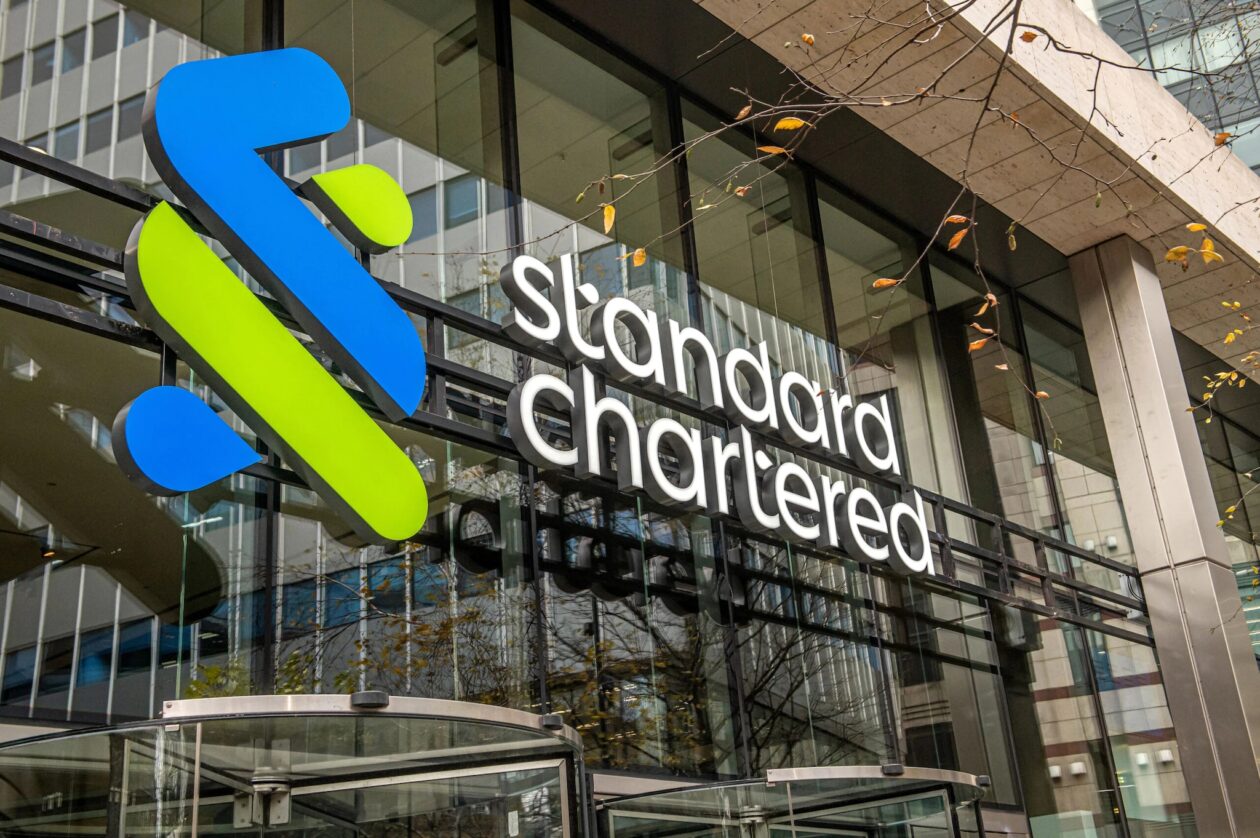
Standard Chartered has become the first Global Systemically Important Bank (G-SIB) to provide institutional clients with direct access to Circle’s USDC, allowing businesses to mint and redeem the world’s second-largest stablecoin directly through the bank. The landmark partnership eliminates the need for institutions to open separate accounts with Circle, integrating stablecoin infrastructure into Standard Chartered’s existing banking platform. The launch marks one of the strongest signs yet that traditional global banks are embracing stablecoins as core financial infrastructure rather than treating them as niche crypto products.
Initially launching through the bank’s Dubai International Financial Centre (DIFC) operations, the new service is designed for institutional clients seeking regulated access to blockchain-based settlement, treasury management, and liquidity solutions. Standard Chartered says the rollout represents the first phase of a broader global stablecoin strategy that will expand into additional markets as regulatory approvals are secured.
Institutions Can Mint and Redeem USDC Through Their Bank
The new capability allows eligible institutional clients to create and redeem USDC directly within Standard Chartered’s banking ecosystem.
Instead of maintaining separate relationships with Circle, institutions can now access stablecoin services through a single onboarding process while remaining inside the bank’s existing compliance, governance, and risk management framework.
The service is designed to support institutional use cases including:
- On-chain settlement.
- Treasury management.
- Liquidity management.
- Digital asset operations.
- Future payment infrastructure.
By combining traditional banking with blockchain infrastructure, Standard Chartered aims to simplify how institutions move value between fiat currencies and digital assets.
A First for a Global Systemically Important Bank
While several financial institutions have entered the stablecoin market, Standard Chartered is the first Global Systemically Important Bank to offer integrated USDC minting and redemption services.
Global Systemically Important Banks are among the world’s largest and most heavily regulated financial institutions because of their importance to the global financial system. Standard Chartered’s participation signals that stablecoins are increasingly being viewed as legitimate financial infrastructure capable of supporting institutional capital markets rather than existing solely within the crypto industry.
The designation also reinforces growing confidence among regulators that properly governed stablecoin services can coexist within traditional banking systems.
Dubai Serves as the First Launch Market
The service is initially available through Standard Chartered’s operations in the Dubai International Financial Centre (DIFC).
Dubai has rapidly emerged as one of the world’s leading jurisdictions for regulated digital asset businesses, making it an ideal testing ground for institutional stablecoin services. Standard Chartered stated that additional markets will follow as local regulatory approvals become available.
The rollout further strengthens the United Arab Emirates’ position as a global hub for blockchain innovation and regulated digital finance.
Stablecoins Continue Moving Into Traditional Banking
The partnership reflects accelerating institutional demand for regulated stablecoin infrastructure.
Banks, asset managers, payment providers, and multinational corporations are increasingly exploring stablecoins for:
- Cross-border payments.
- Treasury operations.
- Digital asset settlement.
- Liquidity management.
- Tokenized financial markets.
Rather than building independent crypto infrastructure, many institutions now prefer integrating stablecoins into existing banking relationships where regulatory oversight, compliance, and operational controls already exist.
Circle Strengthens Institutional Adoption
For Circle, the partnership represents another major step toward expanding USDC’s role within global finance.
Circle Chief Commercial Officer Kash Razzaghi said the collaboration gives institutions trusted access to blockchain-enabled financial markets while maintaining the governance and compliance standards expected by large financial organizations.
The announcement follows a series of recent institutional developments surrounding USDC, including new custody partnerships and growing adoption across tokenized finance, payments, and settlement infrastructure.
Traditional Finance and Blockchain Continue Converging
Standard Chartered’s latest announcement adds to a growing list of major financial institutions embracing blockchain technology.
Over the past several months, firms including BNY, Robinhood, New York Life Investment Management, Ripple, Fidelity, and JPMorgan have all expanded their blockchain strategies through tokenized assets, stablecoins, custody services, or on-chain settlement solutions.
Rather than competing against digital assets, many of the world’s largest financial institutions are now integrating blockchain technology directly into their existing products and services.
- Shiba Inu Partners with Chainlink to Strengthen DeFi Strategy
- U.S. Bank Tests Custom Stablecoin Issuance on Stellar Network
- Soneium Partners with LINE to Integrate Web3 Mini-Apps
- Amazon, Walmart, and Expedia Consider Issuing Stablecoins to Sidestep Costly Card Fees
- Franklin Templeton, Citigroup Turn to Solana for Blockchain-Based Financial Services
- Solana Dev Unveil Quantum-Resistant Vault to Protect User Funds