


















































































































































































































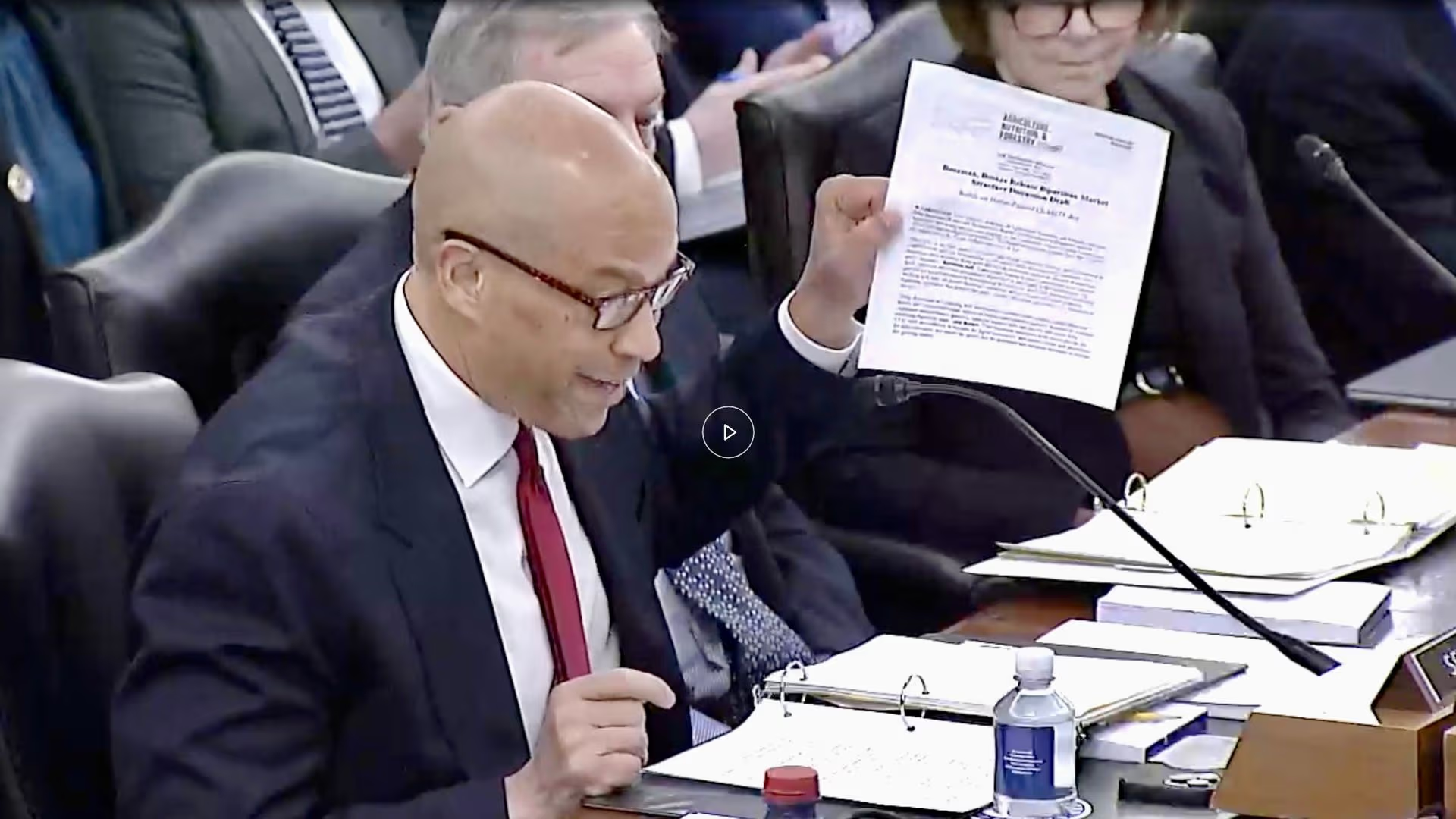
The U.S. Senate Agriculture Committee moved forward its portion of a long-awaited digital asset market structure bill on Jan. 29, 2026, marking the first time comprehensive crypto-related legislation has advanced in the Senate this year. However, the measure passed along party lines, underscoring deep partisan disagreement that could complicate its path to final passage.
The legislation — part of the broader effort often referred to as the CLARITY Act in Congress — would grant the Commodity Futures Trading Commission (CFTC) expanded authority to regulate spot markets for digital asset commodities like Bitcoin and Ether, potentially creating a federal framework for U.S. crypto markets rather than leaving oversight to a patchwork of enforcement actions.
Republicans on the Agriculture Committee voted unanimously to advance the bill, while Democrats opposed it, notably rejecting the measure in its current form due to concerns that it lacks key protections — including stronger provisions for decentralized finance (DeFi) oversight and ethics measures aimed at preventing political figures and families from profiting off crypto ventures.
Senator Cory Booker (D-NJ), the top Democrat on the committee, said the bill was “close to the finish line” but criticized its exclusion of broader safeguards, arguing that additional protections were needed before it could earn bipartisan support.
With the Agriculture Committee portion approved, the bill now moves toward consideration by the full Senate — but only after a companion version from the Senate Banking Committee is debated and passed. That panel’s version has been delayed amid ongoing negotiations between financial institutions and crypto firms over contentious issues, such as whether crypto platforms should be allowed to pay interest or rewards on stablecoins — a sticking point for banks worried about deposit flight and systemic risk.
The lack of bipartisan support in the Agriculture Committee highlights the challenges facing comprehensive crypto legislation in 2026. While the House passed its own crypto-related bill in 2025, the Senate still needs at least seven Democratic votes to overcome procedural hurdles and deliver a final bill to President Donald Trump’s desk for signature.
The Agriculture Committee’s action marks a key procedural milestone, but the legislation’s future remains uncertain as lawmakers continue to negotiate compromises that might secure broader backing for a unified U.S. digital asset regulatory framework.
- SEC Clarifies That Many Crypto Staking Services Aren’t Securities
- SEC Approves Two Spot Ethereum ETFs for NYSE Listing
- President Trump and Family Accused by Democrats of Profiting From Crypto Schemes, Foreign Influence
- US DOJ Scraps Crypto Unit as Trump Loosens Digital Oversight
- U.S. SEC Staff Clarifies That Some Crypto Stablecoins Aren’t Securities
- Illinois May Become First U.S. State with an Official Bitcoin Reserve