




















































































































































































































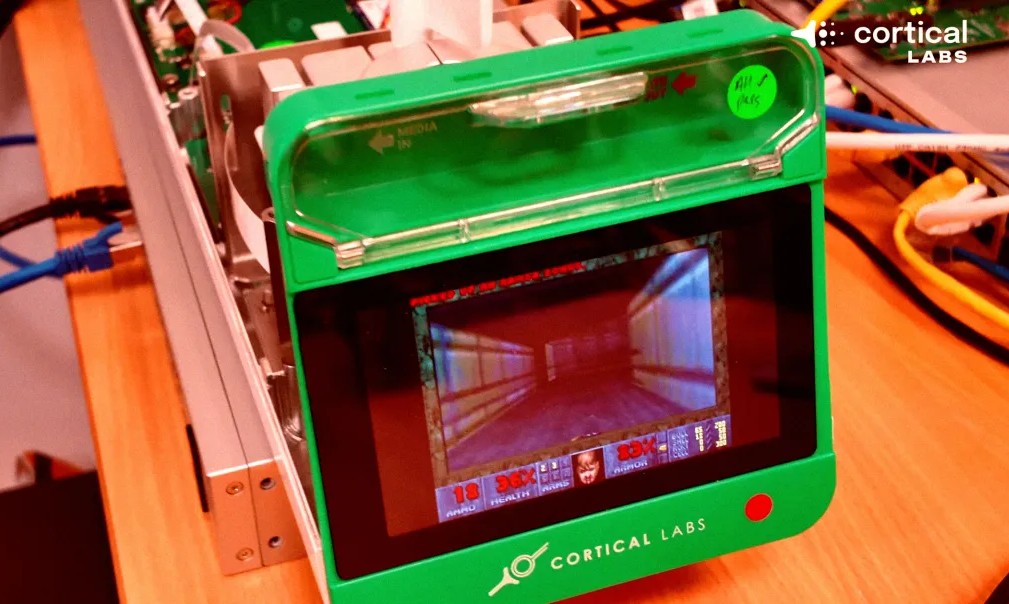
Researchers have demonstrated a remarkable new form of computing by teaching lab-grown human brain cells connected to a computer chip to play the classic video game Doom. The experiment, conducted by Australian biotech company Cortical Labs, highlights the potential of “biological computers” that combine living neurons with traditional silicon hardware.
The system—known as CL1—contains roughly 200,000 living human neurons grown on a silicon microchip. These neurons are kept alive with nutrients while electrical signals allow them to communicate with the computer hardware and interact with digital software.
From Pong to Doom
The research builds on earlier experiments where Cortical Labs taught clusters of neurons to play the classic arcade game Pong, a much simpler two-dimensional game. The move to Doom represents a significant leap in complexity because the game requires navigating a 3-dimensional environment, identifying enemies, and making multiple types of decisions in real time.
To make the game playable for the neurons, engineers translated the visual information from the game into patterns of electrical stimulation. These signals were delivered to the neurons, which responded with their own electrical activity. The system then interpreted those responses as actions in the game—such as moving the character or firing a weapon.
For example:
One neural firing pattern triggers the character to shoot.
Another pattern may cause the character to move or turn.
Through feedback and repeated interaction, the neurons gradually adapt their firing patterns, demonstrating basic learning behavior.
Not Exactly a Pro Gamer
Despite the impressive milestone, the biological computer is still far from mastering the game. Researchers say the neural system currently plays Doom like a beginner who has never used a computer before.
The neurons can detect enemies and occasionally shoot or move effectively, but they also fail frequently and often die quickly in the game. Still, the ability to learn and improve through feedback demonstrates adaptive real-time learning, a key milestone for biological computing.
A New Kind of “Wetware” Computer
This technology falls into a category sometimes called “wetware computing,” where living biological cells are integrated with electronic systems to process information. Unlike traditional silicon processors that operate in binary states, neurons communicate through complex electrical patterns and connections, potentially offering new forms of computation.
Researchers believe these hybrid systems could one day lead to breakthroughs in areas such as:
Energy-efficient artificial intelligence
Brain-computer interfaces
Advanced robotics
Neurological research and drug development
The CL1 platform even allows developers to experiment with the system using a programming interface, potentially opening the door to new biological computing applications.
Why This Matters
Teaching brain cells to play Doom may sound like a novelty, but it represents a deeper step toward blending biological intelligence with digital technology. If scientists can continue improving the interface between living neurons and computers, future systems could perform complex tasks far beyond video games—potentially creating highly efficient, adaptive computing systems inspired by the human brain.
For now, the neurons may not be winning any gaming tournaments. But their ability to learn and interact with software suggests a future where biology and computing evolve together into entirely new forms of technology.
- Richest YouTube Star MrBeast’s Firm Files Trademark With Crypto Ambitions
- Tesla’s Optimus Bot Makes a Scene at The Robotaxi Event, Robovan Revealed
- Sui Gears Up to Launch Web3 Gaming Device, Slated For 2025 Release
- T-Mobile Parent Company Deutsche Telekom Ventures into Bitcoin Mining with Renewable Energy
- Meta Revives Stablecoin Plans With New 2026 Push, Focus on Regulatory Compliance
- Ledger Rolls Out Enterprise Mobile App, Adds TRON Support For Stablecoin Transactions