












































































































































































































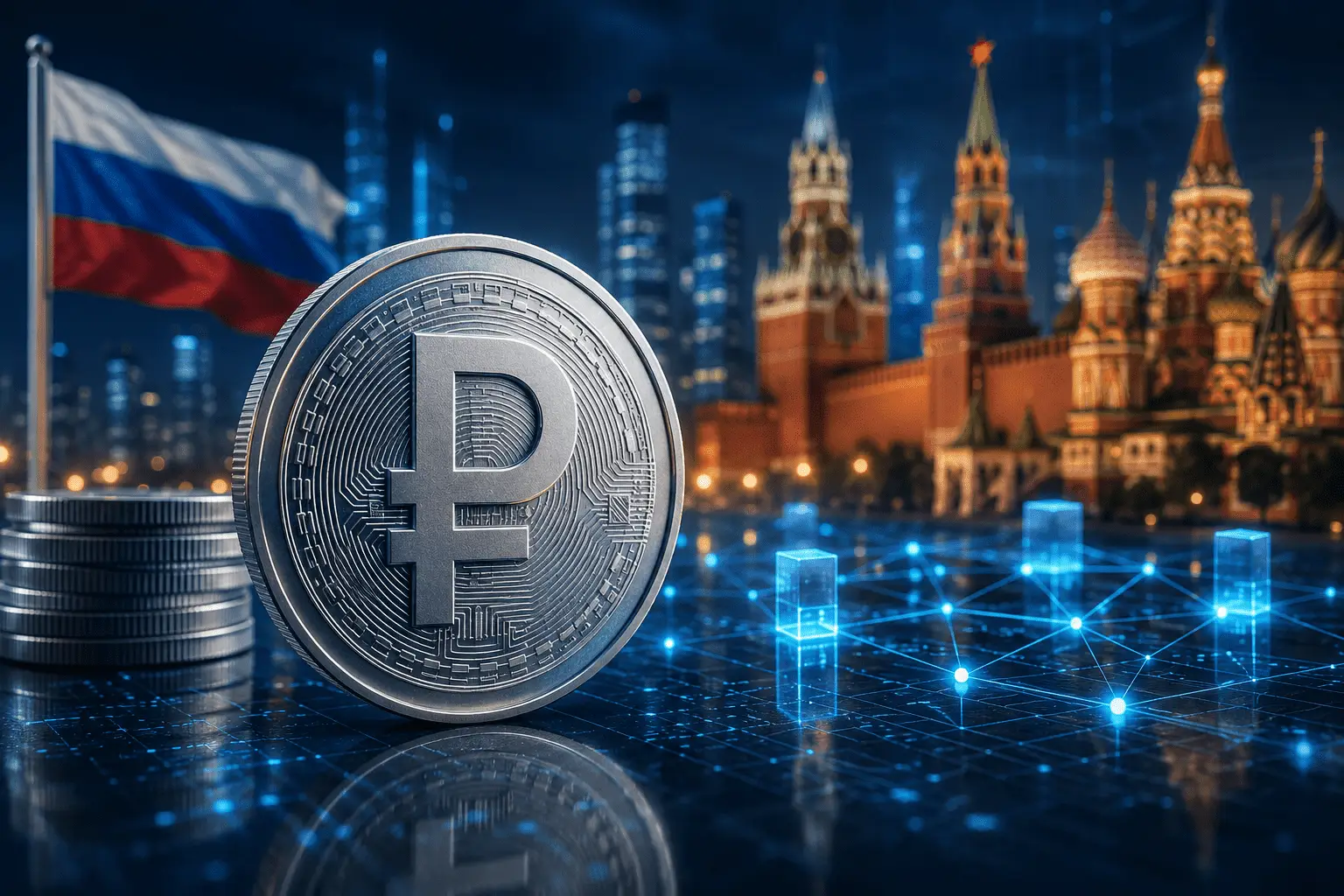
Russia’s Central Bank says “everything is ready” for the nationwide rollout of the digital ruble, with the country’s largest banks and retailers set to begin supporting the central bank digital currency (CBDC) on September 1, 2026. Speaking at the Bank of Russia Financial Congress, Governor Elvira Nabiullina confirmed that the technological infrastructure has been completed and that systemically important banks are prepared to begin offering digital ruble wallets, payments, and transfers to millions of customers. The announcement marks one of the largest CBDC deployments in the world and represents a major step in Russia’s effort to modernize its domestic payment system.
Alongside the digital ruble rollout, the Bank of Russia also revealed it is actively discussing the use of stablecoins for international settlements. However, officials emphasized that stablecoins would complement—not replace—the digital ruble, which remains the country’s primary digital currency initiative.
Major Banks and Retailers Ready for Launch
Beginning September 1, Russia’s systemically important banks will be required to support digital ruble services for customers.
Users will be able to:
- Open digital ruble wallets.
- Transfer digital rubles.
- Pay merchants using the CBDC.
- Conduct everyday financial transactions through participating banks.
Large retailers will also begin accepting digital ruble payments, with additional banks and smaller businesses joining the program in phases through 2028. The rollout is designed to gradually integrate the CBDC into Russia’s financial system while giving businesses time to upgrade payment infrastructure.
Digital Ruble Will Exist Alongside Cash and Bank Deposits
Russian officials continue emphasizing that the digital ruble is not replacing traditional money.
Instead, it will become a third form of the Russian ruble, circulating alongside physical cash and commercial bank deposits. Individuals will remain free to decide whether they want to use digital rubles, and all transactions for consumers will initially be free of charge.
Governor Nabiullina said the central bank intends to continue improving the platform to ensure it becomes convenient for both consumers and businesses.
Commercial Banks May Eventually Host Digital Wallets
One notable update from the Financial Congress involved how digital wallets may be managed in the future.
Currently, digital ruble wallets are hosted directly by the Bank of Russia. However, Nabiullina revealed regulators are exploring whether commercial banks could eventually host customer wallets themselves, making the system more integrated with traditional banking services.
The proposal remains under discussion but could significantly expand how financial institutions participate in Russia’s CBDC ecosystem.
Stablecoins Could Support International Payments
Beyond the digital ruble, Russian regulators are also evaluating the role of stablecoins in cross-border finance.
According to Nabiullina, the central bank is discussing stablecoins for international settlements, particularly as Russia continues seeking alternative payment mechanisms following years of international sanctions.
Officials stressed, however, that stablecoins are not being considered for widespread domestic use and are viewed only as a supplement to the digital ruble rather than a competing payment system.
New Crypto Regulations Are Still Being Developed
Russia’s broader cryptocurrency framework remains under development.
Lawmakers have postponed additional readings of comprehensive crypto legislation that will establish new rules governing digital asset markets. Officials are also considering introducing a 48-hour cooling-off period for certain cryptocurrency transfers involving inexperienced investors as part of future consumer protection measures.
According to the Bank of Russia, the proposed delay is intended to reduce fraud and protect retail investors without affecting licensed trading platforms or brokerage services.
Public Adoption Remains Uncertain
Although the technology is ready, consumer demand remains one of the biggest challenges.
Recent surveys indicate many Russians still do not understand why they would need a digital ruble in addition to existing bank accounts and cash. Polling also shows only a small percentage of workers would voluntarily choose to receive their salaries entirely in digital rubles.
Bank officials acknowledge that long-term adoption will depend on making the system simple, useful, and convenient for everyday transactions rather than relying solely on government mandates.
- Dubai Regulator Orders KuCoin to Halt Unlicensed Crypto Services
- Australian Solana Treasury Buys Over 200 Million PUMP Tokens
- Pro-Israel Hackers Burn $90 Million Stolen From Iran Exchange Nobitex
- Bahamas Passes Crypto Law Designed to Prevent FTX, Terra Disasters
- Dubai Police Partners With Cardano Foundation to Prevent Crime
- Argentina Opposition Threatens to Remove President After Libra Token Scam