




















































































































































































































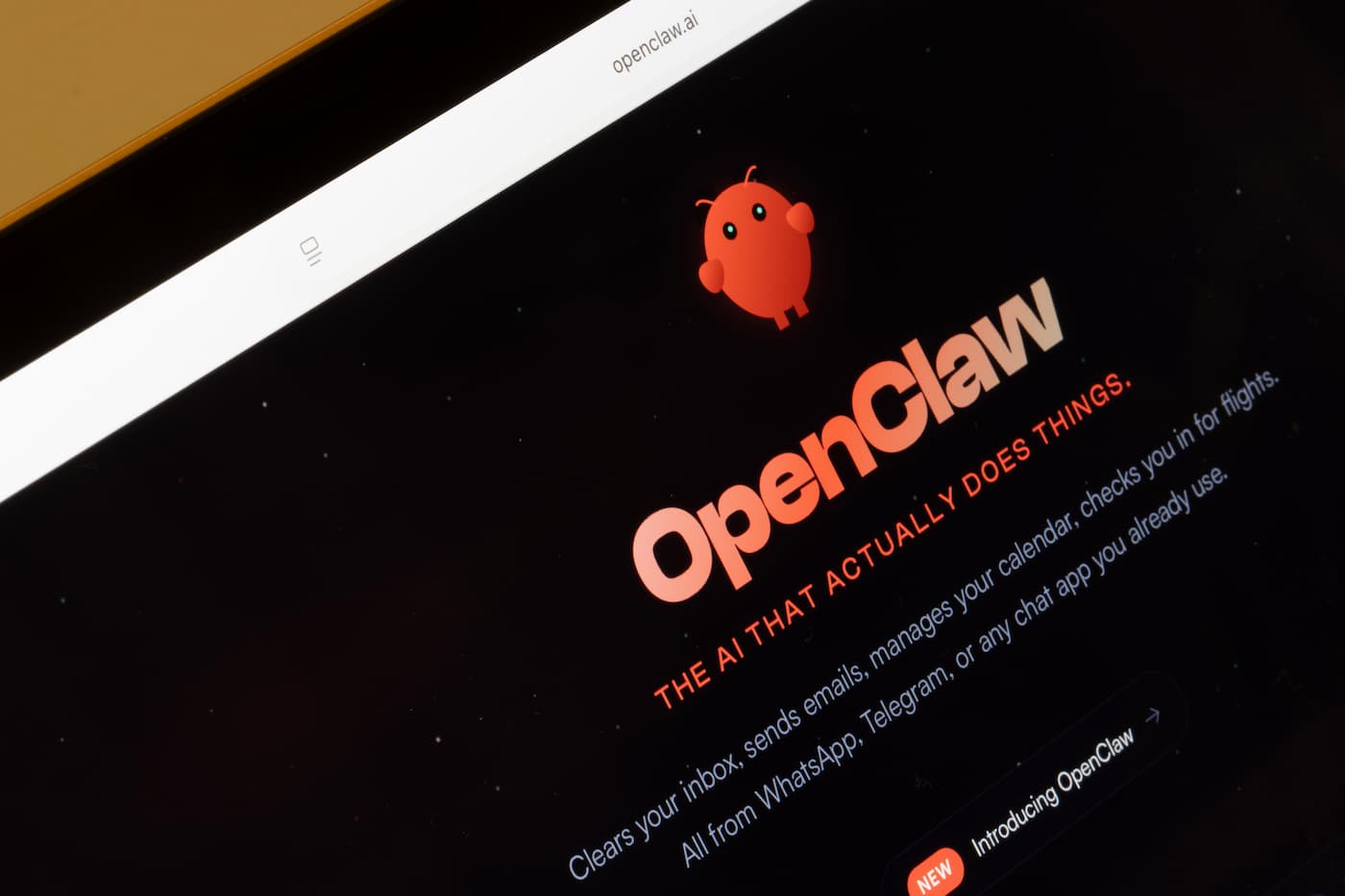
Artificial intelligence leader OpenAI has made a major strategic hire by bringing on Peter Steinberger, the developer behind the widely popular open-source AI agent OpenClaw, to spearhead its efforts in next-generation personal agents.
OpenClaw — originally known as Clawdbot and Moltbot — gained viral success in late 2025 and early 2026 as a practical autonomous AI assistant that can manage emails, book flights, handle calendars and interact with apps on behalf of users. The project amassed hundreds of thousands of stars on GitHub and drew millions of visits in a short span, demonstrating significant community interest in agentic AI — systems that do things, not just generate text.
Steinberger to Lead Personal Agent Development at OpenAI
In announcing the move, OpenAI CEO Sam Altman said Steinberger will be joining the company’s efforts to develop “the next generation of personal agents,” a core technology believed to be central to future AI products. Altman described Steinberger as “a genius with a lot of amazing ideas” about building agents capable of interacting with each other and performing tasks seamlessly for users.
Steinberger himself said that instead of turning OpenClaw into a standalone company, he chose to join OpenAI because it offered the fastest path to bringing agentic AI to a broad global audience. “What I want is to change the world, not build a large company,” he wrote in a blog post.
OpenClaw Becomes an Open-Source Foundation With OpenAI Support
Alongside the hiring, OpenClaw will transition into an independent open-source foundation, with OpenAI providing ongoing support. This arrangement aims to preserve the project’s community-driven nature and ensure the software remains freely accessible while benefiting from OpenAI’s technical resources and safety research.
OpenAI’s commitment to open-source stewardship highlights a dual strategy: absorb top talent and integrate cutting-edge agent innovation into its ecosystem while ensuring community involvement and transparency around foundational AI tools.
What OpenClaw Brings to the Table
OpenClaw’s early designs enable it to:
Perform autonomous tasks such as checking flight statuses, managing inboxes and scheduling appointments.
Interact with third-party services by interfacing locally or via messaging APIs.
Scale to multi-agent systems, where different agents coordinate on complex workflows.
Its rapid growth — hundreds of thousands of stars on GitHub and millions of views across platforms — signals broad developer and user appetite for practical agentic AI that goes beyond generative text.
Industry Context and Implications
Steinberger’s hiring comes amid accelerating competition in agentic AI, where startups and major players alike are racing to produce systems capable of autonomous action rather than just conversational output. OpenAI’s move positions it to lead in this next frontier by combining open-source innovation with enterprise-level safety and integration into established products.
By backing the OpenClaw foundation and clearly articulating personal agents as a strategic priority, OpenAI is committing to a future where AI helpers do real-world tasks across domains — from personal productivity to enterprise workflows — while keeping the underlying designs community-reviewable and extensible.
- Microsoft’s New Copilot AI Agents Act Like Virtual Employees to Automate Tasks
- Former OpenAI Researcher & Whistleblower Found Dead at Age 26
- Bitronix Launches First AI-Powered Gaming Trading Platform Inside Telegram with EU Regulation and $10 Minimum Entry
- Group Asks Federal Agency to Halt Use of Elon Musk’s Grok AI Amid Racism Concerns
- Meta Neural Network Patent Showcases AI’s Place in Artificial Reality Bet
- Elementor #15884