



































































































































































































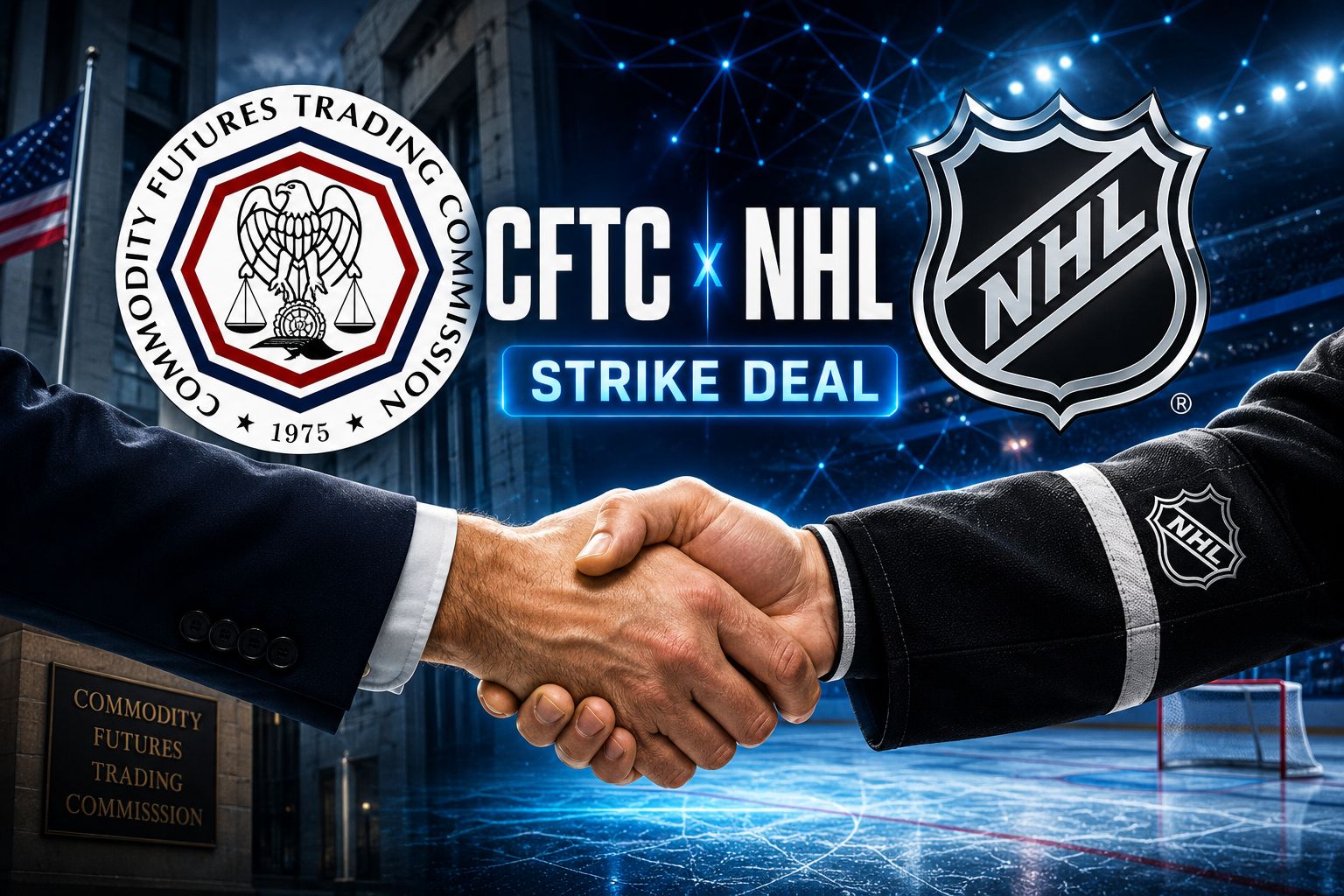
The U.S. Commodity Futures Trading Commission (CFTC) has reached a new agreement with the National Hockey League (NHL) aimed at protecting the integrity of rapidly growing sports prediction markets tied to professional hockey. The partnership marks another major step in the federal government’s expanding oversight of event-based trading platforms like Polymarket and Kalshi.
The agreement establishes a formal information-sharing relationship between the CFTC and the NHL to monitor potential threats including insider trading, match-fixing, and suspicious market activity connected to hockey-related prediction contracts.
Prediction Markets Are Becoming a Major Regulatory Focus
Prediction markets have exploded in popularity over the past two years, allowing users to trade on outcomes tied to:
- Elections
- Sports
- Economic data
- Geopolitical events
- Corporate developments.
Platforms like Polymarket, Kalshi, and newer entrants into the sector have increasingly blurred the lines between financial derivatives, sports betting, and information markets. The CFTC, which regulates derivatives markets in the United States, has argued that many prediction contracts fall under federal commodities law rather than traditional gambling regulation.
As these markets expand into sports, regulators are becoming increasingly concerned about:
- Insider information
- Athlete integrity
- Match manipulation
- Coordinated market abuse.
The NHL Agreement Mirrors MLB’s Earlier Deal
The NHL partnership follows a similar integrity agreement the CFTC reached earlier this year with Major League Baseball (MLB). Under the arrangement, the NHL and CFTC will coordinate on:
- Suspicious trading activity
- Market surveillance
- Information sharing
- Potential integrity threats tied to prediction markets.
Reports indicate the agreement allows confidential cooperation between both parties when unusual betting or derivatives activity is detected involving NHL games or league-related events. The move reflects how seriously regulators and sports leagues are now treating prediction markets as part of the broader financial ecosystem rather than simply online gambling products.
Sports Leagues Are Quietly Embracing Prediction Markets
Interestingly, the NHL is not just working with regulators—it has also been exploring relationships with prediction market platforms themselves. Leagues across professional sports are increasingly recognizing that prediction markets may become a major new form of fan engagement and financial participation. According to reports, organizations connected to:
- MLB
- MLS
- UFC
- NHL
have all begun engaging more directly with prediction market infrastructure and integrity systems. This creates an unusual dynamic where leagues are simultaneously:
- Supporting market growth
- Benefiting from increased engagement
- While also helping regulators police the space.
Prediction Markets Face Growing Political and Legal Battles
The integrity agreement also arrives during a period of intense legal and political conflict surrounding prediction markets in the United States. Several states including:
- Minnesota
- Utah
- New York
have recently attempted to restrict or challenge platforms offering sports and event-based contracts. At the same time, the CFTC under Chairman Michael Selig has taken a much more supportive stance toward federally regulated prediction markets compared to prior administrations. That shift has accelerated the expansion of platforms like Polymarket and Kalshi, even as regulators continue debating where prediction markets end and gambling begins.
The Bigger Picture
The new NHL-CFTC partnership shows how quickly prediction markets are becoming integrated into mainstream finance, sports, and regulation. What started as niche crypto betting platforms are now evolving into federally monitored financial markets tied to real-world events.
- Polymarket Sued After Traders Claim Platform Changed Rules in $80 Million Strategy Bitcoin Bet
- Allied Gaming & Entertainment to Invest in Bitcoin and Ethereum
- MoonPay Signs Eight-Figure Title Sponsorship Deal With X Games League
- Kalshi and Polymarket Lose Attempts to Block Gambling Lawsuits in Nevada and Washington
- Playtron to Launch Game Dollar on Sui Network for SuiPlay0X1
- Animoca Chairman’s X Account Hacked to Promoting Fake Token