

















































































































































































































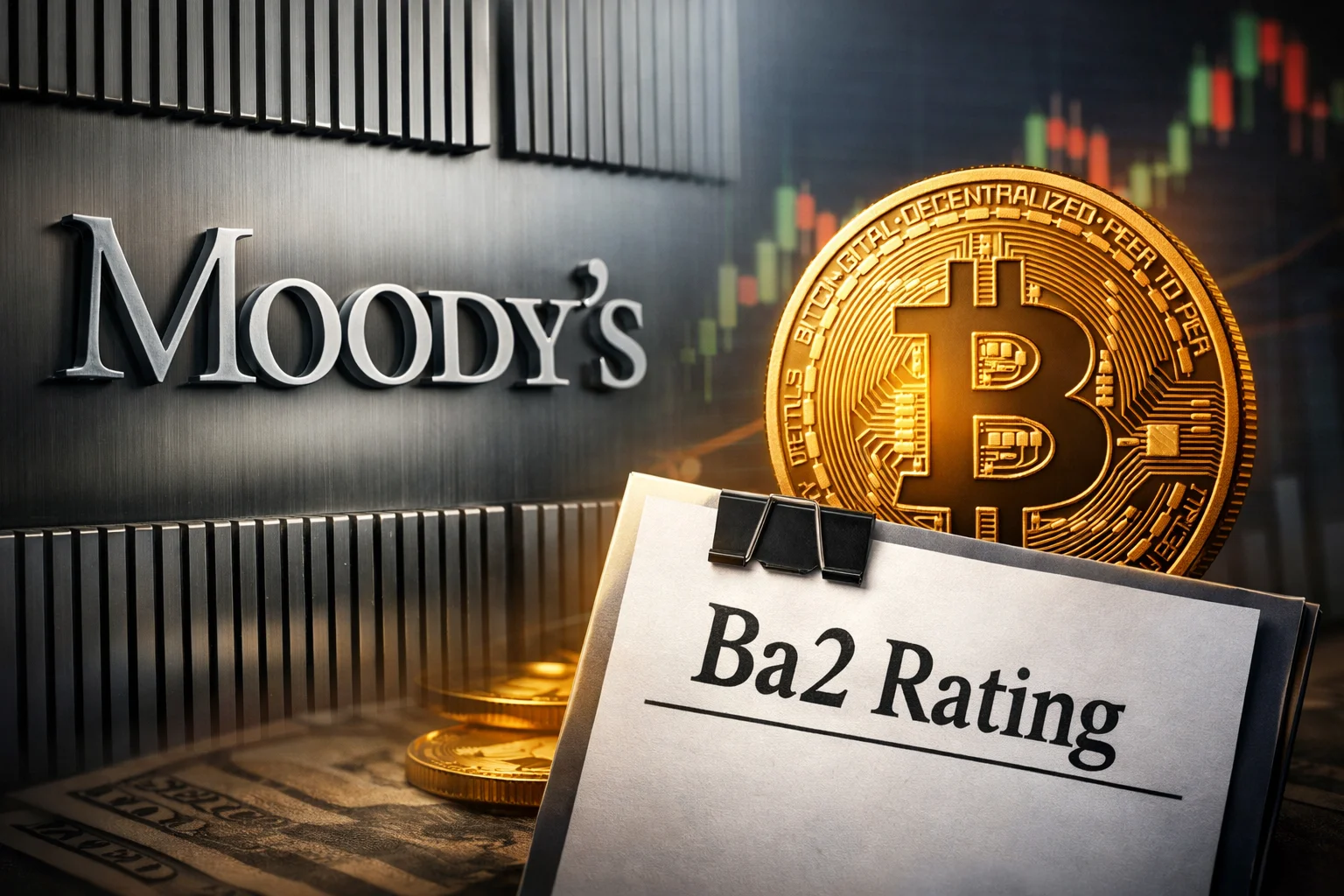
Bitcoin has officially entered the traditional bond market for the first time after Moody’s Investors Service assigned a credit rating to a groundbreaking crypto-backed municipal bond issued through New Hampshire. The move marks a historic step in bridging digital assets with legacy financial infrastructure.
A First-of-Its-Kind Bitcoin-Backed Bond
The bond—structured by the New Hampshire Business Finance Authority—is backed directly by Bitcoin collateral rather than traditional revenue streams. Moody’s gave the deal a provisional Ba2 rating, placing it in the speculative-grade category, just below investment grade.
This makes it the first time a major credit agency has formally evaluated a financial instrument tied directly to Bitcoin, opening the door for institutional investors to gain exposure to crypto through regulated debt markets.
How the Structure Works
The bond is expected to raise around $100 million and will rely entirely on Bitcoin collateral to repay investors. Instead of taxpayer backing, repayment comes from the liquidation of Bitcoin held in custody if needed.
To manage risk, the structure includes overcollateralization—
Moody’s emphasized that the rating reflects Bitcoin’s volatility, which remains the primary risk factor behind the speculative grade.
Why the Rating Matters
Credit ratings are critical for institutional adoption, as many large investors can only allocate capital to assets that have been evaluated by agencies like Moody’s.
By assigning a rating—even a speculative one—Moody’s has effectively validated Bitcoin as a form of collateral within traditional finance, signaling a shift in how digital assets are perceived by legacy financial institutions.
A New Phase of Institutional Adoption
This development represents a major evolution in Bitcoin’s role in the financial system. Previously used mainly as a store of value or trading asset, Bitcoin is now being integrated into structured financial products like bonds.
Analysts see this as the beginning of a new phase where crypto is not just held—but actively used within global capital markets to unlock liquidity and financing opportunities.
Why This Matters
This milestone highlights how quickly crypto is merging with traditional finance.
The bigger takeaway:
Bitcoin is no longer just a speculative asset—it’s becoming financial infrastructure. And with institutions now able to access it through familiar tools like bonds, the next wave of adoption could come from Wall Street, not just retail investors.
- Bitcoin Surges Above $100K as Inflation Fears Fade Ahead of Trump’s Inauguration
- Crypto Stocks Plunge on New Nasdaq Rules as Bitcoin Slips Under $110K
- Bitcoin Jumps as Japan Stock Market Rallies 10% After Historic Record Sell-Off
- Coinbase Launches ‘Coin50’ Index as Crypto Equivalent to S&P 500 and a Balance to Bitcoin
- XRP Leads Crypto Losses as Ethereum, Dogecoin Crater and Bitcoin Slips Below Key Support
- SOL Strategies Lands Nasdaq Approval to List its Shares