


















































































































































































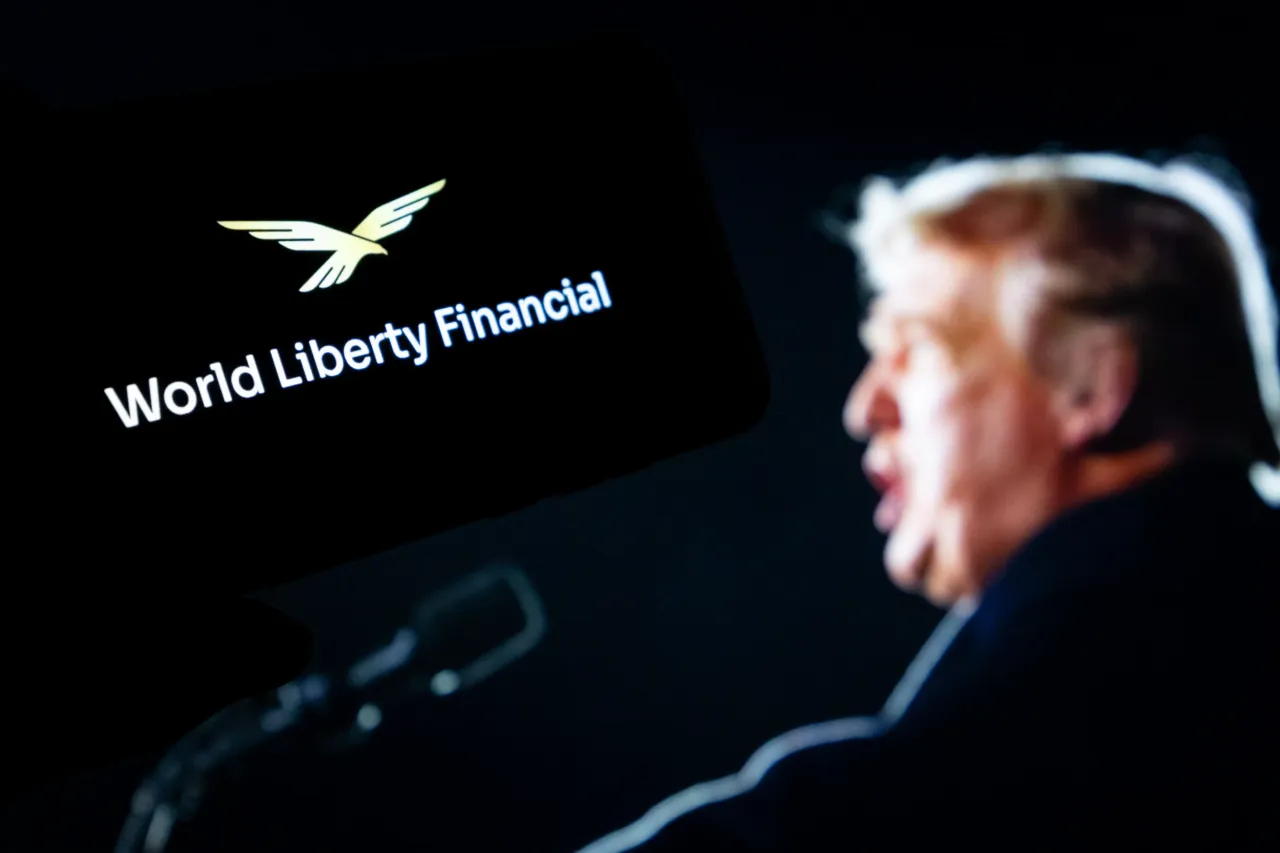
President Donald Trump and his family’s cryptocurrency company, World Liberty Financial (WLFI), are facing a federal lawsuit alleging they improperly profited from more than $2 billion in cryptocurrency-related transactions involving entities linked to the United Arab Emirates (UAE). Filed by a shareholder of stablecoin issuer Circle Internet Group, the lawsuit claims that two major transactions involving World Liberty Financial violated the U.S. Constitution’s Foreign Emoluments Clause, which restricts federal officials from accepting certain benefits from foreign governments without congressional consent. The White House and World Liberty Financial have denied the allegations.
Circle Shareholder Files Federal Lawsuit Against Trump
The lawsuit was filed on October 22 in the U.S. District Court for the District of Columbia by J. Benjamin Greenberg, a former Circle employee and shareholder.
Greenberg brought the case as a shareholder derivative lawsuit, meaning he is attempting to pursue claims on Circle’s behalf rather than solely for his personal benefit.
The complaint names several defendants, including:
President Donald Trump
World Liberty Financial, the Trump family-backed cryptocurrency business
Steve Witkoff, the U.S. special envoy to the Middle East
Four affiliated limited liability companies
The lawsuit alleges that financial arrangements involving UAE-linked entities provided improper economic benefits to Trump while he was serving as president.
It also argues that the transactions benefited World Liberty Financial’s USD1 stablecoin, which competes with Circle’s USDC.
Importantly, Circle did not file or authorize the lawsuit. The company confirmed that Greenberg initiated the action independently as a shareholder.
$500 Million World Liberty Deal Draws Constitutional Challenge
The first transaction identified in the lawsuit involves a $500 million investment in World Liberty Financial.
According to the complaint, an investment vehicle backed by Sheikh Tahnoon bin Zayed Al Nahyan, the UAE’s national security adviser, agreed to purchase a 49% stake in World Liberty Financial shortly before Trump’s January 2025 inauguration.
The lawsuit alleges that although the agreement was reached before Trump returned to office, he subsequently received financial benefits from the transaction while serving as president.
The distinction is central to the plaintiff’s constitutional argument.
Greenberg contends that the financial benefits represented prohibited foreign-government-linked payments under the Foreign Emoluments Clause.
The lawsuit seeks a judicial determination on that question. No court has ruled that the investment violated the Constitution.
$2 Billion Binance Investment Using USD1 Raises Additional Questions
The second transaction involves a $2 billion investment in cryptocurrency exchange Binance by MGX, an Abu Dhabi-based investment company chaired by Sheikh Tahnoon.
The investment was funded using USD1, the dollar-pegged stablecoin issued by World Liberty Financial.
The complaint argues that the transaction provided substantial economic advantages to World Liberty Financial by increasing the circulation and commercial importance of its stablecoin.
According to the plaintiff, those benefits potentially translated into additional financial gains for Trump and his family’s business interests.
The lawsuit raises several questions about the arrangement:
Why USD1 was selected to facilitate the $2 billion Binance investment.
Whether UAE government-linked entities provided financial benefits to businesses associated with the president.
How World Liberty Financial benefited from the stablecoin’s expanded circulation.
Whether Trump personally received prohibited financial gains while holding public office.
Using USD1 for a transaction does not, by itself, establish a constitutional violation.
The legal dispute concerns the alleged financial benefits, the connections to foreign state entities and whether those arrangements fall within constitutional restrictions.
What Is the Foreign Emoluments Clause?
The Foreign Emoluments Clause is part of Article I, Section 9 of the U.S. Constitution.
It generally prohibits individuals holding covered federal offices from accepting certain gifts, payments, offices or other benefits from foreign governments without congressional consent.
The provision is intended to reduce the risk of foreign governments gaining improper influence over U.S. officials through financial arrangements.
The World Liberty Financial lawsuit raises a complicated legal question about how that restriction applies to private businesses connected to a sitting president.
The plaintiff argues that profits generated through the UAE-linked transactions qualify as prohibited benefits.
The defendants dispute that interpretation and maintain that their business activities comply with applicable law.
A court would need to address both the constitutional claims and procedural questions about whether Greenberg has legal standing to pursue them.
Lawsuit Seeks Return of Profits and Disclosure of Foreign Crypto Payments
Greenberg is asking the federal court to order several remedies.
These include:
A declaration that the challenged financial benefits violated the Foreign Emoluments Clause.
Recovery of profits determined to have been unlawfully obtained.
Disclosure and accounting of additional cryptocurrency-related payments involving foreign governments.
Unspecified monetary damages and other appropriate relief.
The lawsuit does not establish that the full $2.5 billion involved in the two transactions was paid to Trump personally.
That figure represents the combined reported size of the $500 million equity transaction and $2 billion Binance investment.
Any determination of personal profits, recoverable funds or damages would require further legal proceedings.
White House and World Liberty Financial Reject Allegations
Both the White House and World Liberty Financial have disputed the lawsuit’s claims.
White House spokesperson Anna Kelly described the case as frivolous and rejected allegations of conflicts of interest.
World Liberty Financial spokesperson David Wachsman said the company complies with U.S. laws and regulations and maintains that its personnel do not work for the federal government.
The company characterized the claims as lacking merit and indicated that it intends to contest them in court.
Circle separately emphasized that it had no role in initiating, directing or authorizing the shareholder lawsuit.
The case remains at an early stage, and the allegations have not been proven in court.
UAE AI Chip Deal and Binance Pardon Add to Scrutiny
The lawsuit also references broader U.S.-UAE business and policy developments.
Among them are the Trump administration’s decisions concerning advanced American AI chip exports to the UAE and the presidential pardon of Changpeng Zhao, Binance’s founder.
The plaintiff points to those developments as part of the context surrounding the financial relationships involving World Liberty Financial.
However, the existence of these government actions does not independently prove that they were exchanged for cryptocurrency investments or other financial benefits.
The administration has denied wrongdoing.
The dispute arrives amid continuing congressional scrutiny of World Liberty Financial’s foreign business relationships and the potential conflicts of interest associated with cryptocurrency ventures involving public officials.
World Liberty Financial Faces Growing Legal and Political Scrutiny
Launched in 2024, World Liberty Financial has become one of the most closely watched cryptocurrency businesses associated with the Trump family.
Its operations include the WLFI governance token and USD1, a dollar-pegged stablecoin designed for digital asset payments and financial transactions.
The company’s growth has brought attention to the intersection of cryptocurrency regulation, private business ownership and federal government policy.
Because USD1 competes in the same market as Circle’s USDC, the lawsuit also introduces a commercial dimension to the constitutional dispute.
The plaintiff argues that World Liberty Financial’s relationships with UAE-linked investors gave it advantages that could negatively affect Circle and its shareholders.
Whether those allegations can support a derivative lawsuit remains a question for the court.
Trump’s Crypto Business Faces a New Constitutional Test
The lawsuit against Trump and World Liberty Financial brings together several issues that have become increasingly important as cryptocurrency enters mainstream finance.
These include foreign investment, stablecoin competition, presidential business interests and the constitutional limits on financial benefits involving foreign governments.
For the cryptocurrency industry, the case could draw additional attention to how politically connected digital asset businesses operate and disclose their financial relationships.
However, its broader legal implications will depend on whether the lawsuit proceeds and how the court interprets the constitutional and shareholder claims.
- Apple will let dating apps offer third-party payment options in the Netherlands
- Trump Will Host Crypto Summit at the White House Next Friday
- Trump Organization to Launch a Cryptocurrency Initiative, Eric Trump Says
- Underestimating The Orange Pill: Bitcoin Spot ETF Proposals to Be Rejected by SEC, Stated by Matrixport
- Over 20% of Voters in Swing States Consider Crypto a Key Issue in US Elections, DCG Survey
- Louisiana Bans CBDCs and Protects BTC Rights with Legislation