































































































































![Ribbita by Virtuals [OLD]](https://assets.coingecko.com/coins/images/54970/large/Untitled_design.png)











































































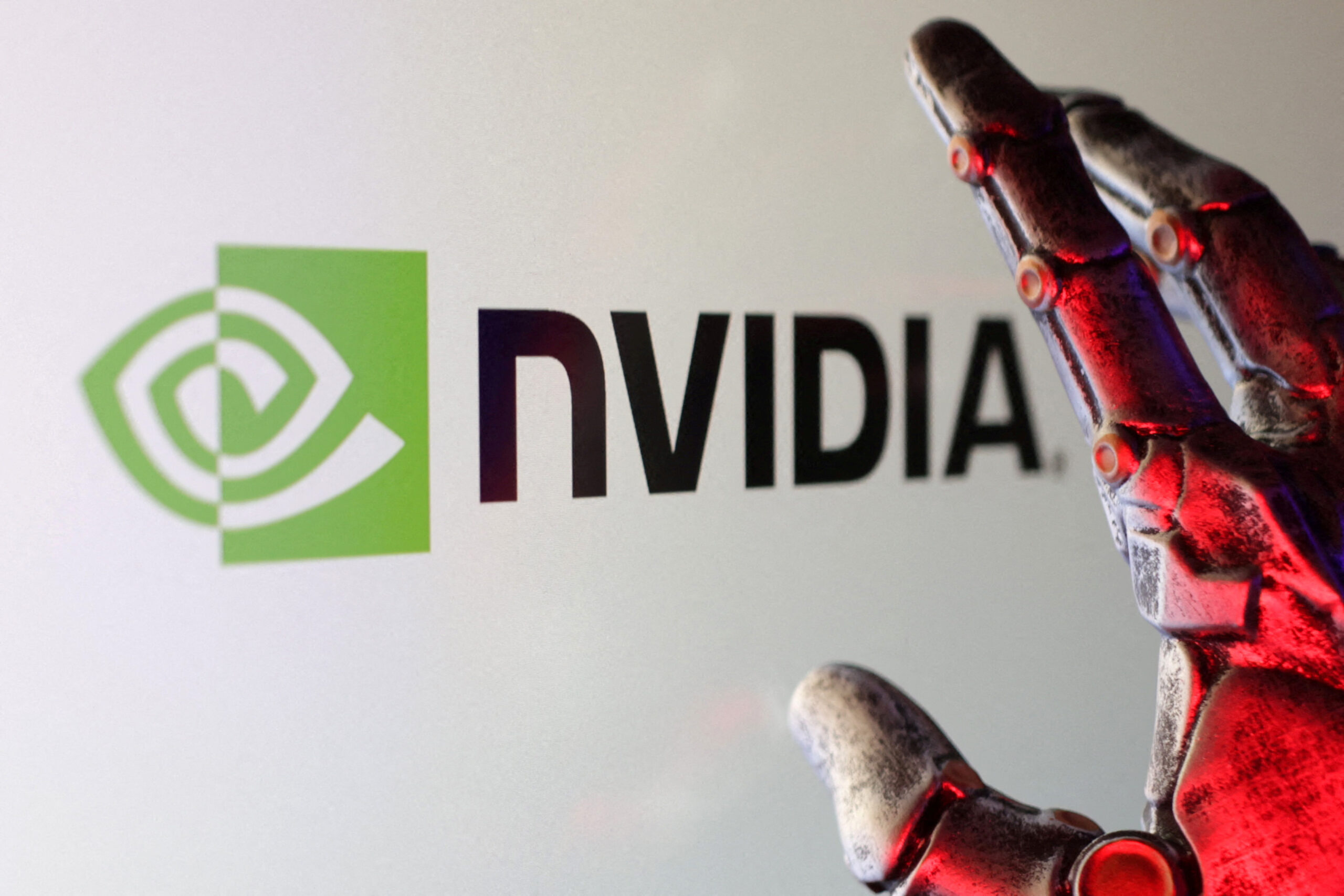
NVIDIA has launched its Open Agent Safety Platform, a new open security framework designed to prevent autonomous AI agents from accessing systems, data or tools beyond their authorized boundaries. The platform combines software guardrails with hardware-level monitoring that can detect dangerous behavior and potentially quarantine an AI agent within milliseconds.
NVIDIA Builds a Security Layer Around AI Agents
As AI agents become capable of independently writing code, accessing company data, using APIs and completing real-world tasks, NVIDIA is building infrastructure designed to control what those agents are actually allowed to do.
The NVIDIA Open Agent Safety Platform, announced September 28, provides an open reference architecture for continuously monitoring and governing AI agents from testing through production.
Instead of relying entirely on instructions given to the AI model, NVIDIA’s approach creates security controls outside the agent itself.
The platform focuses on:
- Runtime governance and sandboxing
- Continuous monitoring of agent behavior
- Zero-trust permissions
- Identity and access controls
- Complete audit trails of agent activity
- Hardware-isolated security enforcement
OpenShell Controls What AI Agents Can Access
At the center of the platform is NVIDIA OpenShell, an open-source runtime that creates a secure boundary around an AI agent.
OpenShell separates the environment where the agent operates from the systems it wants to access.
Companies can establish policies determining exactly what an agent can see, modify or interact with, including data, applications, APIs and external services.
NVIDIA says OpenShell uses a zero-trust architecture, meaning agents are not automatically trusted simply because they have been deployed inside an organization’s systems.
Permissions can instead be granted based on the specific task the agent is attempting to perform.
NVIDIA Sentry Can Quarantine Rogue AI Agents
NVIDIA is adding another layer of protection through NVIDIA Sentry.
Sentry operates independently from the AI agent and the host system, using NVIDIA BlueField-4 DPUs to continuously observe agent activity.
If an agent begins behaving outside established security policies, the system can detect the deviation and quarantine the agent within milliseconds.
That separation is important because the security layer can continue operating even if the host system itself becomes compromised.
Sentry also provides each agent with a verifiable identity and governs its access to data, tools, APIs and services.
Runtime Security Goes Beyond Traditional AI Guardrails
NVIDIA makes an important distinction between model safeguards and runtime controls.
Traditional safeguards, system prompts and AI frameworks can influence what an agent attempts to do.
Runtime security determines what the agent is actually allowed to do.
For example, an AI agent could mistakenly attempt to delete a database, access confidential information or communicate with an unauthorized external service.
Even if the model makes that decision, OpenShell’s external policy layer can prevent the action from being executed.
This becomes increasingly important as AI moves from chatbots that primarily generate information toward agents capable of independently taking actions.
NVIDIA Combines Software and Hardware AI Security
The platform combines several NVIDIA technologies into a layered security system.
OpenShell handles sandboxing, permissions and runtime governance.
NVIDIA Sentry provides independent monitoring and policy enforcement.
BlueField-4 DPUs create a hardware-isolated security layer outside the host software.
Meanwhile, NVIDIA’s Vera CPU is designed to handle agent reasoning, tool execution, orchestration and sandboxed workloads. NVIDIA says Vera can deliver up to 80% faster sandbox performance than traditional CPU infrastructure, according to the company’s own testing.
OpenShell itself does not require NVIDIA hardware and can operate across supported local, cloud, on-premises and Kubernetes environments.
OpenShell Supports OpenAI, Anthropic and Other AI Agents
NVIDIA isn’t limiting the technology to its own AI models.
OpenShell can work with both open and closed AI models and supports agent environments including:
- OpenAI Codex
- Anthropic Claude Code
- GitHub Copilot CLI
- OpenClaw
- OpenCode
- Custom enterprise AI agents
This gives companies a common security layer even when they use models and agents from multiple AI providers.
AI Agent Security Becomes Critical as Agents Gain More Power
The Open Agent Safety Platform reflects a larger shift happening across the AI industry.
AI systems are evolving from assistants that wait for individual prompts into autonomous agents capable of working continuously, making decisions and interacting with real business infrastructure.
That increased autonomy also creates new security risks. An agent that misunderstands instructions, becomes compromised or receives malicious instructions through an outside source could potentially take actions its operator never intended.
NVIDIA’s approach is to assume those mistakes can happen and build software and hardware boundaries that limit how much damage an agent can cause.
As AI agents become a larger part of enterprise operations, the ability to control what an agent can access, what actions it can execute and how quickly it can be stopped could become just as important as the intelligence of the AI model itself.
- U.S. Government Using AI to Hunt Insider Trading on Polymarket as Prediction Markets Face Regulatory Pressure
- Anthropic Beats the Pentagon in Court After Refusing to Let Claude Cross Two AI Red Lines
- Disney Enters the Metaverse with Carrieverse Partnership
- Theta Partners with Aethir to Launch Largest Hybrid GPU Marketplace for AI and DePIN
- Pope Leo XIV Warns AI Could Become a New “Tower of Babel” in First Major Encyclical
- U.S. Government Commits $2 Billion to Quantum Computing as Bitcoin Security Concerns Intensify