

















































































































































































































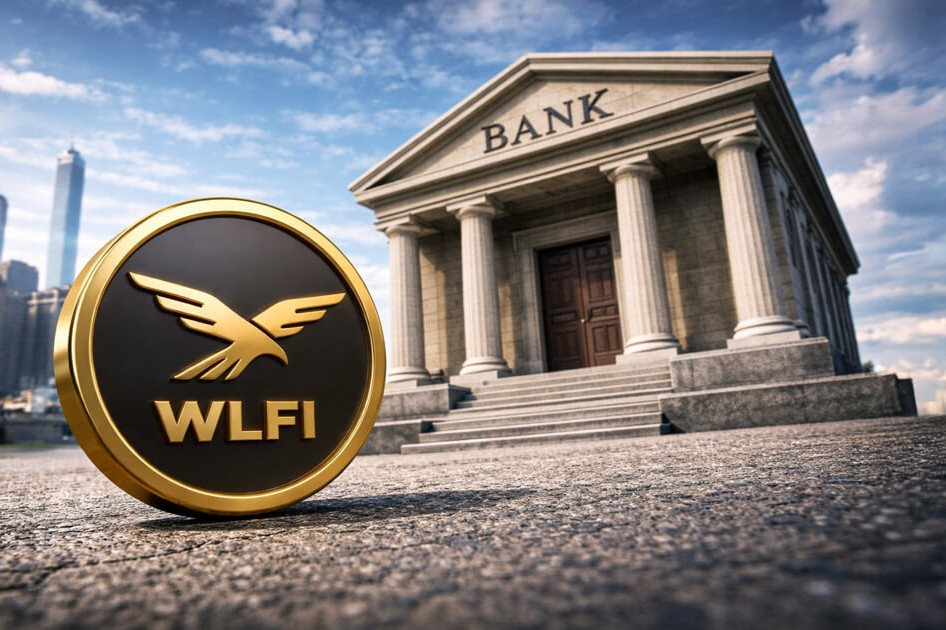
World Liberty Financial, the crypto venture linked to President Donald Trump and his family, has received preliminary conditional approval from the Office of the Comptroller of the Currency to establish a federally chartered national trust bank focused on its USD1 stablecoin. The proposed World Liberty Trust Company, National Association would take over the issuance and redemption of USD1 from BitGo, bringing one of the Trump family’s largest crypto businesses directly under federal banking supervision.
The approval represents a significant milestone for World Liberty Financial, but it is not yet final authorization to begin banking operations. The company must satisfy multiple OCC requirements before the trust bank can officially open. If completed, the charter would allow World Liberty to control more of USD1’s infrastructure internally rather than relying on outside companies for issuance, custody and reserve management.
World Liberty Financial Is Getting Its Own National Trust Bank
The OCC granted preliminary conditional approval on August 14 for the creation of World Liberty Trust Company, which would be headquartered in Bay Harbor Islands, Florida.
World Liberty originally applied for the charter in January.
Under the proposed structure, the new institution would become responsible for major parts of the USD1 ecosystem, including issuing and redeeming the stablecoin, managing its reserves, providing custody services for fiat and major stablecoins, and facilitating conversions between USD1 and other stablecoins.
That would represent a major change from USD1’s current structure.
World Liberty Would Take USD1 Issuance Away From BitGo
BitGo currently serves as the exclusive issuer and custodian behind USD1.
World Liberty Trust Company intends to take over USD1 issuance and redemption from BitGo once the bank becomes operational.
This would allow World Liberty to vertically integrate more of its stablecoin business.
Instead of creating the stablecoin while depending on another regulated company to handle critical infrastructure, World Liberty would have its own federally supervised trust institution capable of performing many of those functions.
That could give the company significantly greater control over USD1 as it attempts to compete with major dollar-backed stablecoins such as Tether’s USDT and Circle’s USDC.
This Won’t Be a Traditional Consumer Bank
Despite receiving a national trust bank charter, World Liberty Trust Company isn’t planning to operate like JPMorgan Chase, Bank of America or Wells Fargo.
The proposed institution will not accept traditional deposits and won’t carry FDIC deposit insurance. It also does not currently plan to seek a Federal Reserve master account.
Its primary purpose is much narrower.
World Liberty Trust Company would operate as a federally regulated institution built around stablecoin issuance, custody, reserve management and related fiduciary activities.
That distinction is important because the charter doesn’t mean World Liberty Financial is suddenly opening checking and savings accounts or operating conventional bank branches.
Instead, it creates something closer to a federally regulated stablecoin bank.
USD1 Could Move Directly Under Federal Banking Supervision
The charter could fundamentally change USD1’s regulatory structure.
World Liberty originally proposed creating the trust bank to place USD1 under direct federal supervision rather than relying primarily on the state-licensed structure supporting its existing operations.
That strategy has become particularly important following passage of the GENIUS Act, which established America’s first comprehensive federal framework for payment stablecoins.
The law requires qualifying issuers to maintain appropriate reserves and comply with regulatory standards covering areas such as risk management and anti-money-laundering controls.
World Liberty is effectively attempting to position itself inside that emerging regulated stablecoin system rather than operating around it.
Trump Family Connections Created Conflict-of-Interest Concerns
The application attracted significant scrutiny because of World Liberty Financial’s connections to the sitting president and his family.
Commenters raised concerns about potential conflicts of interest involving President Trump, members of his family and foreign investors connected to the project.
The OCC ultimately determined that those broader political concerns were outside the scope of its chartering review.
The regulator instead evaluated whether the proposed institution satisfied the legal, financial, operational and supervisory requirements applicable to a national trust bank.
That decision is likely to remain politically controversial given the unprecedented overlap between a sitting president’s family and a crypto company seeking federal banking authorization.
Eric Trump Signed Regulatory Commitments
The OCC’s approval documents provide additional insight into how ownership interests surrounding the bank will be handled.
Eric Trump, acting as president of DT Marks SC LLC, signed commitments limiting the company’s ability to exercise control over the proposed bank.
Among other restrictions, the agreement states that if DT Marks directly or indirectly acquires 10% or more of any class of voting stock, management must receive a proxy covering voting shares above 9.9%.
The OCC documents also contain similar passivity commitments involving other investors, designed to prevent shareholders from exercising unauthorized control over the federally chartered institution.
These conditions illustrate the regulatory separation the OCC is attempting to establish between significant investors and the bank’s actual management.
Foreign Investment Also Received Regulatory Attention
The OCC documentation also references StringZ Holding RSC (DE) LLC, whose commitments were signed by Hamad Khlfan Ali Matar Alshamsi.
StringZ agreed to restrictions preventing it from controlling the bank, placing representatives in management positions or exercising certain governance rights.
If its ownership reaches 10% or more of a voting class, voting power above 9.9% would similarly be subject to proxy restrictions.
These provisions are notable because foreign investment surrounding World Liberty Financial has already attracted political scrutiny.
The OCC’s approach appears designed to ensure that major shareholders remain investors rather than gaining operational control over the federally regulated institution.
USD1 Has Grown Into a Major Stablecoin
World Liberty launched USD1 in 2025, and the token expanded rapidly.
The stablecoin reached a $1 billion market capitalization less than a month after launch, according to CoinGecko figures previously reported by Decrypt.
USD1 has subsequently become an increasingly important component of World Liberty Financial’s ecosystem.
The company has also expanded beyond the stablecoin itself. In January, World Liberty launched World Liberty Markets, a DeFi lending platform allowing users to supply assets for yield or borrow against their portfolios using stablecoins, ETH and wrapped Bitcoin.
Creating its own federally regulated trust bank would add another major layer to that ecosystem.
The Charter Is Conditional and World Liberty Still Has Work to Do
The OCC’s decision shouldn’t be interpreted as World Liberty Trust Company already being fully operational.
The regulator specifically granted preliminary conditional approval.
World Liberty must satisfy the OCC’s pre-opening requirements before receiving final authorization to begin operating the national trust bank.
That process can include requirements involving capital, governance, risk management, compliance systems, management personnel and operational readiness.
The OCC can therefore still prevent the bank from opening if World Liberty fails to satisfy the conditions attached to its approval.
Crypto Companies Are Becoming Banks Instead of Fighting Them
World Liberty’s strategy also reflects a larger transformation occurring across cryptocurrency.
For years, crypto companies largely attempted to build financial infrastructure outside traditional banks.
Now some of the industry’s largest companies are moving in the opposite direction.
Instead of simply asking banks for access, crypto companies are increasingly seeking federal trust charters and other regulated financial licenses themselves.
World Liberty’s approach is particularly notable because the company is attempting to place the issuer of its stablecoin directly inside the federal banking system.
That could become an increasingly important model as stablecoins evolve from crypto trading instruments into broader infrastructure for payments, settlements, tokenized assets and onchain financial markets.
- Fed Chair Powell Told House Democrats U.S. Needs Stablecoin Bill
- White House to Release Crypto Report July 30 with Potential Bitcoin Reserve Disclosures
- OCC Grants National Bank Charters to Circle, Ripple and Other Crypto Firms
- Federal Prosecutors Open Criminal Investigation into The Fed and Jerome Powell
- Jane Street Hit With Third Lawsuit Over 2022 Terra-Luna Crash, Facing Insider Trading Allegations
- SEC Approves Grayscale Index ETF Conversion, Clears Solana, XRP, Cardano For Spot Trading