














































































































































































































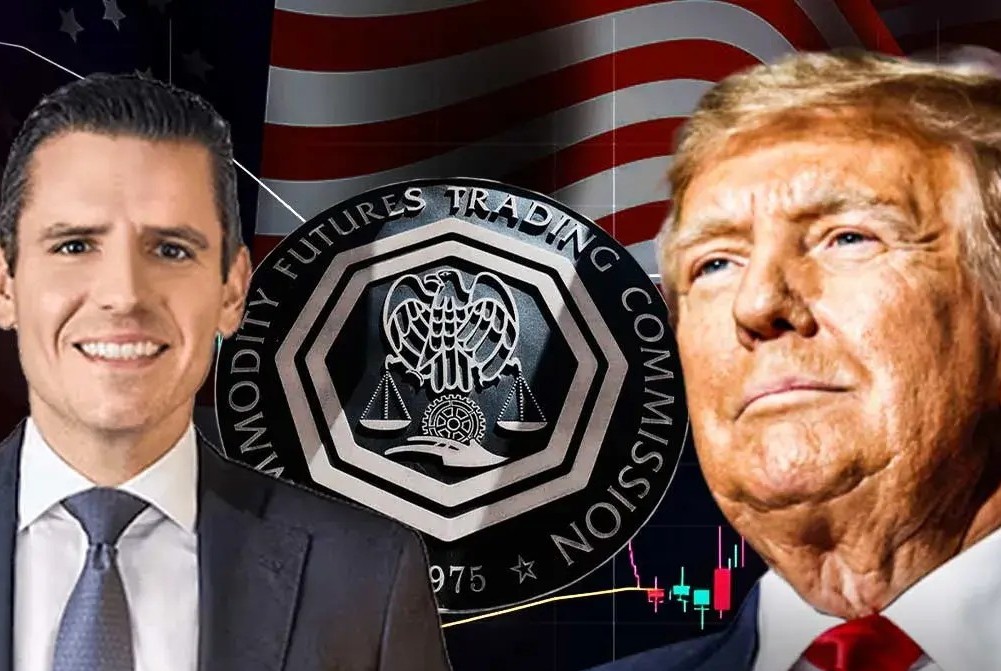
President Donald Trump is expected to meet with executives from some of the biggest names in crypto and prediction markets at the White House on Wednesday, August 19, alongside CFTC Chair Michael Selig and other senior administration officials. The gathering comes at a critical moment for both industries as Washington debates new crypto market structure legislation while prediction platforms such as Kalshi battle states over whether their federally regulated event contracts can be treated as gambling.
The meeting is scheduled for 2:30 p.m. ET at the Eisenhower Executive Office Building, adjacent to the West Wing. It is intended to serve as a kickoff ahead of the Commodity Futures Trading Commission’s first Innovation Advisory Committee meeting on Thursday, August 20.
Trump Will Meet Directly With Crypto Industry Leaders
Trump’s expected attendance elevates what could otherwise have been a routine regulatory meeting into a significant White House crypto policy event.
Executives representing crypto companies, venture capital firms and prediction market businesses are expected to participate. Reports indicate representatives connected to Coinbase, Ripple, Chainlink, Kalshi and Paradigm are among the anticipated industry participants.
The gathering is expected to focus broadly on financial innovation, digital assets and prediction markets rather than a single piece of legislation.
The timing, however, means several major regulatory battles will almost certainly hang over the discussion.
CFTC Chair Michael Selig Will Be in the Room
Michael Selig, chairman of the CFTC, is also expected to attend.
That is particularly important because the CFTC could become one of the most powerful regulators in the U.S. crypto industry if Congress ultimately passes comprehensive digital asset market structure legislation.
The agency is also at the center of the rapidly escalating fight over prediction markets.
Selig has taken an increasingly assertive position that federally regulated prediction markets fall under the CFTC’s jurisdiction.
Earlier this week, the agency used its emergency authority to order Kalshi to continue operating under federal CFTC rules while the company faces litigation challenging its activities.
Meeting Comes During Kalshi’s Growing Fight With States
The White House gathering arrives at an especially important moment for prediction markets.
Platforms such as Kalshi have expanded rapidly into contracts covering politics, economics, sports and other real-world events.
But state gaming regulators and attorneys general increasingly argue that some of those products — particularly sports contracts — amount to gambling and should therefore fall under state gaming laws.
Kalshi argues the opposite.
Because it operates as a federally regulated derivatives exchange, the company maintains that its event contracts fall under the Commodity Exchange Act and CFTC jurisdiction.
That disagreement has triggered an increasingly complicated federal-versus-state legal battle.
CFTC’s Prediction Market Position Is Becoming More Aggressive
The CFTC’s recent support for Kalshi makes Selig’s participation in Wednesday’s meeting particularly noteworthy.
The agency’s decision to direct Kalshi to continue operating represented a significant assertion of federal authority over prediction markets.
The underlying question is whether states can effectively override the federal derivatives regulator by classifying CFTC-regulated event contracts as gambling.
If the CFTC’s interpretation ultimately prevails, federally regulated prediction market platforms could potentially operate nationwide without obtaining separate gaming licenses in every state.
If states prevail, prediction platforms could instead face a fragmented regulatory environment requiring state-by-state geofencing and restrictions.
White House Meeting Comes One Day Before Major CFTC Session
The timing of Wednesday’s White House gathering isn’t coincidental.
On Thursday, August 20, the CFTC’s newly created Innovation Advisory Committee is scheduled to hold its inaugural meeting.
The committee is expected to examine several areas transforming financial markets, including cryptocurrency, blockchain technology, artificial intelligence and prediction markets.
Selig originally unveiled the committee as part of an effort to bring technology companies and financial innovators directly into conversations about modernizing U.S. market regulation.
Wednesday’s White House meeting is intended to help begin that broader policy dialogue before the committee formally meets the following day.
Crypto Market Structure Legislation Looms Over the Meeting
The meeting also comes as Washington continues wrestling with the CLARITY Act, legislation designed to establish clearer rules for America’s cryptocurrency markets.
One of the biggest questions surrounding U.S. crypto regulation has been how responsibility should be divided between the Securities and Exchange Commission and CFTC.
Market structure legislation could give the CFTC significantly expanded authority over parts of the digital asset spot market while establishing clearer definitions determining when cryptocurrencies fall under securities or commodities regulation.
The bill’s path through the Senate has become increasingly difficult, however, with lawmakers still divided over several provisions.
A procedural Senate vote has been discussed for September 15, placing additional pressure on lawmakers and industry participants to resolve outstanding disagreements.
SEC Chair Paul Atkins Is Also Expected to Participate
The CFTC won’t be the only major financial regulator represented.
SEC Chair Paul Atkins is also expected to participate in the gathering, according to reports surrounding the meeting.
Having both Atkins and Selig in the room alongside crypto executives is significant because coordination between the two agencies will be essential if Congress establishes a new regulatory framework for digital assets.
For years, crypto companies complained that overlapping SEC and CFTC jurisdiction left businesses uncertain about which rules applied to particular digital assets.
A major objective of market structure legislation is to reduce that ambiguity.
Prediction Markets Have Become a Major Part of the Crypto Conversation
Prediction markets were once a relatively small corner of the digital asset ecosystem.
That has changed dramatically.
Platforms such as Kalshi and Polymarket have attracted substantial trading activity around elections, sports, economic data and global events.
Traditional financial companies are paying attention as well.
Gemini, for example, reported that the number of event contracts traded through its prediction market increased 93% from the first quarter, demonstrating how exchanges are increasingly expanding beyond conventional cryptocurrency trading.
That growth is forcing regulators to decide whether prediction markets should primarily be viewed as financial markets, gambling platforms or some combination of the two.
The White House Is Bringing Crypto Directly Into Policy Discussions
The meeting also demonstrates how dramatically cryptocurrency’s relationship with Washington has changed.
Crypto executives spent much of the previous decade attempting to influence regulation from outside the traditional financial establishment.
They are increasingly being brought directly into White House discussions alongside the country’s leading financial regulators.
Wednesday’s gathering brings together three groups whose decisions could determine the structure of the American digital asset industry:
The White House, which is pushing a broader pro-innovation financial technology agenda.
Federal regulators, particularly the CFTC and SEC, responsible for implementing and enforcing financial market rules.
Crypto and prediction market companies, which are building products faster than existing regulatory frameworks have adapted.
Getting those groups into the same room doesn’t guarantee agreement, but it provides a direct channel for discussing the regulatory conflicts currently unfolding across the country.
Lorem ipsum dolor sit amet, consectetur adipiscing elit. Ut elit tellus, luctus nec ullamcorper mattis, pulvinar dapibus leo.
- Jack Dorsey’s Block Wants a Federal Bank Charter for Bitcoin and Stablecoin Custody
- SEC, Ripple to End Legal Battle as Both Parties Abandon Appeals, Leaving XRP Ruling Intact
- Fed Note Explores Using Gold Profits to Fund U.S. Bitcoin Reserve
- Trump’s Labor Department Retracts Biden-Era Guidance Against Crypto in Retirement Plans
- Franklin Templeton, Van Eck and Blackrock Compete to Promote Bitcoin ETFs on Google Ads
- Senate Passes Landmark GENIUS Act Stablecoin Bill