

























































































































![Ribbita by Virtuals [OLD]](https://assets.coingecko.com/coins/images/54970/large/Untitled_design.png)
















































































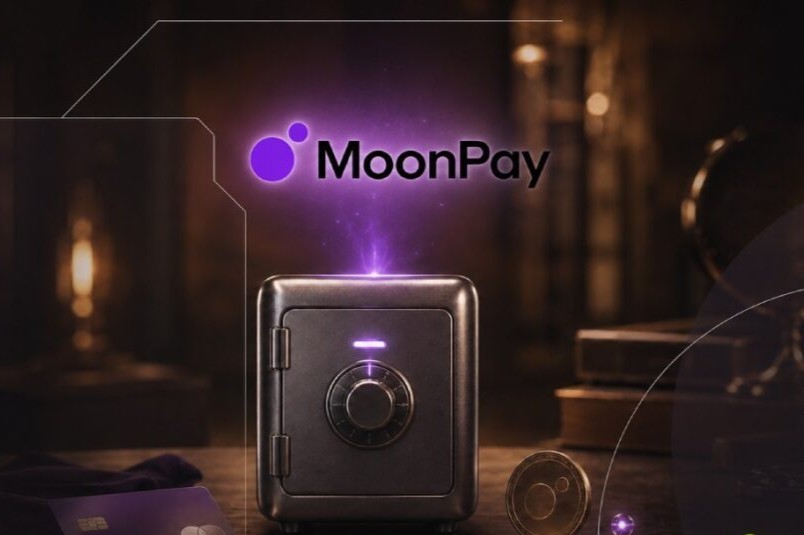
MoonPay has unveiled PayBox, a new payment vault that enables ChatGPT and Claude users to securely send cryptocurrency, trade digital assets, and even pay for real-world goods and services directly from AI conversations. The platform is designed to give AI assistants the ability to prepare and execute financial transactions without ever taking custody of a user’s funds, marking a major milestone in the emerging field of agentic commerce.
Rather than exposing wallet private keys to artificial intelligence, PayBox uses advanced cryptographic security and user-defined permissions to keep assets under the owner’s control. Users simply describe what they want to do in natural language, approve the transaction with a passkey when required, and the payment is completed through MoonPay’s non-custodial infrastructure.
AI Can Now Execute Real-World Payments
PayBox allows users to connect their crypto wallet directly to ChatGPT or Claude through custom connectors.
Once connected, users can ask their AI assistant to perform actions such as:
- Purchase cryptocurrency.
- Swap one token for another.
- Bridge assets across blockchains.
- Deposit funds into DeFi protocols.
- Book flights and hotels.
- Pay for everyday goods and services.
The AI prepares the transaction, while the user remains in control of final authorization through secure authentication.
Users Keep Full Control of Their Funds
A key feature of PayBox is that it never gives custody of assets to either MoonPay or the AI assistant.
Instead, the platform uses multi-party computation (MPC) and hardware-secured enclaves to split wallet keys into multiple encrypted pieces. No single party—including MoonPay, ChatGPT, Claude, or the user alone—possesses the complete signing key.
This architecture significantly reduces the risk of theft while ensuring every transaction remains cryptographically secure.
Flexible Permission Controls
PayBox offers two operating modes depending on how much autonomy users want to give their AI assistant.
Users can choose:
- Always Ask, requiring approval with a passkey before every transaction.
- Autonomous Mode, allowing the AI to execute transactions automatically within predefined spending limits and rules.
These controls enable users to automate repetitive financial tasks while maintaining strict limits on what an AI agent can do independently.
Supports Multiple Blockchain Networks
At launch, PayBox supports transactions across several major blockchain ecosystems, including:
- Solana
- Ethereum
- Base
- Arbitrum
- Polygon
- Hyperliquid
- Tempo
- Robinhood Chain
The platform is designed to work across both crypto-native applications and traditional online commerce, giving AI assistants a broader role in managing digital finances.
MoonPay Expands Beyond Crypto Payments
The launch represents another step in MoonPay’s evolution from a fiat-to-crypto payment processor into a broader financial infrastructure provider.
Over the past two years, the company has expanded through acquisitions, stablecoin initiatives, institutional payment products, and AI-focused financial tools. PayBox builds on that strategy by positioning MoonPay at the center of the rapidly growing agentic AI economy, where autonomous software can perform financial tasks on behalf of users while remaining under human oversight.
- Nvidia CEO Predicts Elon Musk will Reach 1 Gigawatt of AI Compute Ahead of Rivals
- Zerebro’s Jeffy Yu Allegedly Found Alive at Parents’ House After Apparent Staged Death Sparked $100M Memecoin Surge
- Nvidia Tops Microsoft as The Most Valuable Public Company
- Zuckerberg Training AI “CEO” Signals a Future Where Executives Could Be Replaced
- Sui Partners With Alibaba Cloud To Launch AI Coding Assistant
- Walmart Launches New 3D E-Commerce Platform