














































































































































































































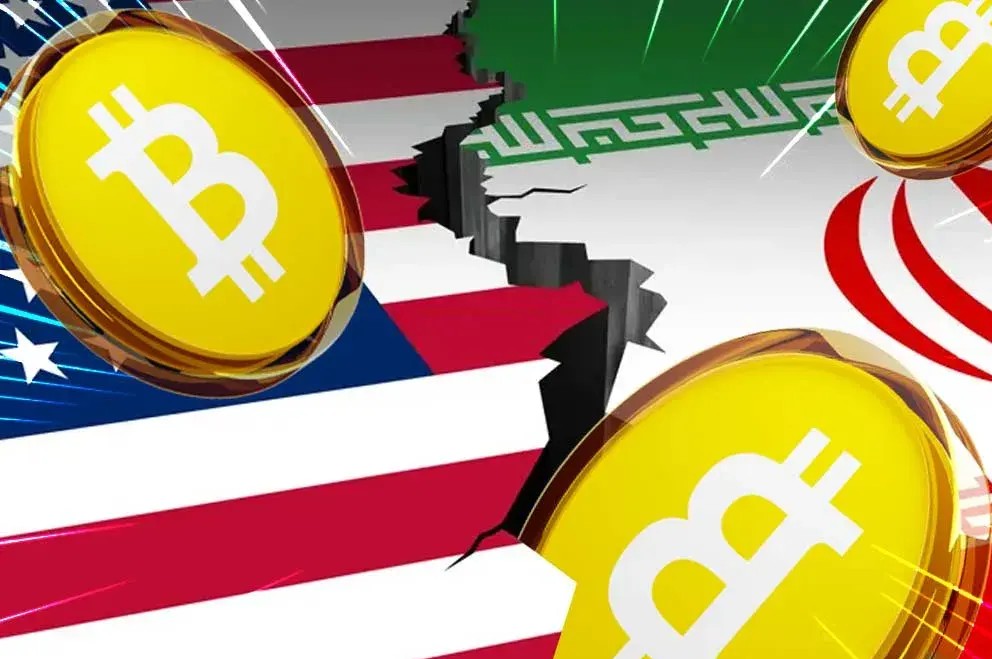
Bitcoin briefly fell below $64,000 after renewed U.S. military strikes on Iran and escalating geopolitical tensions triggered a broad selloff across global risk assets. The decline erased much of the cryptocurrency’s recent rally following softer U.S. inflation data, as investors shifted toward safer assets amid growing uncertainty in the Middle East. Additional market pressure came after President Donald Trump made new allegations involving China, further dampening investor sentiment and weighing on both traditional financial markets and cryptocurrencies.
The selloff illustrates how Bitcoin, despite its reputation as “digital gold,” continues to behave like a risk asset during periods of geopolitical stress. Alongside declines in Asian equities and U.S. stock futures, cryptocurrencies retreated as traders reduced exposure to volatile assets while monitoring developments overseas.
Geopolitical Tensions Trigger Risk-Off Trading
The latest decline followed reports of additional U.S. military strikes targeting Iranian positions, raising fears that the conflict could expand further across the region.
The uncertainty prompted investors to move capital away from higher-risk assets, including:
- Cryptocurrencies.
- Technology stocks.
- Emerging market assets.
- High-growth equities.
As a result, Bitcoin fell below the $64,000 level before stabilizing, while several major altcoins recorded even steeper losses.
Bitcoin Gives Back Inflation Rally
Just days earlier, Bitcoin had climbed above $65,000 after cooler-than-expected U.S. inflation data increased expectations that the Federal Reserve could eventually adopt a more accommodative monetary policy.
That optimism quickly faded as geopolitical concerns overtook macroeconomic data.
The reversal demonstrates how external events can rapidly change market sentiment, particularly when investors become more focused on preserving capital than seeking higher returns.
Global Markets Move Lower Together
The weakness was not limited to crypto markets.
Investors also sold:
- Asian equities.
- Nasdaq futures.
- Growth stocks.
- Other speculative investments.
This synchronized decline reinforced Bitcoin’s continued correlation with broader financial markets during periods of elevated uncertainty rather than behaving as an independent safe-haven asset.
Analysts Watch Key Support Levels
Market analysts are now closely monitoring whether Bitcoin can maintain important technical support.
According to market observers, continued geopolitical uncertainty could increase volatility in the coming days, with traders watching whether buyers return near recent support zones.
Despite the short-term weakness, many analysts continue to view institutional demand, ETF inflows, and improving regulatory clarity as supportive longer-term factors for Bitcoin’s outlook.
Institutional Fundamentals Remain Intact
Although short-term sentiment deteriorated, the broader institutional narrative surrounding Bitcoin has changed little.
Recent developments continue to support long-term adoption, including:
- Renewed spot Bitcoin ETF inflows.
- Growing institutional participation.
- Expansion of tokenized financial markets.
- Continued progress on U.S. crypto legislation.
These structural trends remain intact even as geopolitical events create temporary volatility across financial markets.
Geopolitics Continues to Influence Crypto
The latest decline reinforces how macroeconomic and geopolitical developments have become major drivers of cryptocurrency prices.
While blockchain technology operates independently of national governments, investor behavior does not. During periods of heightened uncertainty, many institutional investors reduce exposure to risk assets across the board, including Bitcoin, regardless of the underlying fundamentals.
As cryptocurrencies become increasingly integrated into traditional financial markets, global political events are likely to have an even greater influence on short-term price movements.
What This Means for Crypto
Bitcoin’s drop below $64,000 highlights the growing relationship between digital assets and the broader global financial system. While Bitcoin was originally promoted as an asset independent of traditional markets, today’s institutional participation means geopolitical events, monetary policy, and macroeconomic uncertainty now play an increasingly important role in determining short-term price action.
For the broader Web3 industry, the selloff serves as a reminder that adoption brings both opportunity and greater exposure to global financial conditions. As more institutional capital flows into crypto through ETFs, tokenized assets, and regulated investment products, digital assets are becoming increasingly interconnected with equities, bonds, and other risk markets.
Although geopolitical tensions may continue driving near-term volatility, the long-term fundamentals supporting blockchain adoption—including tokenization, stablecoin growth, and institutional investment—remain firmly in place. As global markets mature, Bitcoin’s role may continue evolving from a speculative asset into an increasingly important component of the modern financial system, even as it experiences short-term swings driven by world events.
- Bitcoin Drops Below $80K After Inflation Data Surges to 6%
- Gemini’s $2 Billion Crypto Return to Earn Members
- Coinbase Partners JPMorgan Chase to Redeem Card Rewards in USDC Stablecoin
- Bitcoin Drops Below $80K as Recent Buyers Realize Losses But Market Indicators Suggest Stability
- Ethereum Soars Past $3,400 Sparking Altcoin Season Buzz as Alts Fly
- Coinbase Faces Solana Transaction Delays Amid Technical Issues