













































































































































































































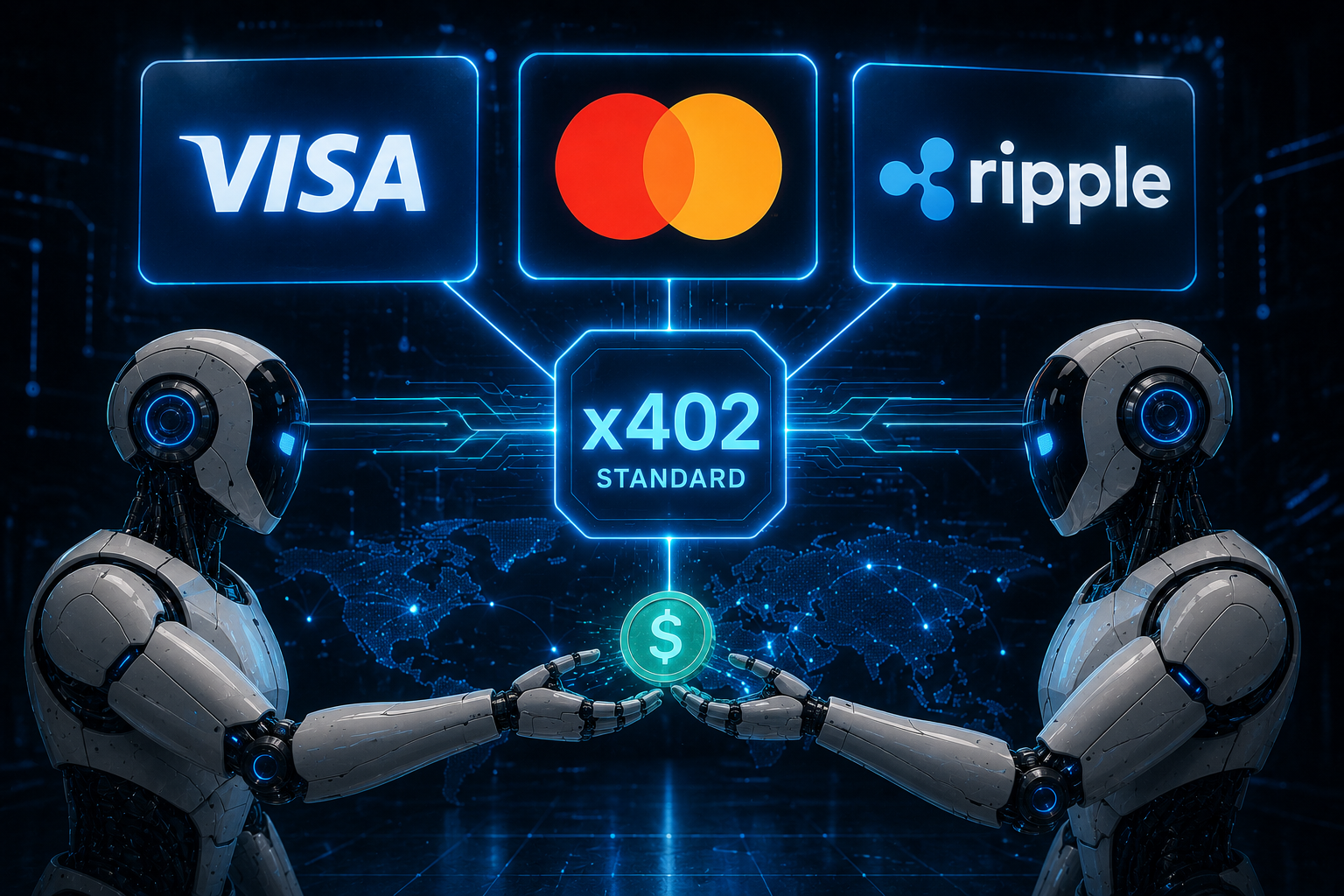
Some of the biggest names in payments, blockchain, and cloud computing have joined forces to build what could become the financial infrastructure powering the next generation of AI agents. Visa, Mastercard, Ripple, Coinbase, Google, Amazon Web Services (AWS), Circle, and dozens of other organizations have become founding members of the newly launched x402 Foundation, an open governance body created under the Linux Foundation to oversee the x402 protocol—an internet-native payment standard that allows autonomous AI agents to send and receive stablecoin payments directly over standard HTTP requests. The initiative marks one of the most significant collaborations yet between traditional finance and Web3 to support the emerging agentic economy.
Originally developed by Coinbase, the x402 protocol has already processed approximately 75 million transactions totaling $24 million in payment volume. By placing the protocol under open governance, the Foundation aims to create a vendor-neutral standard that enables AI agents, APIs, and applications to pay for digital services as seamlessly as they exchange information online.
A New Payment Layer for the AI Economy
The x402 protocol brings payments directly into the fabric of the internet.
Instead of requiring separate checkout pages or payment gateways, AI agents can automatically pay for digital services while interacting through standard web requests.
Potential use cases include:
- AI agents purchasing APIs.
- Paying for cloud computing resources.
- Buying data in real time.
- Autonomous software subscriptions.
- Machine-to-machine commerce.
The goal is to eliminate friction so software can transact as easily as it communicates.
Visa, Mastercard, and Ripple Join Open Governance
The x402 Foundation launches with 40 founding organizations, including major payment networks, blockchain companies, and technology providers.
Premier members include:
- Visa
- Mastercard
- Ripple
- Coinbase
- Amazon Web Services
- Circle
- Shopify
Rather than being controlled by a single company, the protocol will evolve through an open governance model managed by the Linux Foundation, allowing participants to collectively shape technical standards and future development.
Ripple Brings XRP and RLUSD Into Agentic Payments
As a Premier Member, Ripple plans to integrate both XRP and its RLUSD stablecoin into the x402 ecosystem.
According to Ripple, AI agents will increasingly need payment infrastructure capable of moving value as quickly as they exchange data. The company believes the XRP Ledger can provide fast, low-cost settlement for autonomous software operating across global networks.
The announcement further expands Ripple’s growing focus on AI-powered financial infrastructure following the launch of its XRPL AI development tools earlier this year.
Stablecoins Become the Preferred Payment Rail
One of the Foundation’s biggest priorities is supporting stablecoin payments.
Unlike traditional card payments that rely on multiple intermediaries, stablecoins allow AI agents to settle transactions almost instantly while maintaining price stability.
As AI-driven commerce expands, stablecoins are increasingly viewed as the ideal payment mechanism for autonomous software because they combine programmable money with low-cost global settlement.
Coinbase Hands the Protocol to the Community
Coinbase originally created x402 before donating the protocol to the Linux Foundation.
Moving the project into open governance is intended to encourage widespread industry adoption rather than tying the standard to any single commercial entity.
This approach mirrors other successful internet standards that became widely adopted after transitioning into neutral governance organizations.
AI Agents Are Becoming Economic Participants
The Foundation believes AI systems will soon become active participants in the global economy.
Rather than simply generating text or answering questions, future AI agents may:
- Purchase computing power.
- Pay for premium data.
- Subscribe to software services.
- Coordinate supply chains.
- Complete business transactions.
Building standardized payment infrastructure today could enable these systems to operate securely across the internet without requiring human intervention for every financial decision.
- Drake Takes Aim at Kendrick Lamar With AI Tupac & Snoop Dogg Vocals on ‘Taylor Made Freestyle’ Diss Track
- Tech Founder Says New Site RentAHuman.ai Launched, Reports Early Sign-Ups
- Adam Silver and Victor Wembanyama Unveil NB-AI at NBA All-Star Tech Summit with “Movie Mode” Feature to Make Live Games Look Like a Film
- ChatGPT No Longer Requires an Account — But There’s a Catch
- Elon Musk’s Grok AI Can Now Interpret Images
- Anthropic Quietly Adds Invisible Watermarks to Claude AI Outputs and Developers Are Already Trying to Break Them