

















































































































































































































The launch of tokenized SpaceX shares was supposed to be a landmark moment for blockchain-based finance. Instead, it turned into one of the most chaotic tokenized equity rollouts the crypto industry has seen. Major exchanges including Binance Wallet, Bybit, and Bitget Wallet were forced to cancel their tokenized SpaceX share campaigns after failing to secure enough underlying shares to satisfy overwhelming investor demand.
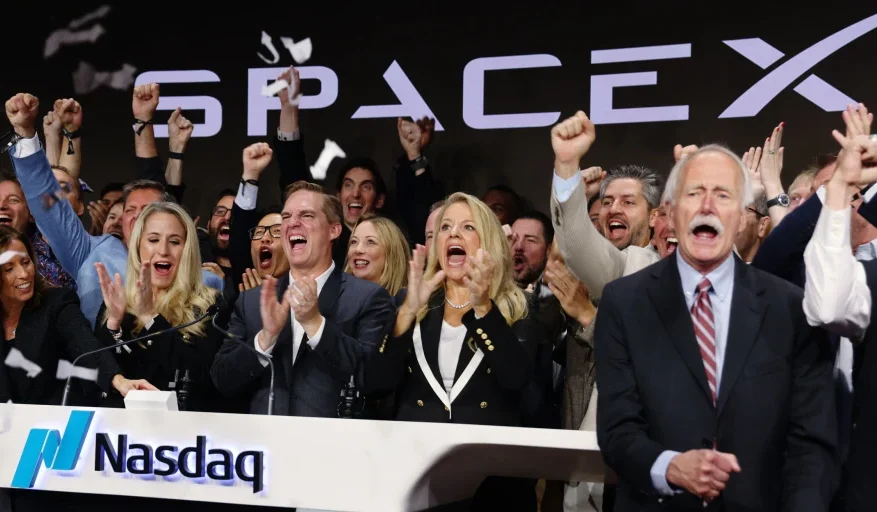
The cancellations came just as SpaceX (SPCX) completed the largest IPO in U.S. history, with shares surging after their Nasdaq debut. The contrast between soaring public market demand and the shortage of tokenized allocations exposed both the promise and limitations of bringing traditional equities onto blockchain networks.
Over $1 Billion in Demand Crashes Into a Share Shortage
According to tokenization platform xStocks, investor demand for tokenized SpaceX shares exceeded $1 billion before the IPO. However, the company was unable to acquire enough actual SpaceX shares to back all of the tokenized products that exchanges planned to distribute.
As a result, partner platforms including Binance Wallet, Bybit, and Bitget Wallet were left without sufficient allocations. Rather than offering partial distributions, the exchanges canceled their campaigns and refunded customers who had subscribed for IPO access.
The situation highlighted a reality many investors overlook: tokenized stocks still require access to real shares. Blockchain technology can improve trading and accessibility, but it cannot eliminate shortages of the underlying asset.
SpaceX IPO Becomes the Largest in History
The allocation problems occurred as SpaceX completed a historic public debut. The company priced its IPO at $135 per share, raising approximately $75 billion and achieving a valuation approaching $1.8 trillion. The offering instantly became the largest IPO ever completed in U.S. markets.
Investor enthusiasm pushed shares significantly above their offering price shortly after trading began. By the end of the first trading session, SPCX had climbed nearly 20%, lifting the company’s valuation above $2 trillion and reinforcing its status as one of the world’s most valuable publicly traded companies.
The explosive demand only intensified the scramble among tokenization platforms seeking exposure to SpaceX shares.
Refunds Issued Across Major Crypto Platforms
Faced with insufficient allocations, exchanges quickly moved to refund affected customers. xStocks and its parent company Kraken confirmed that requests for IPO access could not be fully fulfilled and that customer funds linked to unfilled orders were returned.
Bitget Wallet also refunded users after reporting millions of dollars in subscription demand during the initial offering window. Other participating platforms followed similar procedures to avoid leaving customers locked into unsuccessful allocations.
While the refunds helped prevent a larger customer backlash, the incident exposed operational challenges that tokenized equity providers will likely need to solve as the sector expands.
Tokenized Stocks Face Their Biggest Test Yet
The SpaceX frenzy arrives at a time when tokenized stocks have become one of crypto’s fastest-growing sectors. Exchanges and fintech companies are racing to offer blockchain-based access to public equities, ETFs, private company shares, and other real-world assets.
Supporters argue tokenized securities can provide fractional ownership, global accessibility, 24/7 trading, and faster settlement compared to traditional markets. However, the SpaceX allocation shortage demonstrated that tokenization still depends heavily on traditional financial infrastructure.
No matter how efficient the blockchain layer becomes, issuers must still secure the underlying shares before they can create legitimate tokenized representations.
Investor Appetite for Tokenized Equities Remains Massive
Despite the failed allocations, the incident revealed enormous investor demand for tokenized stocks. Retail traders around the world are increasingly looking for blockchain-based access to high-profile companies that have historically been difficult to invest in.
The overwhelming response to SpaceX has encouraged many industry participants to accelerate tokenization efforts for other major companies. Exchanges are already exploring future offerings tied to both public and private firms as competition intensifies in the real-world asset sector.
For many observers, the failure was not a sign of weak demand—it was evidence that demand currently exceeds available infrastructure.
What This Means for Crypto
The collapse of several tokenized SpaceX offerings serves as both a warning and a validation for the tokenization industry. On one hand, the inability to secure enough shares exposed significant operational challenges. On the other, more than $1 billion in investor demand demonstrated that appetite for tokenized equities is real and growing rapidly.
For crypto exchanges, the event underscores the importance of securing asset inventory before launching large-scale tokenized products. For investors, it serves as a reminder that blockchain-based stocks remain dependent on traditional market infrastructure.
As tokenized finance continues expanding, the SpaceX IPO scramble may ultimately be remembered as the moment the industry learned that creating a token is easy—but obtaining the underlying asset is where the real challenge begins
- Bitcoin Hits New All-Time High, Crosses $125K For The First Time as ‘Uptober’ Momentum Builds
- Peter Thiel Backed Erebor Secures Conditional OCC Charter for Crypto Banking
- Citi to Launch Bitcoin Custody as Wall Street Moves Deeper Into Crypto
- Bitcoin Plunges Below $86,000 as US Jobs Data Dampens Rate Cut Hopes
- U.S. Inflation Jumps to 4.2% as Crypto Markets Rebound Despite End of Disinflation Trend
- Telegram Launches TON-Linked ‘Stars’ Currency After Toncoin Hits All-Time High Price