











































































































































































































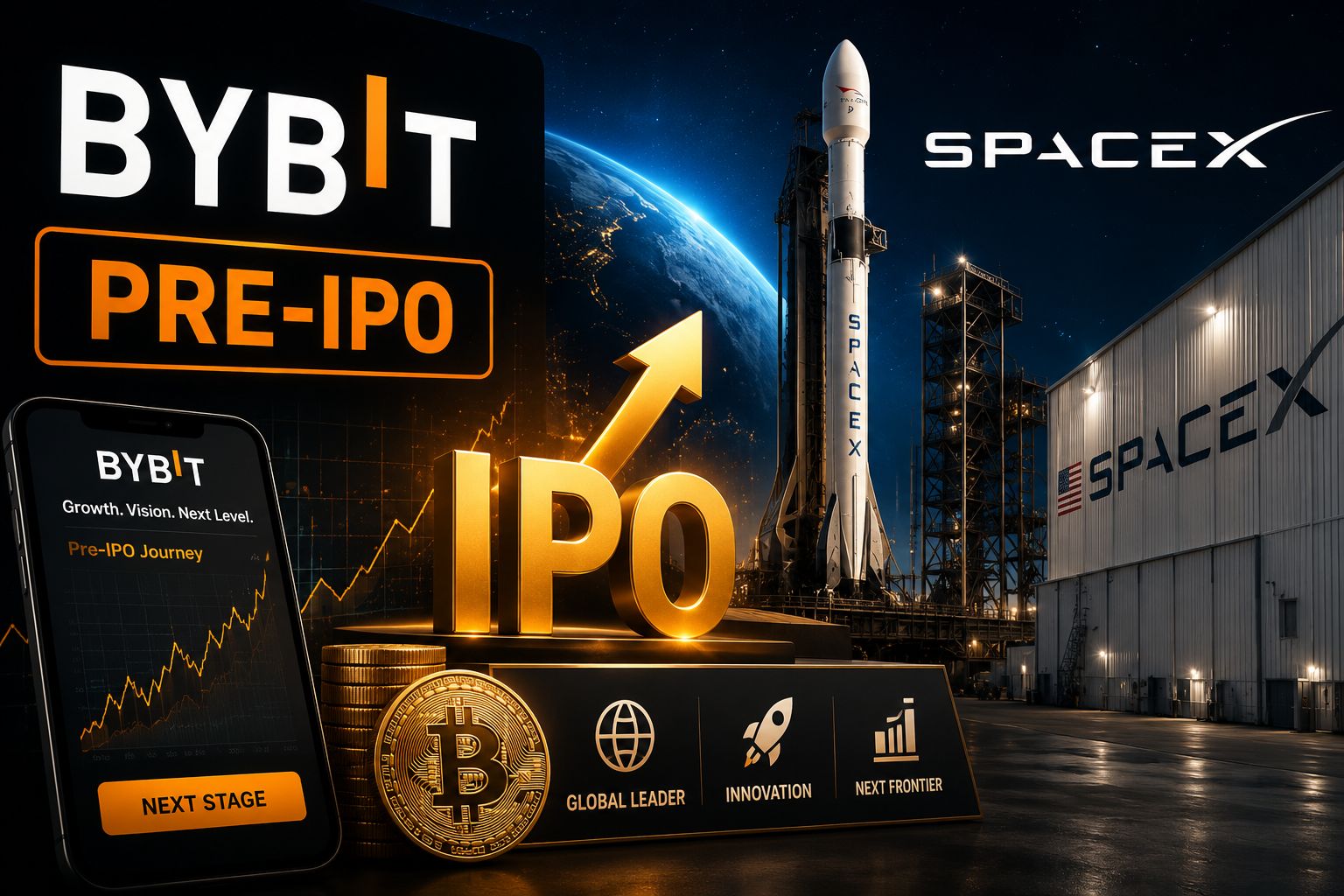
Bybit has launched a new tokenized investment product tied to SpaceX, giving users exposure to the valuation of Elon Musk’s private aerospace company without actually owning shares in the business. The offering represents the latest expansion of tokenized real-world assets (RWAs), a rapidly growing sector that aims to bring traditional financial assets onto blockchain-based platforms.
While the product allows crypto users to gain economic exposure to SpaceX’s market value, investors should understand that purchasing the token does not grant ownership rights, voting privileges, or direct equity in the company. The distinction has sparked debate about how tokenized assets should be marketed and understood by retail investors.
How Bybit’s Tokenized SpaceX Product Works
The new offering is part of Bybit’s broader push into tokenized stocks and private market investments. Rather than purchasing actual SpaceX shares, investors buy blockchain-based tokens whose value is designed to track the performance of the underlying asset.
The structure allows users to gain exposure to one of the world’s most valuable private companies without needing access to traditional private equity markets, which are typically restricted to accredited investors and institutional firms. SpaceX has remained privately held for more than two decades, making it difficult for ordinary investors to participate directly in its growth.
By using tokenization, Bybit aims to create a more accessible pathway for global investors seeking exposure to private companies that are normally unavailable through public stock exchanges.
Investors Do Not Own Actual SpaceX Shares
The most important detail of the offering is that buyers are not purchasing actual equity in SpaceX. Instead, they are purchasing a synthetic representation designed to mirror the value of the underlying shares.
As a result, token holders do not receive shareholder rights, dividend payments, governance participation, or legal ownership claims against SpaceX itself. Their investment is tied to the performance and structure of the tokenized product rather than direct ownership of company stock.
The distinction has become increasingly important as tokenized securities gain popularity across the crypto industry. While tokenization can improve accessibility and liquidity, the rights attached to a token can vary significantly depending on how the product is structured.
Tokenized Assets Continue Gaining Momentum
The launch comes amid growing interest in tokenized real-world assets across the cryptocurrency sector. Major financial institutions and blockchain companies have increasingly embraced tokenization as a way to bring traditional assets onto digital networks.
Tokenized products now include government bonds, treasury funds, private credit, real estate, commodities, publicly traded stocks, and private company shares. Industry analysts estimate that tokenized assets could become a multi-trillion-dollar market over the next decade as financial infrastructure increasingly moves on-chain.
Supporters argue that tokenization can lower barriers to entry, improve settlement efficiency, and provide broader access to investment opportunities that were previously available only to wealthy investors.
Regulatory Questions Remain
Despite rapid growth, tokenized assets continue to face regulatory uncertainty in many jurisdictions. Questions remain regarding investor protections, disclosure requirements, custody arrangements, and the legal rights associated with token ownership.
Private company exposure is particularly sensitive because firms such as SpaceX often maintain strict controls over who can buy, sell, or transfer shares. Regulators may increasingly examine whether tokenized representations provide investors with sufficient transparency regarding what they actually own.
The challenge for exchanges will be balancing innovation with clear disclosures that help users understand the differences between direct ownership and synthetic exposure products.
Competition in Tokenized Markets Is Accelerating
Bybit is not alone in pursuing tokenized investments. Several crypto exchanges and blockchain companies are racing to bring traditional financial assets on-chain as demand grows for 24/7 trading and global market access.
The sector has gained momentum following increased institutional interest in tokenized securities, particularly as major banks and asset managers continue launching blockchain-based investment products. Many industry leaders view tokenization as one of the most significant long-term opportunities connecting traditional finance and cryptocurrency markets.
The addition of a SpaceX-linked product demonstrates how exchanges are increasingly targeting high-profile private companies that generate significant investor interest but remain inaccessible through public markets.
- Flare Network Launches FXRP to Let XRP Be Used in DeFi Apps
- Schwab Aims to Expand Crypto Services—And Launch a Stablecoin
- FOX’s Verify Protocol for News integrates with TIME Media
- Coinbase Plans to Tokenize $COIN Stock in Renewed Security Token push
- PropyKeys Officially Launches, Introducing Onchain Home Addresses as a New Asset Class
- 3 Decentralized Platforms, Fetch.AI, SingularityNET and Ocean Protocol to Merge AI Tokens, Create AI Alliance