


























































































































![Ribbita by Virtuals [OLD]](https://assets.coingecko.com/coins/images/54970/large/Untitled_design.png)

















































































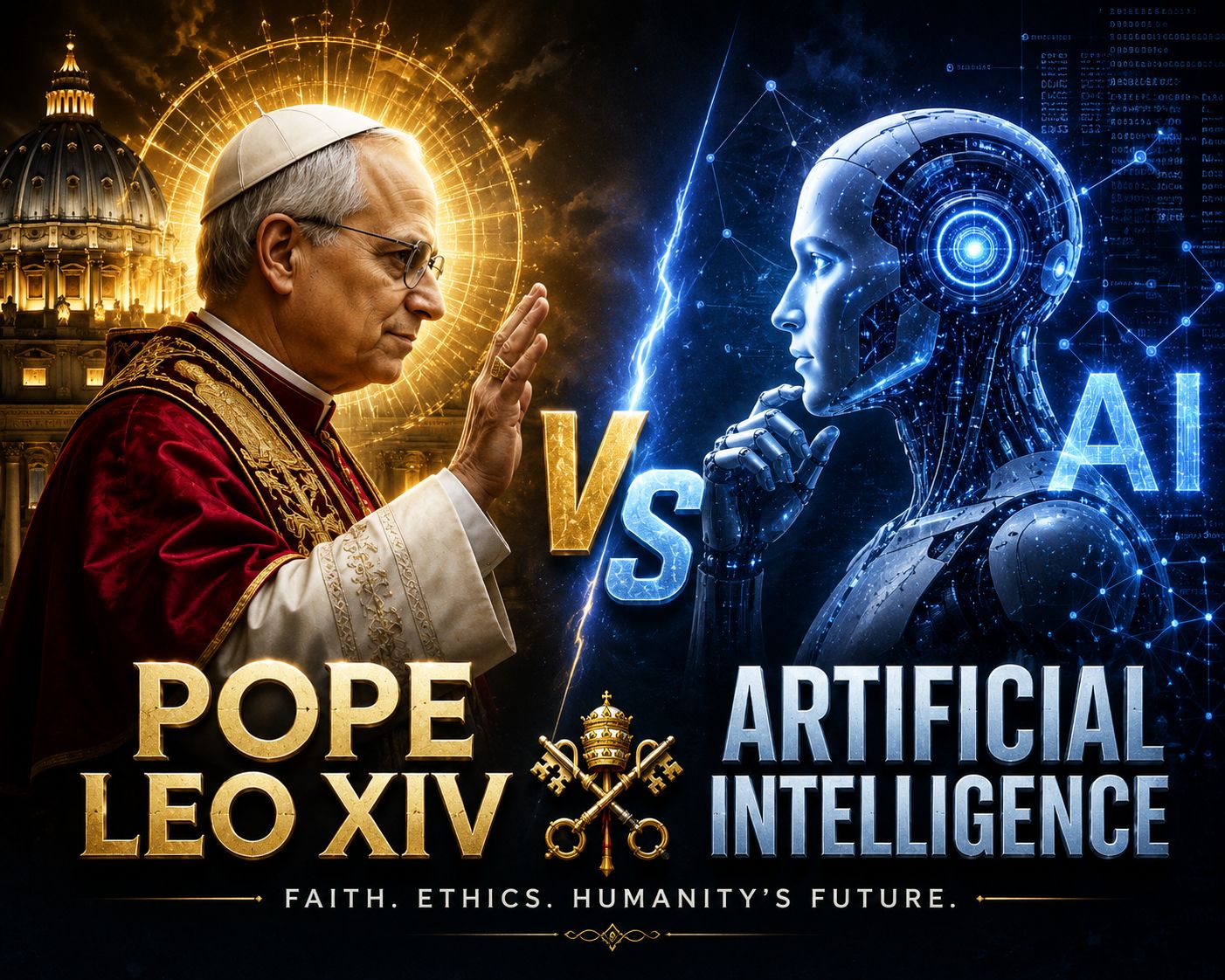
Pope Leo XIV has officially entered the global AI debate with the release of his first papal encyclical, Magnifica Humanitas: On Safeguarding the Human Person in the Time of Artificial Intelligence. The 42,000-word document positions artificial intelligence as one of the defining moral and societal challenges of the modern era, comparing today’s AI race to the biblical story of the Tower of Babel.
The encyclical warns that unchecked AI development could concentrate power, erode truth, displace workers, distort human identity, and even push humanity toward forms of technological domination disconnected from morality and human dignity.
The Vatican Is Treating AI Like the Industrial Revolution
Pope Leo XIV intentionally framed the AI revolution alongside the Industrial Revolution addressed by Pope Leo XIII in the historic 1891 encyclical Rerum Novarum, which focused on labor rights and social justice during rapid industrialization. The new document argues humanity is once again facing a technological transformation capable of reshaping:
- Labor
- Economics
- Warfare
- Information systems
- Human relationships
- Political power.
According to the Vatican, AI should not simply be treated as a neutral tool. Instead, the Pope argues the systems being built today will directly shape the future structure of human society itself.
Pope Leo Warns About Power Concentration and “Anti-Human” Technology
One of the biggest themes throughout the encyclical is concern over concentrated technological power. The Pope warns that AI development is increasingly controlled by:
- Large corporations
- Governments
- Military systems
- Wealthy private actors.
The document repeatedly argues that AI systems risk reducing human beings into:
- Data points
- Behavioral profiles
- Algorithmic outputs
- Economic units.
Pope Leo also criticized visions of:
- Transhumanism
- Post-humanism
- Fully autonomous warfare
- Machine-controlled social systems.
The encyclical calls for stronger democratic oversight, transparency, and regulation to ensure AI remains accountable to humanity rather than evolving into systems driven solely by profit, surveillance, or geopolitical competition.
The “Tower of Babel” Comparison
Perhaps the most talked-about section of the encyclical is Pope Leo’s comparison between AI development and the biblical Tower of Babel story. In the Book of Genesis, humanity attempts to build a tower reaching heaven itself, symbolizing unchecked ambition and power disconnected from moral grounding.
Pope Leo argues modern AI development risks repeating that same pattern. Building increasingly powerful systems without fully understanding their long-term consequences or ethical foundations. The Pope warned that technological advancement without moral responsibility could produce:
- Social fragmentation
- Manipulation
- Inequality
- Dehumanization
- Loss of truth itself.
AI Warfare and Autonomous Weapons Were Major Concerns
The encyclical also strongly criticized military uses of AI. Pope Leo warned that some AI-powered weapons systems are already moving beyond meaningful human control and called for what he described as the “disarmament” of AI from systems tied to war, domination, and geopolitical competition.
The Vatican argued that allowing autonomous systems to make life-and-death decisions risks fundamentally undermining human responsibility and morality itself. This places the Vatican increasingly at odds with growing global military investment into:
- Autonomous drones
- AI battlefield systems
- Algorithmic warfare
- Predictive military targeting.
Tech Leaders Are Already Reacting
The encyclical immediately triggered reactions across both Silicon Valley and global politics. Anthropic co-founder Chris Olah appeared alongside Pope Leo during the Vatican presentation and praised the Church for engaging directly with AI ethics and long-term societal risks.
Meanwhile, reactions from the tech industry were mixed. Some AI researchers applauded the Vatican for emphasizing human dignity and moral responsibility, while critics accused the Pope of being overly skeptical toward technological progress. The document has already become one of the most widely discussed moral interventions into the AI debate from any global institution.
- Mastercard Launches AI Payment Network That Allows Machines to Transact Using Stablecoins
- AI Agent Forms Its Own Company and Prepares to Trade Crypto, Marking a New Era of Autonomous Business
- FCC Proposes All AI-Generated Content in Political Ads Must Be Disclosed
- Aurora Labs Launches TurboChain and TurboSwap for the AI Meme Coin TURBO
- What is ERC-7857? A New Standard For Intelligent NFTs
- Nunchuk BTC Wallet Lets AI Use Bitcoin—But Keeps Humans in Control